Small Back Patio Ideas That Make Tiny Spaces Feel Complete
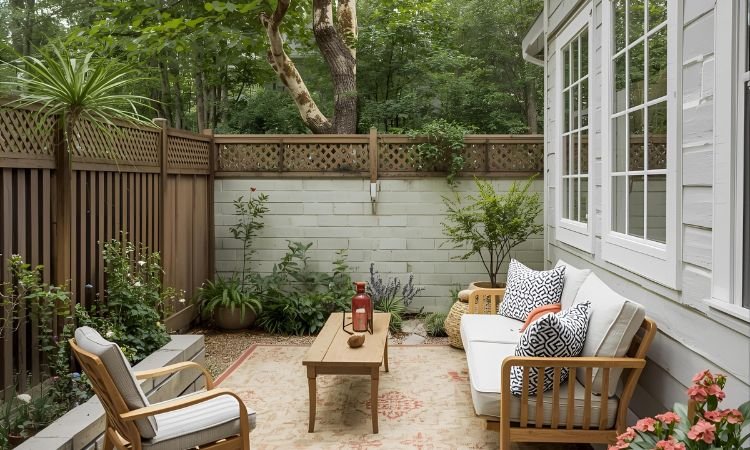
Your back patio is maybe 8×10 feet and you’re trying to figure out how to make it actually usable instead of just a concrete slab where you occasionally stand while grilling. Every patio idea you see online assumes you have 300 square feet to work with. You’ve got like 80 square feet total and need it to work for morning coffee, evening drinks, and somehow still fit your grill.
Small patios require completely different thinking than spacious ones. You can’t just scale down big patio ideas—that creates cramped unusable spaces. Instead you need strategies specifically designed for limited square footage that prioritize function over trying to fit everything. One or two purposes done well beats attempting every patio activity in inadequate space.
Here’s what I see constantly. People either overfurnish small patios creating obstacle courses, or they give up entirely leaving boring empty concrete. The sweet spot is choosing appropriately scaled pieces, defining clear purpose, and using vertical space and visual tricks making small feel intentional rather than inadequate.
Walking through 10 small back patio ideas that actually work in tight spaces. You’ll see which furniture scales make sense, how to maximize limited square footage, what makes small patios feel cozy versus cramped, and the specific choices that help tiny outdoor spaces punch above their weight.
What Makes Small Patios Actually Look Good
- Right-Sized Furniture Matters Most: Bistro sets and apartment-scale pieces fit properly while standard patio furniture overwhelms. It’s like clothes where fit determines whether something looks good. The proportional furniture makes small patios functional instead of frustrating.
- Defined Purpose Focuses Design: Choosing single main use—dining, lounging, gardening—creates functional space versus trying everything badly. It’s like small apartment rooms where specific function works better than multipurpose confusion. The focused approach makes limited space successful.
- Vertical Elements Add Interest: Using walls for plants, shelving, and decor preserves precious floor space. It’s like small room storage where going up saves ground area. The vertical emphasis makes patios feel larger and more interesting.
- Visual Continuity Expands Feeling: Coordinated colors and materials create flow making spaces feel bigger than actual measurements. It’s like paint color where cohesion affects perception. The unified approach prevents chopped-up feeling emphasizing limited size.
Small Back Patio Ideas
Transform limited outdoor space into functional retreats with these small patio approaches designed for real square footage constraints.
Bistro Dining Setup
Use small bistro table and two chairs creating intimate dining spot. The compact furniture fits properly while providing real function. I’ve found bistro sets are absolute best for small patios—they’re designed for exactly this situation.
Choose 24-30 inch diameter table with two folding or stacking chairs. Metal, wood, or mosaic bistro sets cost $100-400. Add small outdoor rug underneath defining space ($40-100). Include wall-mounted planter and string lights overhead. Total setup runs $200-600. The properly scaled dining creates usable outdoor eating without overwhelming limited space.
Corner Bench Seating
Build or install L-shaped bench in corner maximizing seating without furniture crowding floor. The built-in approach provides substantial seating using minimal footprint. And honestly, corner benches create way more seating capacity than individual chairs in tight spaces.
Install corner bench using 2x4s and decking boards (DIY $100-250) or buy ready-made outdoor corner bench ($300-700). Add outdoor cushions ($80-200). Include small side table for drinks. The efficient layout seats 3-4 people comfortably while leaving floor space clear.
Vertical Garden Wall
Cover patio wall with vertical planter creating lush garden using zero floor space. The living wall adds major visual interest and privacy without sacrificing usable area. This basically gives you garden and patio function in same footprint.
Install wall-mounted planter boxes, hanging pockets, or trellis system ($50-200). Fill with herbs, flowers, or trailing plants ($40-100). Add drip irrigation for easy maintenance ($30-80). Total costs $150-400. The vertical approach creates garden impact while preserving every inch of floor space.
Multi-Purpose Storage Bench
Use storage bench providing seating plus hidden storage for cushions, tools, and toys. The dual-function piece works harder than regular seating. I mean, storage is premium in small spaces—furniture that does double duty is essential.
Choose weather-resistant storage bench 4-5 feet long ($150-400). Add cushion on top for comfortable seating. Store grill tools, plant supplies, outdoor toys inside. The concealed storage keeps patio organized while providing needed seating without separate pieces cluttering space.
Folding Furniture Setup
Use collapsible table and chairs stored when not needed freeing space for other activities. The flexible approach lets small patio serve multiple purposes. This works great if you use patio differently at different times.
Buy quality folding bistro set storing against wall or in storage bench ($120-300). Set up for dining, fold away for yoga or kids’ play. Add hooks mounting folded chairs on wall as art when stored. The adaptable furniture gives flexibility small permanent setups can’t provide.
Sectioned Zones Design
Divide small patio into distinct mini-zones using rugs, planters, or level changes. The defined areas create purpose and interest. Sound familiar to studio apartment layouts? Same principle—zones replace walls in limited space.
Use small outdoor rug defining seating area (2-4 people), position plants creating separation, add grill zone in corner, create herb garden along edge. Each section serves specific purpose without bleeding together. Costs $200-500 for rugs, planters, furniture. The organization makes small space feel intentional and complete.
Narrow Galley Layout
Arrange furniture along long walls creating clear central pathway. The galley approach suits narrow patios preventing width-blocking furniture placement. This mirrors galley kitchen efficiency in tight rectangular spaces.
Position bench or loveseat along one long wall, place small table and chairs opposite, leave 24-30 inch clear path between. Add wall-mounted elements avoiding floor obstruction. The linear layout maximizes seating while maintaining circulation in narrow spaces.
Elevated Deck Platform
Build small raised deck creating defined outdoor room feeling. The elevated platform with defined edges makes space feel more intentional and complete. This transforms plain concrete into deliberate outdoor destination.
Construct 8×10 foot deck platform 6-12 inches high using composite or cedar decking (DIY $300-800, professional $800-1,500). Add railings on open sides, furniture, and lighting. The platform effect creates outdoor room feeling making small space feel more significant.
Intimate Seating Nook
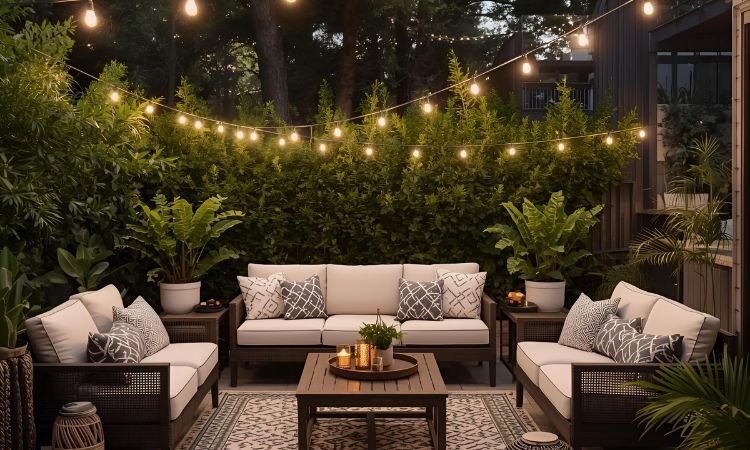
Create cozy two-person lounging spot with small loveseat or two club chairs. The intimate scale suits romantic or quiet reading use. This prioritizes comfort over capacity making small patio relaxing retreat.
Choose apartment-sized loveseat or two small club chairs ($300-800). Add small side table between for drinks ($40-100). Include throw pillows and outdoor blanket creating cozy atmosphere. The comfortable focused setup creates destination worth using regularly.
Container Garden Patio
Fill small patio with varied container plants creating garden atmosphere. The mobile containers provide flexibility while abundant plants make space feel lush despite limited size. This works great for gardeners with no yard space.
Arrange 8-12 containers varying heights and sizes along edges and corners ($150-400). Mix herbs, vegetables, flowers creating productive decorative garden. Leave central space clear for bistro set or chair. The container approach gives serious gardening space while maintaining patio function.
Making Small Patios Successful
- Measure Before Buying Anything: Know exact dimensions ensuring furniture actually fits before purchasing. It’s like online shopping where size matters more than pictures. The accurate measurements prevent expensive returns and frustration.
- Embrace Multi-Function Pieces: Every item should serve at least two purposes in small spaces. It’s like tiny house living where functionality matters intensely. The efficient choices maximize limited square footage.
- Use Light Colors Strategically: Lighter furniture and decor make small patios feel more open versus dark heavy pieces. It’s like room painting where color affects perception. The brightness creates airier feeling.
- Keep Floor Clear: Minimize items sitting on patio surface keeping pathways open. It’s like small room design where floor space affects feeling dramatically. The clear floor makes patios feel less cramped.
Frequently Asked Questions About Small Back Patios
What’s Minimum Functional Patio Size?
6×8 feet (48 square feet) accommodates small bistro set and minimal circulation. 8×10 feet (80 square feet) provides comfortable dining or seating for 2-4 people. Below 40 square feet becomes challenging for furniture plus movement—better treating as garden or single-chair reading nook.
The key is choosing furniture proportional to actual space. Tiny patio with tiny furniture works better than trying to fit standard pieces.
Can You Fit Dining and Lounging?
Not comfortably in spaces under 100 square feet. Better choosing primary function and committing fully. Trying both in limited space creates cramped unusable situation serving neither purpose well.
If space is 8×12 or larger, folding furniture lets you switch between dining and lounging setups. Below that, pick one and do it properly.
What About Grill Storage?
Small grills (18-22 inches) fit in corners without dominating. Choose compact models versus full-size which overwhelm small patios. Store grill cover, tools, and propane in storage bench or wall-mounted cabinet preserving floor space.
Consider apartment-sized electric grills requiring less clearance than gas models. The compact cooking keeps grilling option without sacrificing entire patio.
How Do You Add Privacy?
Vertical solutions work best—lattice panels with climbing plants, bamboo screening, outdoor curtains hung from overhead structure. Avoid solid fences eating visual space making small areas feel smaller.
Tall planters with ornamental grasses create natural screening without permanent construction. The vertical privacy preserves precious floor space while blocking sight lines.
What Lighting Works Best?
String lights overhead provide ambient glow without floor space ($20-60). Wall-mounted sconces save surface area ($40-120 per pair). Solar path lights tuck in planters adding light without outlets or wiring ($25-80).
Battery-operated lanterns provide portable flexible lighting. The wireless options avoid installation while maintaining lighting flexibility in changing layouts.
Creating Your Small Patio Paradise
Small back patio ideas prove that limited square footage becomes asset when you stop fighting it. The right-scaled furniture, focused purpose, and smart space-saving strategies create outdoor spaces genuinely worth using. And honestly, small patios often feel cozier and more intimate than sprawling ones—the limited size creates natural gathering effect.
Start by measuring your actual space and existing features. Determine primary use committing to doing one thing really well. Choose appropriately scaled furniture and accessories. The focused approach creates patios working with your reality instead of against it.
What’s your small patio’s biggest challenge—fitting furniture, making it feel inviting, or figuring out what purpose makes most sense? Tell me what you’re dealing with and I’ll help narrow down which approach works for your specific space!