Small Concrete Patio Ideas That Make Basic Slabs Look Intentional
You’ve got a plain concrete patio—maybe 8×10 feet of boring gray rectangle that came with your house. It’s functional but totally uninspiring. Every time you look at it, you think about all those gorgeous patios with pavers and stone, then you see the quotes and laugh. You’re not spending $3,000 redoing a tiny patio.
The good news is concrete patios clean up way better than you’d think. We’re talking staining, painting, adding borders, creating patterns—all for way less than ripping out and replacing. Your basic builder-grade concrete slab can look intentional and styled without major construction or contractor pricing.
Here’s what stops people. They assume concrete means permanent boring, or they think any upgrade requires demolition. But concrete is actually super versatile for DIY improvements. You can transform plain slabs in a weekend for a few hundred dollars creating patios that look like you meant for them to be concrete instead of just accepting what the builder poured.
Walking through 10 small concrete patio ideas that work specifically with existing slabs. You’ll see which upgrades deliver biggest visual impact, what you can actually DIY versus needing professionals, how to add character without starting over, and the realistic costs making concrete patios look good without breaking budgets.
Why Concrete Patios Need Different Treatment
- Surface Treatment Changes Everything: Staining, painting, or stamping transforms basic gray concrete into intentional design element. It’s like wall paint where surface finish determines appearance. The treatment makes concrete look chosen rather than default.
- Defined Borders Add Polish: Clear edges using different materials create intentional boundaries versus concrete just ending randomly. It’s like picture frames where edges complete composition. The border definition makes patios look finished.
- Strategic Furniture Placement Matters: Proper furniture scale and positioning determines whether small concrete patios feel cozy or cramped. It’s like room furniture where arrangement affects entire feeling. The thoughtful layout maximizes limited square footage.
- Layering Softens Hardscape: Adding rugs, planters, and textiles prevents all-concrete sterile feeling. It’s like room accessories where layers create warmth. The softening elements make concrete welcoming rather than industrial.
Small Concrete Patio Ideas
Transform basic concrete slabs into intentional outdoor spaces with these approaches designed for existing small patios.
Concrete Stain Makeover
Apply concrete stain creating rich color and dimension. The chemical reaction creates variegated appearance way more interesting than plain gray. I’ve found staining is probably easiest upgrade delivering maximum impact—it’s basically dyeing your patio.
Clean concrete thoroughly, apply acid-based stain in earth tones—terracotta, brown, charcoal—following manufacturer directions. DIY costs $50-150 for average small patio. Choose complementary colors or single rich tone. The stained surface looks intentional and custom versus basic builder concrete.
Painted Concrete Floor
Paint concrete using outdoor floor paint creating solid color or patterns. The opaque coverage completely changes appearance. And honestly, painted concrete patios can look surprisingly upscale when done properly.
Use concrete floor paint or porch paint in colors beyond gray—slate blue, sage green, warm terracotta, charcoal. Clean and prime concrete first. Paint costs $40-100 for small patio. Add painted border design or geometric pattern for extra interest. The color transformation makes concrete feel designed rather than default.
Concrete Stencil Patterns
Create tile or pattern appearance using stencils and concrete paint. The faux tile effect costs fraction of actual tile installation. Sound familiar to those gorgeous Mediterranean tile patios? This gets similar look for $100 instead of $3,000.
Buy concrete stencils in Moroccan, Spanish, or geometric patterns ($30-80). Use two paint colors creating contrast—typically light base with darker pattern. Total DIY costs $80-200. The pattern breaks up plain concrete creating visual interest and custom appearance.
Outdoor Area Rug Layering
Cover concrete with large outdoor rug creating defined living space. The rug adds color, pattern, and softness while hiding plain concrete. This is literally easiest transformation requiring zero permanent changes.
Choose outdoor rug sized appropriately—5×7 or 6×9 for small patios ($80-300). Look for weather-resistant polypropylene or recycled plastic. Add furniture on rug creating room-like feeling. The rug defines space while adding personality and comfort to hard surface.
Border Accent Addition
Frame concrete edges with contrasting material—pavers, brick, stone, or wood. The border creates finished intentional appearance. I mean, this trick is everywhere in landscaping because it really works making basic elements look designed.
Install single row of pavers, bricks, or stone around concrete perimeter using landscape adhesive or mortar. Materials cost $80-200 for small patio, professional installation adds $300-600. The frame transforms plain slab into deliberate patio design.
Potted Plant Arrangement
Surround small concrete patio with abundant container plants softening hard edges. The living elements add color and life while concrete provides neutral backdrop. This works great if you love gardening but hate your concrete.
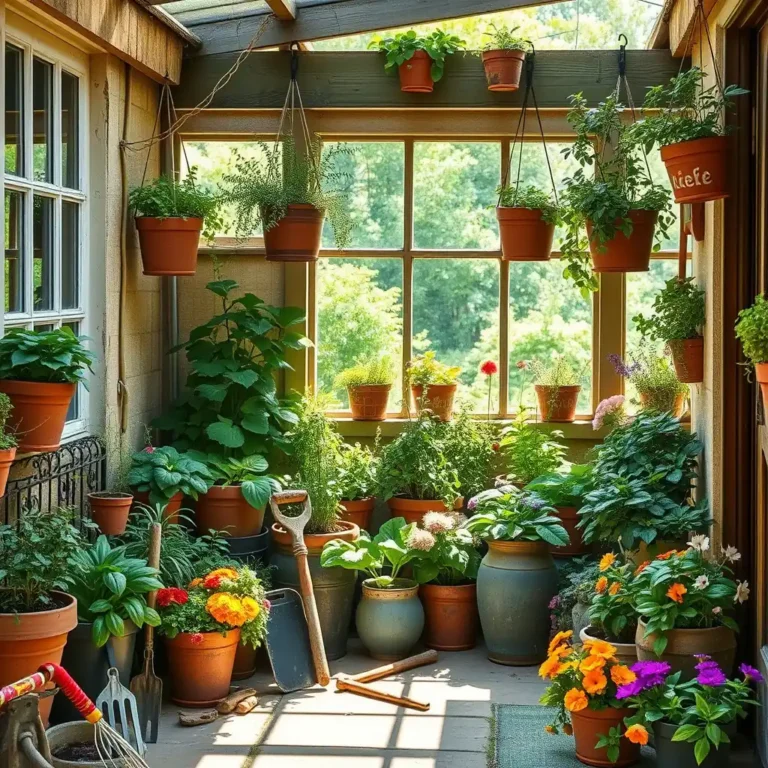
Arrange 8-15 varied containers around patio edges—mix heights, materials, plant types. Pots cost $10-40 each, plants add $8-30 each. Total investment $200-700 creating lush feeling. The greenery distracts from concrete while creating garden atmosphere.
Furniture and Rug Combination
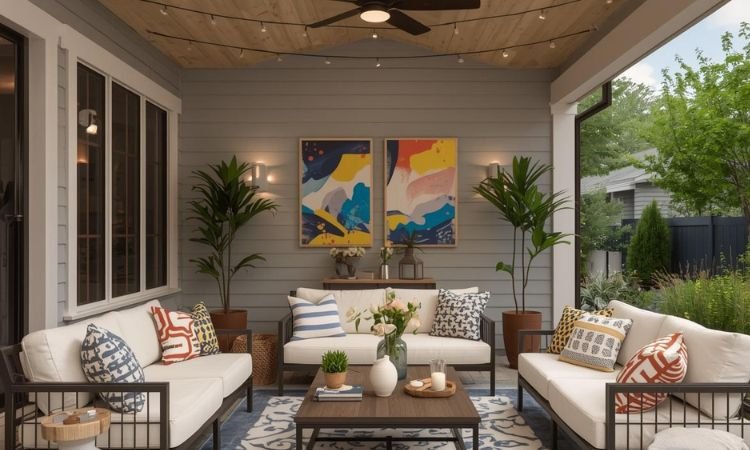
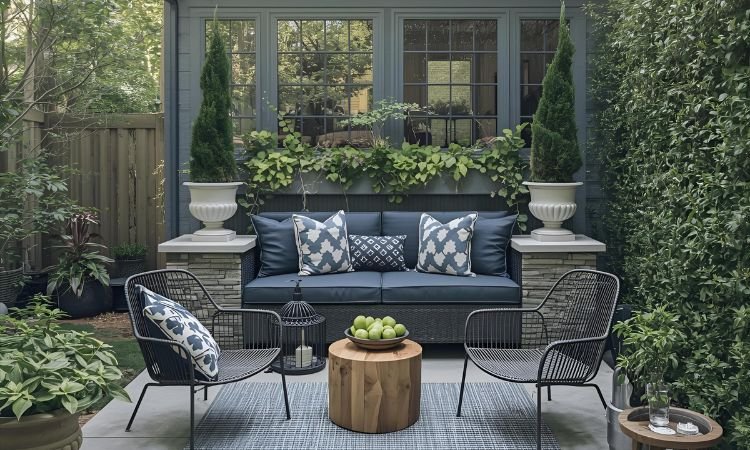
Cover concrete with rug and properly scaled furniture creating outdoor room. The complete styling makes concrete irrelevant as backdrop to actual living space. This approach accepts concrete as foundation focusing attention elsewhere.
Layer outdoor rug, add bistro set or small loveseat, include side tables and accessories. Total furniture and rug costs $400-1,000. The furnished outdoor room draws eyes to living space rather than concrete surface underneath.
Patio Tile Overlay
Install interlocking deck tiles over concrete creating instant upgrade. The click-together tiles require zero construction knowledge or permanent changes. And honestly, these have improved dramatically—they don’t look cheap anymore.
Buy composite or wood-look interlocking tiles covering concrete surface ($3-8 per square foot). An 8×10 patio needs 80 square feet costing $240-640. Tiles lay directly on concrete, lift easily if moving. The surface transformation creates wood-deck appearance on concrete base.
Scored Pattern Creation
Cut decorative pattern into existing concrete creating tile or stone appearance. The scored lines add dimension and visual interest to flat surface. This requires renting equipment but creates permanent upgrade.
Rent concrete saw with diamond blade ($60-100 per day). Cut grid pattern, geometric design, or faux-stone pattern. Optional: stain different sections varied colors emphasizing pattern. Cuts alone cost $60-100, adding stain adds $50-100. The custom pattern creates high-end appearance from basic concrete.
Painted Rug Design
Paint faux rug directly on concrete creating permanent design. The painted element adds pattern and color without actual rug maintenance. I’ve seen these look surprisingly good when well-executed—like street art for your patio.
Use concrete paint creating rug-like design with border and pattern. Costs $60-150 in paint and supplies. Add polyurethane sealer protecting design ($30-50). The permanent artwork transforms concrete while requiring zero ongoing maintenance unlike fabric rugs.
Getting Concrete Upgrades Right
- Prepare Surface Properly: Clean concrete thoroughly removing dirt, oil, and loose material before any treatment. It’s like painting walls where prep determines results. The proper preparation ensures upgrades actually adhere and last.
- Test Products First: Try stains or paints on inconspicuous area ensuring color and finish meet expectations. It’s like paint samples where testing prevents regrets. The preview shows actual results before committing.
- Seal Finished Work: Apply concrete sealer protecting painted or stained surfaces from weather and wear. It’s like clearcoat where protection extends life. The sealing investment preserves upgraded appearance for years.
- Work With Existing Features: Design around drain grates, expansion joints, or concrete imperfections rather than fighting them. It’s like home renovation where working with structure beats fighting it. The acceptance creates realistic results.
Frequently Asked Questions About Small Concrete Patios
Can You Cover Concrete Without Removing It?
Yes—paint, stain, tile overlays, deck tiles, and outdoor rugs all work over existing concrete without removal. The surface treatments transform appearance without demolition or disposal costs. Most upgrades are DIY-friendly requiring minimal skills or tools.
Concrete provides excellent stable base for various treatments. The solid foundation actually makes upgrades easier than building new patio from scratch.
How Long Does Stained Concrete Last?
Properly applied and sealed concrete stain lasts 5-10+ years. High-traffic areas show wear sooner requiring occasional touch-ups or resealing. The longevity depends heavily on sealer quality and reapplication—expect resealing every 2-3 years maintaining appearance.
Staining creates permanent color change—you can’t just wash it off if you hate it. The commitment level sits between paint (easily changed) and replacement (permanent).
What About Cracked Concrete?
Small cracks fill with concrete crack filler before staining or painting. Larger structural cracks might need professional repair or you can work them into design as “character.” The repair-before-treating approach ensures upgrades don’t highlight damage.
Severely damaged concrete showing major cracking, crumbling, or settling might need replacement. But surface cracks and minor damage often fix easily before upgrading appearance.
Can You Paint Concrete Yourself?
Absolutely—concrete painting is straightforward DIY project. Clean surface, apply concrete primer, paint with concrete floor paint. Most challenging part is thorough cleaning and waiting for proper drying between coats.
Weekend warrior can easily handle 8×10 patio. Following product directions and proper prep determines success more than skill level. This is genuinely accessible DIY project.
How Do You Maintain Upgraded Concrete?
Sweep regularly removing dirt and debris. Hose down monthly. Reseal every 2-3 years protecting finish. Avoid harsh chemicals or pressure washing on high settings damaging sealers.
Painted concrete might need touch-ups every few years high-traffic areas. Stained concrete develops patina over time often improving appearance. The maintenance remains minimal compared to other patio materials.
Transforming Your Concrete Patio
Small concrete patio ideas prove that boring builder-grade slabs transform into intentional outdoor spaces with relatively simple upgrades. The surface treatments and strategic styling create patios looking designed and custom rather than default and forgotten. And honestly, once you add color, pattern, or good furniture, concrete becomes neutral backdrop instead of eyesore.
Start by determining budget and DIY comfort level. Choose upgrade matching skills—painting easier than scoring patterns. Prep surface properly ensuring treatments adhere and last. Add furniture and softening elements completing transformation. The step-by-step approach creates outdoor space you actually want to use.
What’s your concrete situation—plain gray slab, already painted but ugly color, cracked and sad, or just boring? Tell me what you’re starting with and I’ll help figure out most realistic upgrade approach!