Backyard Paver Walkway Ideas That Transform Your Outdoor Space
Your backyard needs a proper path but you’re tired of looking at plain concrete or muddy tracks through the grass. You want something that looks intentional, lasts through weather, and doesn’t break the bank. The problem is figuring out what actually works versus what just looks good in photos.
Paver walkways solve the muddy path problem while adding real visual interest to your yard. They handle foot traffic better than grass, cost less than poured concrete, and you can actually install them yourself over a weekend. The right design turns a functional necessity into something that genuinely improves how your backyard looks and feels.
I’m covering everything from classic brick patterns and natural stone looks to modern geometric designs and budget-friendly options. You’ll see which paver materials last longest, what patterns work for different styles, how to handle curves and slopes, and what mistakes cost people the most money. These ideas work in real backyards where you’re dealing with actual budgets and DIY skill levels.
What Makes Paver Walkways Work
Proper Base Prevents Settling: The gravel and sand foundation matters more than the pavers themselves for long-term performance. It’s like building foundations where what’s underneath determines stability. The solid base prevents sinking, shifting, and uneven surfaces over time.
Pattern Choice Affects Perception: How you lay pavers changes how wide or long paths feel regardless of actual dimensions. It’s like optical tricks where arrangement alters perception. The thoughtful pattern selection makes walkways feel more proportional to your space.
Material Selection Impacts Maintenance: Different paver types require varying levels of upkeep and handle weather differently. It’s like choosing materials where initial decisions affect years of care. The smart selection matches your climate and maintenance willingness.
Edge Restraints Maintain Shape: Proper edging keeps pavers from spreading or shifting when ground freezes and thaws. It’s like containment where boundaries maintain integrity. The solid edges protect your installation investment long-term.
Backyard Paver Walkway Ideas That Transform Your Outdoor Space
Create functional and beautiful paths with these backyard paver walkway ideas featuring proven designs.
Classic Running Bond Pattern
Install pavers in a simple running bond pattern—like bricks in a wall—creating timeless appeal with straightforward installation. The offset pattern provides good interlock while looking clean and intentional. It’s like traditional design where proven layouts never go out of style.
This pattern works with rectangular pavers of any size and suits both formal and casual yards. The simple layout makes DIY installation easier since you’re just offsetting each row by half. This backyard paver walkway classic delivers reliable results without complicated cutting.
Herringbone Diagonal Design
Lay pavers in a 45-degree herringbone pattern creating visual interest and superior interlock strength. The angled zigzag pattern handles heavy traffic better than straight patterns while adding dynamic movement. It’s like engineered design where form meets function.
Herringbone requires more cutting at edges but the structural benefits justify the extra work. The pattern looks especially good leading to focal points like patios or garden features. This backyard paver walkway option delivers both durability and visual appeal.
Mixed Size Random Pattern
Combine pavers of different sizes in a random pattern creating natural, organic looks. The varied dimensions prevent repetitive appearance while using up different size pieces efficiently. It’s like puzzle work where variety creates interest.
This works great with natural stone or tumbled pavers giving casual, cottage-style vibes. The random layout actually makes installation easier since you’re not following rigid patterns. This backyard paver walkway approach suits informal gardens and relaxed outdoor spaces.
Bordered Walkway Design
Frame your main paver field with contrasting border pavers adding definition and finished appearance. The darker or different-colored edge creates clear boundaries while elevating the overall look. It’s like picture frames where edges complete the composition.
Soldier course borders—pavers turned perpendicular to the field—work especially well for traditional looks. The border also provides natural stopping points for edging restraints. This backyard paver walkway detail transforms basic installations into more refined designs.
Stepping Stone Style Path
Space individual pavers through lawn or groundcover creating casual paths that blend with landscaping. The separated stones provide dry footing without dominating yard space visually. It’s like breadcrumb trails where subtle guidance beats obvious intrusion.
Set pavers 18-24 inches apart for comfortable walking stride. Use larger format pavers—at least 18×18 inches—providing stable stepping surfaces. This backyard paver walkway style works beautifully in cottage gardens or informal yard areas.
Curved Garden Path
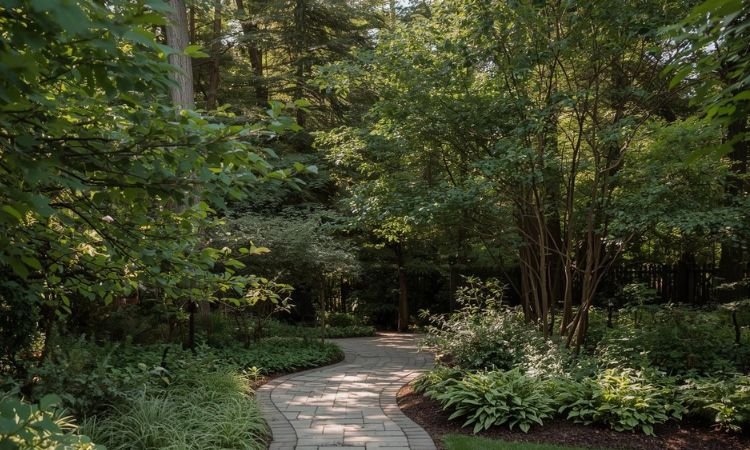
Create gentle curves rather than straight lines adding visual interest and working with natural landscape flow. The winding path feels more organic while making yards seem larger through extended sightlines. It’s like meandering where curves create journey.
Use flexible edging materials following curves smoothly. Smaller pavers work better on curves than large ones requiring less cutting. This backyard paver walkway design softens formal yards and suits naturalistic landscaping styles.
Contrasting Inlay Pattern
Incorporate accent pavers in contrasting colors creating patterns within your main walkway. The inlaid design adds visual interest without overwhelming through thoughtful placement. It’s like highlights where strategic contrast elevates the whole.
Common inlays include diamonds, squares, or border stripes using complementary colors. The accent breaks up long stretches preventing monotony. This backyard paver walkway technique adds personality without complicated installation.
Natural Stone Irregular
Use irregularly shaped flagstone pavers creating rustic, natural pathways. The varied shapes and earth tones blend beautifully with garden settings. It’s like nature’s design where organic shapes feel appropriate outdoors.
Fit stones together like puzzles filling gaps with smaller pieces or ground cover plants. The irregular layout requires more patience during installation but delivers unique character. This backyard paver walkway material suits mountain, cottage, or naturalistic garden styles.
Grid Pattern With Groundcover
Install pavers in a grid pattern with spaces between filled by low groundcover plants. The living joints soften hardscape while maintaining clear walking surfaces. It’s like blending categories where pavers and plants integrate.
Creeping thyme, sedum, or Irish moss work great for filling joints in sunny areas. Space pavers 2-4 inches apart allowing room for plant growth. This backyard paver walkway approach creates living paths that feel less hardscape-heavy.
Modern Linear Design
Lay large format rectangular pavers in clean, linear arrangements creating contemporary geometric looks. The minimalist pattern with crisp lines suits modern architecture and clean-lined landscapes. It’s like contemporary art where simplicity becomes sophistication.
Use pavers at least 12×24 inches and keep joints tight and consistent. Limit color palette to one or two tones maintaining the modern aesthetic. This backyard paver walkway style works perfectly with mid-century modern or contemporary homes.
Two-Tone Checkerboard
Alternate contrasting paver colors creating checkerboard patterns adding playful visual interest. The bold pattern makes statements while remaining structurally sound. It’s like graphic design where high contrast creates impact.
Black and white or dark gray and cream combinations work especially well. The simple alternating pattern makes installation straightforward. This backyard paver walkway design suits eclectic gardens and adds personality to straightforward paths.
Making Paver Walkways Last
Excavate Proper Depth: Dig down 7-8 inches total allowing room for 4-6 inches of gravel base plus 1 inch sand bed plus paver thickness. It’s like foundations where adequate depth prevents future problems. The proper excavation ensures long-term stability.
Compact Thoroughly: Tamp each layer—subgrade, gravel, and sand—before adding the next preventing future settling. It’s like compression where density determines longevity. The thorough compaction maintains level surfaces for years.
Use Quality Materials: Choose proper paver base gravel and bedding sand rather than whatever’s cheapest. It’s like ingredients where quality inputs affect final results. The right materials prevent drainage issues and settling.
Seal When Appropriate: Consider sealing pavers in high-traffic areas or when using porous materials protecting against stains and weather. It’s like protection where preventive care extends life. The sealed surface maintains appearance longer with less maintenance.
Frequently Asked Questions About Backyard Paver Walkways
How Much Do Paver Walkways Cost?
DIY paver walkways typically cost $8-15 per square foot for materials including pavers, base gravel, sand, and edging. Basic concrete pavers run $2-4 per square foot while natural stone costs $8-15 per square foot. A typical 3-foot wide, 20-foot long walkway needs about 60 square feet costing $480-900 in materials for basic pavers.
Professional installation adds $10-20 per square foot in labor bringing total costs to $18-35 per square foot installed. Your actual costs depend on material choices, site conditions, and regional labor rates. Complex patterns, curved paths, or challenging soil conditions increase both material waste and labor time.
Can You Install Pavers Over Existing Concrete?
Yes—you can install pavers over existing concrete if it’s in good condition without major cracks or settling. The concrete provides a stable base eliminating the need for gravel excavation. You’ll need to add a 1-inch sand bed or use paver pedestal systems creating proper drainage and leveling.
This overlay approach works well for upgrading old concrete walkways without demolition costs. However, the pavers will raise the walking surface 2-3 inches which might create tripping hazards at transitions. Existing concrete must be solid and properly sloped for drainage or you’ll inherit those problems.
What’s The Best Paver Material For Cold Climates?
Concrete pavers specifically rated for freeze-thaw cycles handle cold climates best when properly installed. Look for pavers with low water absorption rates—under 5%—preventing moisture from freezing and causing cracking. Clay brick pavers also perform well in freezing conditions though they cost more than concrete.
Natural stone varies widely—dense granite and bluestone handle freezing well while porous sandstone can deteriorate. The installation base matters as much as paver choice—proper drainage prevents frost heave regardless of paver material. Always use polymeric sand in joints preventing water infiltration and weed growth.
How Do You Prevent Weeds Between Pavers?
Install landscape fabric under your base gravel blocking weeds from growing up through the walkway. Use polymeric sand for joints—it hardens when wet creating weed-resistant barriers between pavers. Seal pavers with quality sealant further preventing weed seeds from taking root in joints.
For existing walkways with weeds, pull them manually and refill joints with fresh polymeric sand. Spot treat stubborn weeds with targeted herbicides rather than broadcasting chemicals across your yard. Regular maintenance makes weed control easier—pulling occasional sprouts takes less time than dealing with established growth.
How Wide Should Backyard Walkways Be?
Main backyard walkways should be at least 3-4 feet wide allowing comfortable passage and accommodating lawn mowers or wheelbarrows. Primary paths connecting frequently used areas benefit from 4-5 foot widths letting two people walk side by side. Secondary garden paths can be 2-3 feet wide since they carry less traffic.
Consider what you’ll move along paths—riding mowers, garden carts, or patio furniture—when determining width. Wider feels more welcoming and generous while narrow can feel pinched in open yard areas. Local building codes might specify minimum widths for paths connecting to structures.
Creating Your Perfect Paver Walkway
Backyard paver walkway ideas prove that functional paths can genuinely enhance your outdoor space. The smart strategies combine durable installation with appealing designs creating walkways that improve both form and function. I’ve found that well-planned paver paths become defining features rather than afterthoughts.
Start with proper base preparation—this determines whether your walkway lasts decades or develops problems in years. Choose paver styles and patterns matching your home’s architecture and yard aesthetic. Install quality edging and use proper sand types maintaining integrity long-term. The thorough approach creates walkways you’ll enjoy for years without constant maintenance headaches.
What’s your biggest paver walkway challenge? Share your backyard path projects below!