Backyard Turf Landscaping Ideas That Transform Outdoor Living Spaces
Backyard renovations average $15,000-$40,000 with 55% of homeowners citing lawn maintenance as primary motivation for changes, yet traditional grass requires 40+ hours annual mowing plus constant watering consuming 30-50% of household water use in summer months. The maintenance burden combined with inconsistent appearance drives frustration while utility bills climb.
Backyard turf landscaping ideas reveal which artificial grass applications create genuinely usable outdoor living areas versus installations that simply replace one lawn type with another. The best designs use synthetic turf strategically eliminating maintenance headaches while creating functional spaces that natural grass can’t provide.
We’re covering 10 backyard turf landscaping ideas featuring installations that maximize outdoor living potential. These practical approaches transform maintenance-heavy yards into low-care entertainment areas providing the usability and appearance that makes turf investment worthwhile.
Key points we’re exploring:
- Strategic turf placement maximizing entertainment value
- Integration with hardscaping creating defined zones
- Practical applications for high-traffic family use
- Design strategies maintaining natural appearance
- Installation considerations specific to backyards
- Cost-benefit analysis for different configurations
Essential Qualities of Backyard Turf Landscaping
Year-Round Usability Eliminates Seasonal Limitations: Synthetic turf maintains consistent green appearance and firm surface through winter dormancy, spring mud season, and summer drought that render natural grass unusable for weeks annually. It’s like all-weather courts where seasons don’t dictate availability. The constant readiness enables outdoor living regardless of weather patterns.
Defined Activity Zones Replace Generic Lawn: Turf installations combined with hardscaping create purposeful areas—play zones, gathering spaces, pathways—versus undifferentiated grass requiring identical maintenance everywhere. It’s like room divisions where zones serve specific functions. The defined spaces increase backyard utility through intentional design.
Reduced Maintenance Frees Weekend Time: Eliminating weekly mowing, edging, fertilizing, and watering reclaims 50-70 hours annually while reducing water bills $50-$150 monthly during growing season. It’s like hiring permanent groundskeeper where investment buys time. The maintenance reduction represents primary value proposition for busy households.
Clean Surface Improves Outdoor Living: Turf eliminates mud tracked indoors, grass stains on clothing, and allergen exposure that natural grass creates while providing comfortable barefoot surface. It’s like indoor-outdoor carpeting where cleanliness extends living space. The tidy surface enhances entertaining and daily use.
10 Backyard Turf Landscaping Ideas
Create functional low-maintenance outdoor areas with these backyard turf landscaping ideas featuring strategic installations that enhance usability.
Entertainment Courtyard
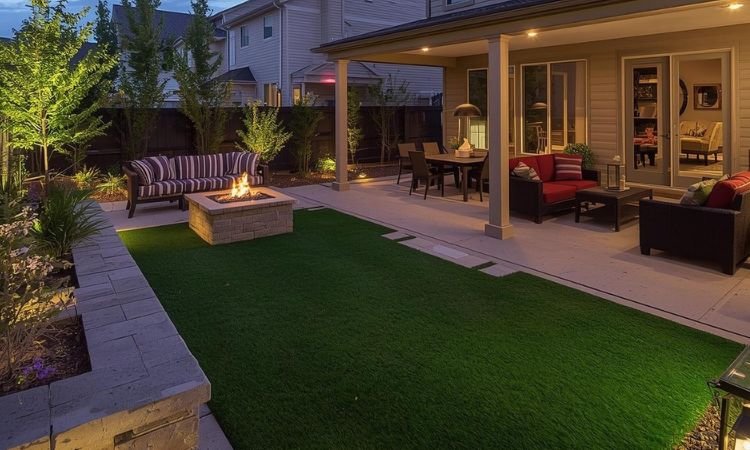
Design central turf courtyard surrounded by hardscaping creating flexible gathering space. The 400-600 square foot synthetic lawn bordered by pavers or concrete provides soft seating area without maintenance interrupting use. It’s like outdoor living rooms where grass becomes functional flooring.
Include level installation allowing furniture placement and activity flexibility. Frame with built-in seating or planter walls defining space. Costs run $3,200-$9,000 for materials and installation. This backyard turf landscaping creates purposeful entertainment zone replacing generic lawn.
Kids Play Area
Install cushioned turf in dedicated play zones providing safe surface for equipment and active play. The padded backing with extra infill cushioning reduces injury risk while eliminating mud and grass stains. It’s like playgrounds where surface matters for safety.
Choose antimicrobial infill options for hygiene and easier cleaning after spills. Include defined borders with edging preventing turf spreading. Expect costs $8-$16 per square foot for safety-rated products. This backyard turf landscaping prioritizes family functionality over pure aesthetics.
Bocce Ball Court
Create regulation or custom-sized bocce courts using short-pile turf providing consistent playing surface. The 10×60 foot standard dimensions or scaled versions offer entertainment feature requiring zero maintenance unlike crushed oyster shell or decomposed granite surfaces. It’s like game rooms where built-in entertainment adds value.
Frame court with wood or metal edging maintaining defined boundaries. Use light-colored turf enhancing ball visibility. Costs range $1,500-$3,500 for complete court installation. This backyard turf landscaping adds recreational feature with minimal ongoing care.
Pathway Network
Connect spaces with turf pathways eliminating muddy trails and worn grass patterns natural traffic creates. The 3-4 foot wide synthetic strips guide movement while maintaining green appearance impossible with constant foot traffic. It’s like hallways where circulation gets dedicated space.
Lay paths over crushed rock base ensuring drainage and stability. Border with pavers or steel edging creating clean transitions. Expect costs $800-$2,000 for typical pathway system. This backyard turf landscaping solves high-traffic zones practically.
Fire Pit Surround
Circle fire pits with turf providing comfortable seating area that handles chair placement without killing grass or creating bare spots. The synthetic surface withstands furniture weight and repositioning while staying clean. It’s like outdoor carpets where ground cover enhances gathering spaces.
Maintain 10-12 foot diameter minimum allowing adequate seating circulation. Choose heat-resistant products near fire features. Costs run $1,200-$3,000 for circular installations. This backyard turf landscaping improves fire pit functionality significantly.
Small Dog Run
Build contained dog runs using antimicrobial turf eliminating mud and simplifying waste cleanup. The 10×20 foot or larger enclosures provide clean exercise areas protecting main yard from digging and wear patterns. It’s like designated pet zones where separation benefits both uses.
Include slight slope toward drain area and hose access for cleaning. Use professional-grade pet turf with superior drainage. Expect costs $1,600-$3,600 for contained run area. This backyard turf landscaping solves pet ownership challenges practically.
Outdoor Fitness Zone
Install durable turf creating home workout area for yoga, calisthenics, or equipment use. The 10×15 foot minimum space provides cushioned surface handling exercise mats and equipment without weather concerns affecting availability. It’s like home gyms where dedicated space encourages use.
Choose high-density products withstanding equipment placement and movement. Position in shaded area reducing heat concerns during summer workouts. Costs range $1,200-$3,000 for fitness-focused installation. This backyard turf landscaping enables outdoor exercise year-round.
Transition Strips
Use narrow turf strips bridging hardscape areas creating visual flow and eliminating awkward gravel or mulch gaps. The 12-18 inch wide sections soften hard edges while requiring no maintenance. It’s like grout lines where small details create polish.
Install between pavers, along deck edges, or flanking pathways adding green without maintenance burden. Choose products matching primary turf if used elsewhere. Expect costs $400-$1,200 for accent strips. This backyard turf landscaping adds finishing touches economically.
Vegetable Garden Borders
Frame raised bed gardens with turf creating clean walking paths and reducing mud transfer into growing areas. The surrounding synthetic grass provides kneeling surface and basket placement areas during harvest. It’s like workshop floors where clean surroundings improve functionality.
Install adequate width—3-4 feet minimum—allowing wheelbarrow access and comfortable movement. Slope slightly away from beds preventing water pooling. Costs run $600-$1,800 for garden perimeter. This backyard turf landscaping enhances functional gardening spaces.
Partial Lawn Conversion
Replace high-maintenance lawn sections while retaining natural grass in low-traffic areas creating hybrid approach. The strategic conversion targets problem zones—shade areas, slopes, heavy traffic—leaving successful grass untouched. It’s like selective upgrades where spending targets issues.
Blend transitions using landscaping, borders, or level changes preventing obvious synthetic-natural boundaries. Start with 30-40% conversion testing satisfaction before expanding. Costs vary with selected areas but typically $4,000-$12,000 for partial conversion. This backyard turf landscaping balances change with budget reality.
Designing Backyard Turf Spaces
Integrate with Existing Hardscape: Combine turf with patios, decks, and pathways creating distinct zones rather than replacing entire lawn with uniform surface. It’s like interior design where varied materials create interest. The mixed approach prevents monotonous appearance while defining purposes.
Plan Drainage Comprehensively: Direct water away from structures and toward appropriate drainage areas preventing pooling affecting turf and surrounding spaces. It’s like site engineering where water management determines success. The drainage planning prevents most installation failures.
Consider Sun Exposure: Match turf selection to sun levels—lighter colors for full sun reducing heat, standard greens for partial shade, premium drainage for shaded areas accumulating moisture. It’s like plant selection where conditions determine choices. The appropriate matching ensures performance.
Include Lighting for Evening Use: Add landscape lighting extending backyard usability into evening hours when turf’s consistent surface and clean appearance shine. It’s like outdoor rooms where illumination enables function. The lighting investment maximizes turf value through extended use hours.
Frequently Asked Questions About Backyard Turf Landscaping
Should You Convert Entire Backyard to Turf?
Partial conversion typically delivers better results than complete replacement. Retain natural grass in areas performing well while converting problem zones, high-traffic areas, or specialty spaces benefiting from synthetic surface. The mixed approach provides flexibility and natural elements.
Full conversion suits small yards where maintenance burden outweighs benefits or locations with severe water restrictions making natural grass impractical. Larger yards benefit from varied surfaces creating visual interest and diverse functionality.
How Does Turf Affect Property Value?
Quality installations in appropriate applications typically add value through reduced maintenance appeal and enhanced outdoor living capability. Poor quality or obviously synthetic installations may reduce value in markets preferring natural landscaping. Location and execution quality determine impact.
Premium materials and professional installation in drought-prone areas generally add value. Budget materials or DIY issues potentially reduce appeal. The investment quality matters more than turf presence alone.
Can You Install Turf Over Existing Lawn?
No—proper installation requires removing existing grass plus 3-4 inches of soil, compacting subgrade, and installing crushed rock base with proper drainage slope. Laying turf over existing lawn guarantees drainage failure, uneven surface, and premature breakdown. It’s like painting without prep where shortcuts cause failure.
Proper base preparation represents 50-60% of installation success. The underground work determines whether installation lasts 15+ years or fails within 5 years requiring complete reinstallation.
What Happens During Heavy Rain?
Quality installations with proper base preparation drain 30-50 inches per hour, faster than natural grass. Water passes through perforated backing into crushed rock base routing to appropriate drainage areas. Poor installations lacking adequate base preparation create pooling and flooding.
Ensure grading slopes away from structures and drainage routes connect to appropriate outlets. The base preparation and drainage planning prevent water accumulation problems.
How Do You Clean Backyard Turf?
Rinse monthly or after dust storms removing accumulated debris. Brush quarterly maintaining upright blade orientation and even infill distribution. Remove leaves and organic matter preventing drainage blockage and decomposition odors. Pet areas need weekly rinsing and occasional antimicrobial treatment.
Use leaf blowers for dry debris removal and stiff brooms for brushing. Avoid pressure washers potentially dislodging infill. The minimal maintenance takes 15-30 minutes monthly versus hours weekly for natural grass.
Creating Your Backyard Turf Space
Backyard turf landscaping ideas reveal that strategic placement creates more value than wholesale conversion. The thoughtful integration with hardscaping and natural elements produces functional outdoor living areas that synthetic turf alone can’t provide. The designed approach balances maintenance reduction with aesthetic quality and practical utility.
Start by identifying specific yard challenges—mud zones, dead grass, high-traffic areas—where turf solves persistent problems. Combine turf with complementary materials creating defined purposeful spaces rather than simply replacing grass with synthetic alternative. The integrated design creates backyard transformation justifying investment through enhanced usability.
What backyard challenge would turf solve for you? Share your yard frustrations below!