Sloped Garden Ideas Hillside Landscaping That Prevents Erosion

Hillside slopes exceeding 25-30 degrees lose 3-6 tons of topsoil per acre annually without stabilization.
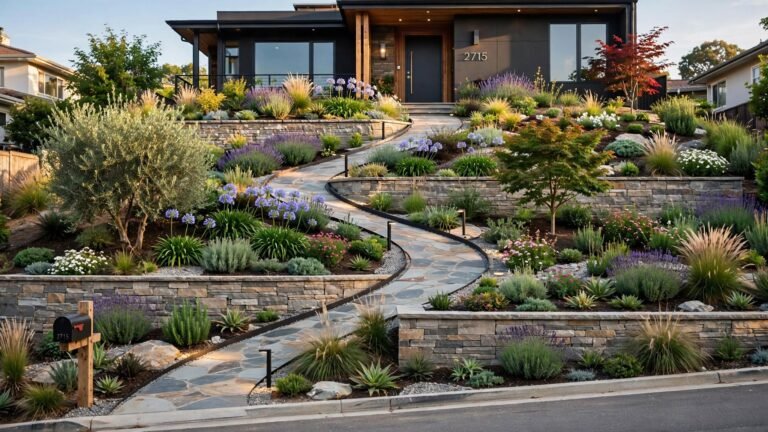
Terracing with retaining walls measuring 24-36 inches height reduces slope angles by 50-70% while creating level planting areas measuring 4-8 feet wide enabling functional garden spaces.
We’ll explore terracing systems, erosion prevention methods, plant selections, and access solutions to transform steep hillsides into productive attractive landscapes rather than leaving unusable eroding terrain requiring constant maintenance or eventual expensive restoration.
Essential Qualities of Sloped Garden Ideas Hillside Landscaping
Multi-Level Terracing Creates Functional SpacesRetaining walls measuring 24-36 inches height with 4-8 feet wide level platforms transform 30-45 degree slopes into usable planting beds, pathways, or seating areas that vertical hillsides can’t accommodate without sliding soil and constant erosion battles. It’s like staircase engineering where levels enable access and utility. The terraced approach delivers practical garden spaces from otherwise unusable steep terrain justifying $25-$60 per square foot construction costs through created functionality.
Deep-Rooted Vegetation Anchors Soil: Plants with root systems penetrating 24-48 inches deep—ornamental grasses, native shrubs, ground covers—prevent the soil slippage and erosion channels that shallow-rooted species can’t stop despite covering ground surface attractively. It’s like foundation anchors where depth determines holding power. The appropriate plant selection creates living permanent erosion control that hardscape alone can’t replicate for natural sustainable slope stabilization.
Contour-Following Drainage Prevents Gullies: French drains, swales, or terraced channels directing water horizontally along slope contours prevent the concentrated downhill flow creating erosion gullies, undermined structures, and washout damage within 3-5 years of unmanaged water exposure. It’s like watershed engineering where water control determines infrastructure survival. The drainage investment prevents catastrophic failures that gradual undermining causes suddenly after reaching critical structural compromise.
Engineered Access Enables Maintenance: Switchback paths with 8-12% grades or stairways with 30-36 inch landings every 12-15 steps provide safe access enabling maintenance activities that inaccessible steep slopes prevent forcing neglect and deterioration. It’s like infrastructure planning where accessibility determines usability. The access investment ensures hillside gardens receiving necessary care rather than abandonment from difficulty reaching areas.
10 Sloped Garden Ideas Hillside Landscaping
Create functional beautiful hillsides with these sloped garden ideas featuring proven slope solutions.
Stone Retaining Wall Terraces
Build multiple stone retaining walls measuring 24-30 inches height creating stepped planting terraces. The natural stone walls with proper drainage prevent erosion while level platforms enable diverse plantings. Space terraces 5-8 feet apart based on slope angle maintaining manageable wall heights.
Include drainage pipes behind walls preventing water pressure buildup. Choose local stone matching regional geology. Costs run $35-$75 per square foot for natural stone terracing. This sloped garden hillside landscaping creates maximum usable planting space.
Ornamental Grass Hillside
Cover slopes with ornamental grasses like miscanthus, pennisetum, or native switchgrass providing erosion control through deep roots measuring 30-40 inches. The drought-tolerant grasses require minimal maintenance while movement and texture add four-season interest. Plant in drifts creating naturalistic appearance.
Choose varieties suited to sun exposure and hardiness zone. Cut back annually in early spring. Expect costs $5-$12 per square foot for complete grass installation. This sloped garden hillside landscaping provides low-maintenance natural stabilization.
Zigzag Pathway System
Install switchback pathways with 8-10% maximum grade creating comfortable hillside access. The zigzag design with gradual ascent enables walking up slopes without excessive effort while reducing erosion from foot traffic. Build with crushed stone, timber, or stone steps depending on slope severity.
Include landings every 20-30 feet providing rest spots and directional changes. Add handrails on sections exceeding 15-degree slopes. Costs range $20-$50 per linear foot for hillside pathway construction. This sloped garden hillside landscaping makes steep terrain accessible safely.
Ground Cover Carpet
Plant dense ground covers like creeping juniper, vinca, or sedum preventing erosion through spreading growth and root systems. The low-maintenance plants measuring 6-12 inches height cover slopes completely within 2-3 growing seasons while requiring minimal care once established. Choose varieties tolerating local conditions.
Plant on 18-24 inch centers allowing fill-in coverage. Mulch between plants during establishment preventing erosion. Expect costs $3-$8 per square foot for ground cover installation. This sloped garden hillside landscaping provides natural economical erosion control.
Rock Garden Integration
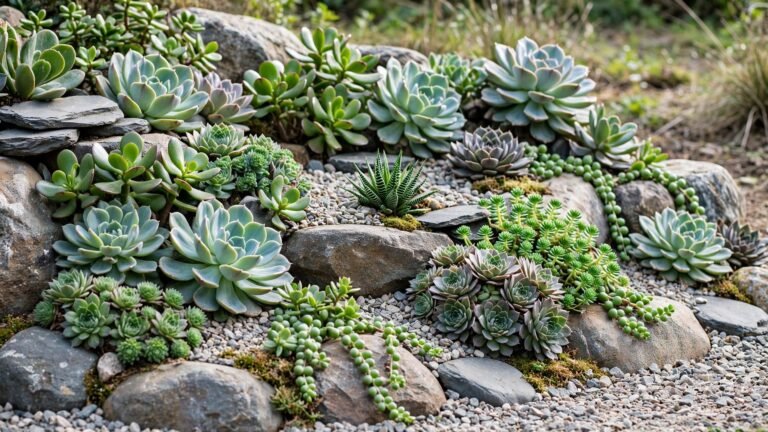
Create naturalistic rock gardens using large boulders weighing 300-1,000 pounds positioned along slope contours. The substantial stones prevent erosion while alpine plants, succulents, or native species fill spaces between rocks. Arrange boulders creating terraced effect without formal walls.
Choose stone matching local geology maintaining regional character. Plant drought-tolerant species suited to rocky conditions. Costs run $12-$30 per square foot for rock garden installation. This sloped garden hillside landscaping suits dry sunny slopes perfectly.
Timber Step Construction
Build timber steps using pressure-treated 6×6 or 8×8 beams creating rustic hillside stairs. The substantial wood treads measuring 36-48 inches wide provide comfortable climbing while natural material coordinates with landscape surroundings. Anchor steps to hillside preventing shifting.
Include gravel or crushed stone between steps improving drainage. Space risers 6-8 inches maintaining comfortable climbing height. Expect costs $25-$60 per step for timber stair construction. This sloped garden hillside landscaping provides functional rustic access.
Gabion Wall Terracing
Use gabion baskets—wire cages filled with stone—creating contemporary retaining walls. The modular system measuring 12×36 or 18×36 inches per basket allows drainage while stone-filled structure prevents erosion. Stack baskets creating varied terrace heights based on slope needs.
Choose stone color coordinating with landscape palette. Include geotextile fabric behind baskets preventing soil migration. Costs range $20-$45 per square foot for gabion installations. This sloped garden hillside landscaping delivers modern industrial aesthetic.
Native Shrub Planting
Install native shrubs in contour rows creating naturalistic hillside plantings. The region-appropriate species with deep root systems measuring 24-36 inches provide erosion control while supporting local wildlife. Space shrubs 3-5 feet apart allowing mature growth without crowding.
Choose drought-tolerant natives requiring minimal watering once established. Mulch heavily during establishment period. Expect costs $6-$15 per square foot for native shrub installation. This sloped garden hillside landscaping creates ecological sustainable solution.
Cascading Water Feature
Design multi-level water feature using natural slope creating gravity-fed cascades. The tiered waterfall with pools at different elevations transforms slope liability into garden focal point while recirculating pump system provides water movement. Build with natural stone maintaining organic appearance.
Include proper liner preventing water loss and erosion. Add aquatic plants and landscape lighting. Costs run $4,000-$12,000 for complete hillside water feature. This sloped garden hillside landscaping creates stunning architectural element.
Mixed Terrace Garden
Combine multiple terrace levels with varied uses—vegetable garden, flower beds, seating areas—creating functional hillside garden rooms. The diverse terraces with stone or timber walls provide maximum slope utility while level platforms enable activities impossible on vertical terrain. Plan terraces based on sun exposure and access.
Include pathways connecting all terraces enabling maintenance access. Design drainage preventing water accumulation between levels. Expect costs $30-$80 per square foot for complete mixed terrace system. This sloped garden hillside landscaping maximizes hillside potential comprehensively.
Implementing Successful Hillside Landscaping
Test Soil Stability: Conduct soil tests determining composition and stability before major construction preventing failures from unstable substrates. It’s like foundation engineering where soil determines structural feasibility. The testing prevents expensive construction on inadequate soil requiring removal and replacement.
Install Drainage First: Establish proper drainage systems before planting or hardscape construction preventing water undermining subsequent work. It’s like infrastructure sequencing where utilities precede finish work. The drainage priority protects all downstream investments from water damage.
Work With Contours: Follow natural slope lines rather than forcing straight geometric patterns requiring excessive excavation and fighting natural drainage. It’s like landscape architecture where cooperation beats domination. The contour-following approach reduces costs while creating natural-appearing results.
Phase Construction: Complete hillside projects in manageable sections rather than overwhelming entire slope simultaneously preventing budget overruns and allowing adjustment based on initial results. It’s like project management where incremental progress enables course correction. The phased approach delivers better results through learning and adaptation.
Frequently Asked Questions About Sloped Garden Ideas Hillside Landscaping
How Steep Before Professional Help Needed?
DIY works for slopes under 20 degrees with simple ground cover or low walls under 24 inches. Slopes exceeding 25 degrees or requiring walls over 30 inches benefit from professional design and engineering ensuring structural integrity and proper drainage preventing failures requiring complete reconstruction.
Professional expertise prevents expensive mistakes that improper engineering causes. The investment delivers lasting safe results versus DIY failures on challenging terrain.
What Plants Prevent Hillside Erosion Best?
Deep-rooted ground covers, ornamental grasses, native shrubs, and established perennials provide best erosion control. Choose species with fibrous root systems penetrating 24-48 inches minimum. Avoid shallow-rooted annuals or delicate perennials providing inadequate soil stabilization on slopes.
Root depth matters more than visual coverage for erosion prevention. The appropriate selection creates permanent stabilization versus temporary cosmetic solutions failing during heavy rain.
How Much Does Hillside Landscaping Cost?
Simple ground cover planting costs $3-$8 per square foot. Timber terracing runs $20-$40 per square foot. Stone retaining walls reach $35-$75 per square foot. Complete hillside transformations with multiple terraces, paths, and drainage cost $20,000-$80,000 for typical residential slopes.
Slope severity and desired functionality dramatically affect costs. The investment level depends on creating usable space versus simple stabilization determining appropriate budget.
Can You Garden on Steep Hillsides?
Yes—but requires terracing creating level planting areas, installing access paths, and implementing comprehensive erosion control. Slopes exceeding 35 degrees need substantial intervention making gentler slopes more practical for typical gardening activities without excessive infrastructure investment.
Slope angle determines required intervention and ultimate functionality. Steeper terrain needs proportionally greater investment creating usable gardening space.
Do Hillside Solutions Increase Property Value?
Well-executed hillside landscaping typically increases value by 10-20% through creating usable outdoor space from otherwise wasted terrain. Poor execution decreasing value through obvious erosion, failed structures, or excessive maintenance requirements. Quality and design appropriateness determine value impact.
Professional design and construction ensure additions rather than detractions. The execution quality affects market perception and actual functional improvement determining ultimate value contribution.
Lets Create Your Challenging Hillside Terrain
Sloped garden hillside landscaping transforms difficult terrain through strategic terracing and erosion control.
Deep-rooted plants with engineered drainage create functional beautiful gardens from previously unusable slopes.
What hillside challenge limits your landscape potential? Share your slope struggles below!