10 Balcony Pots Ideas That Maximize Greenery Without Overcrowding
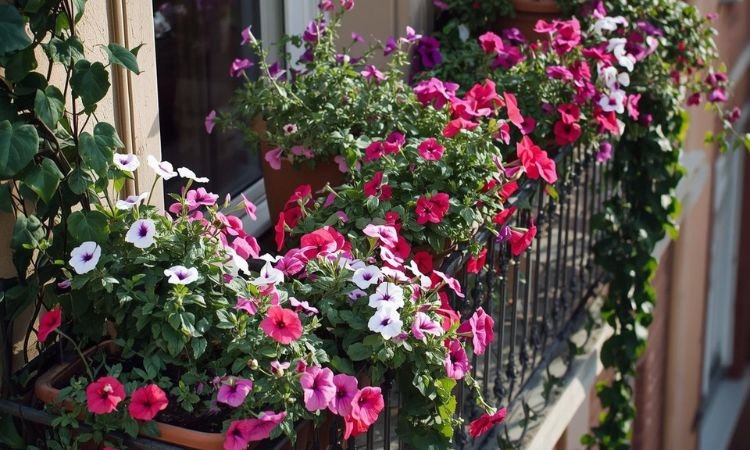
Balconies are often tight—ranging from 4’x6′ to 8’x12′—and carry weight limits of 50–100 lbs per sq ft, so every pot must be lightweight, secure, and purposeful. The right container doesn’t just hold a plant; it saves floor space, withstands wind, and complements your view, not competes with it.
Forget filling every corner. Instead, choose pots that work vertically, stack efficiently, or serve dual roles—like hiding storage or defining zones.
These 10 ideas focus on smart materials, strategic placement, and plants that thrive in confined, exposed spaces.
Why Pot Choice Matters on Balconies
Weight is critical: Wet soil adds 8–10 lbs per gallon—lightweight pots prevent overloading.
Drainage prevents damage: Standing water stains floors and rots roots—every pot needs holes.
Wind demands stability: Tall or top-heavy arrangements can tip—secure or anchor everything.
Sun exposure dictates success: Match plants to your balcony’s light: full sun (6+ hrs), partial (3–6 hrs), or shade (<3 hrs).
10 Balcony Pots Ideas That Maximize Greenery Without Overcrowding
All options work on balconies as small as 4’x6′ and assume standard railing height (36″–42″).
1. Railing-Mounted Trough Planters
Attach narrow troughs (6″–8″ deep) directly to the balcony railing using sturdy brackets to grow herbs, lettuce, or trailing flowers like alyssum.
Choose UV-resistant composite or fiberglass models with built-in drainage to keep weight low and maintenance minimal.
2. Stackable Vertical Herb Towers
Use 3–4 tier self-watering planters that stack vertically (12″–18″ wide) to grow basil, thyme, or mint in a footprint under 1 sq ft.
Built-in reservoirs reduce watering frequency, making them ideal for busy schedules or sunny spots near a water source.
3. Hanging Geotextile Fabric Pots
Suspend lightweight geotextile pots (6″–10″ diameter) from ceiling hooks or upper railing to grow strawberries, cherry tomatoes, or succulents.
These breathable fabric containers weigh 70% less than ceramic when wet and promote healthy root growth through air pruning.
4. Wall-Mounted Pocket Planters
Install modular felt or recycled-plastic vertical gardens on a wall or privacy screen to hold shallow-rooted plants like ferns, succulents, or herbs.
Water from the top—the moisture wicks down—making this system efficient for partial-sun balconies with limited floor access.
5. Fold-Down Wall Planter Shelf
Mount a hinged shelf (24″ W x 8″ D) that folds flat against the wall when not in use, lined with small pots for daily herbs or seasonal blooms.
Gas-lift arms ensure smooth operation, and the design frees up floor space completely during entertaining or cleaning.
6. Rolling Narrow Planter Cart
Use a slim utility cart (16″ W x 12″ D) on lockable casters to hold herbs on top, flowers in the middle, and a storage bin below.
Choose rust-resistant metal or sealed wood, and keep total loaded weight under 50 lbs for safe mobility on small balconies.
7. Corner Trellis with Integrated Planter Base
Place a 4’–5′ tall freestanding trellis in a corner with a built-in planter base (12″x12″) for climbing vines like morning glory or jasmine.
Anchor the base with 20+ lbs of sand or gravel to prevent tipping in windy conditions on upper floors.
8. Self-Watering Window Box Style
Use a 24″–36″ long window box with a hidden reservoir (holds 1–2 gallons) planted with drought-tolerant geraniums or petunias.
Mount on the railing or place on the floor elevated on pot feet to allow drainage and protect balcony surfaces from water stains.
9. Tiered Metal Plant Stand
Choose a 3-tier powder-coated steel stand (24″ W x 18″ D) with open shelves to hold a dwarf olive on bottom, herbs in the middle, and trailing plants on top.
Anchor with a sand-filled base if windy, and keep total height under 4′ to preserve views.
10. Monochromatic Pot Grouping
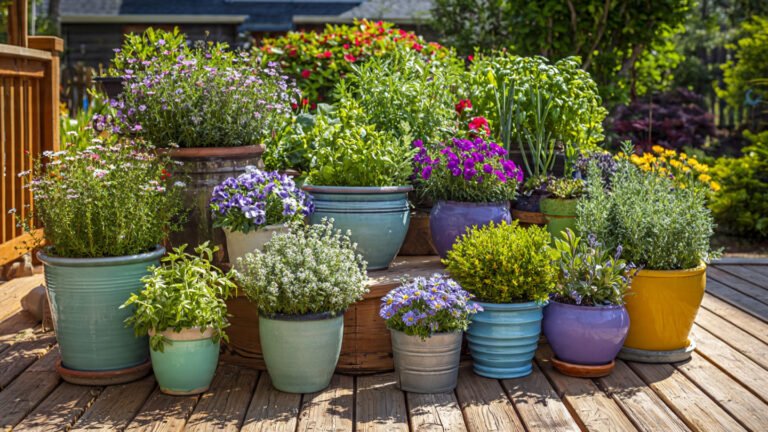
Use 3–5 matching pots (same material, color, shape) in varying sizes grouped on the floor or table for visual calm.
Choose lightweight fiberglass, resin, or fiberstone in matte black, terracotta, or white—never heavy ceramic on upper floors—to maintain style without risk.
Common Mistakes and Fixes
- Using saucers that trap water
Fix: Skip saucers. Use pot feet or risers to elevate containers—lets water drain freely. - Overplanting small containers
Fix: One plant per 6″ pot. Crowding leads to root competition and disease. - Ignoring weight when wet
Fix: Calculate: soil = 8–10 lbs/gal + pot + plant. Stay under 75% of your balcony’s load limit. - Placing shade plants in full sun
Fix: Match plants to light:
- Full sun (6+ hrs): Lavender, rosemary, geraniums
- Partial sun (3–6 hrs): Mint, parsley, begonias
- Shade (<3 hrs): Ferns, hostas, calatheas
- Skipping anchoring in wind
Fix: Secure tall planters with bungee cords to railing, or use weighted bases. High floors = higher wind.
Grow Smart, Not Just Tall
The best balcony pots solve problems: they save space, handle wind, drain well, and stay within weight limits. Start with one railing planter and two hanging pots—you’ll get greenery without clutter.
Which of these 10 ideas fits your balcony’s size, sun, and view? Have you tried vertical planters or rolling carts?
Share your favorite pot hack in the comments—we’d love to see how you’ve brought life to your outdoor perch!