Backyard Patio Designs That Create Outdoor Rooms You’ll Actually Use
Here’s the thing about backyard patios—most people build them thinking they’ll use them constantly, then reality hits and that expensive slab sits empty because it’s too hot, too exposed, or just not comfortable enough to choose over air-conditioned indoors.
The patio fails when it’s basically just concrete with a couple chairs nobody wants to sit in or when you blow the budget on fancy materials but forget shade, privacy, or comfortable furniture.
Here’s what we’re covering:
- Material options for different budgets and styles
- Layout strategies maximizing usable space
- Shade and comfort solutions
- Multi-zone patio designs
- Integration with landscaping
- Feature additions creating ambiance
What Makes Backyard Patios Actually Get Used
Shade Coverage Makes or Breaks Usability: Including pergolas, umbrellas, or overhead structures providing relief from direct sun transforms patios from unusable midday ovens into comfortable spaces you’ll actually occupy during prime outdoor hours. It’s like the difference between parking spots and covered parking. The shade element determines whether patios become favorite hangouts or expensive decoration.
Defined Zones Create Purpose: Designating distinct areas for dining, lounging, or cooking gives patios clear functions versus undefined slabs where nothing feels quite right—the zoned approach makes spaces feel designed for living. It’s like having rooms instead of one big empty area. The purposeful layout encourages regular use.
Comfortable Furniture Matters More Than Materials: Spending thousands on travertine but using cheap uncomfortable chairs creates beautiful patios nobody enjoys while mid-range pavers with quality seating gets used constantly—the sitting experience trumps underfoot aesthetics. It’s like hotels with gorgeous lobbies but terrible beds. The comfort investment pays bigger dividends than surface materials.
Privacy and Enclosure Invite Relaxation: Adding screening, plantings, or partial walls creating some separation from neighbors or street views makes patios feel like outdoor retreats rather than stages where you’re on display—the privacy factor determines whether you’ll relax there in pajamas or avoid it entirely. It’s like having curtains versus floor-to-ceiling windows. The seclusion element enables genuine unwinding.
11 Backyard Patio Designs
Transform your outdoor space with these backyard patio designs creating functional comfortable areas you’ll use year-round.
Multi-Level Tiered Deck Patio
Build patios at different elevations creating distinct zones through level changes. The tiered design adds visual interest while defining separate areas for dining, lounging, or fire pit gathering without walls or dividers. It’s like split-level houses but outside.
Use 6-12 inch height differences between levels. Connect with wide steps doubling as seating. Multi-level construction adds $5-$15 per square foot. These backyard patio designs create natural separation through elevation.
Covered Pergola Dining Area
Center your patio around a substantial pergola providing overhead structure for dining space. The slatted roof offers partial shade while supporting climbing plants, string lights, or retractable canopies adding coverage and ambiance. It’s like an outdoor dining room with a ceiling.
Size pergola proportionally—typically 12×12 or 12×16 for dining tables. Add ceiling fans for air circulation. Pergola kits run $1,200-$4,000 installed. These backyard patio designs provide essential shade and structure.
Circular Paver Pattern
Design rounded or curved patio shapes using cut pavers creating organic flowing layouts. The curved design softens yards while the radial pattern adds visual interest underfoot contrasting with angular home architecture. It’s like taking corners off rectangles.
Hire professionals for curved cuts or use flexible paver systems. Curved designs add 20-30% to material costs through cutting waste. These backyard patio designs bring organic shapes to hardscaping.
Sunken Conversation Pit
Lower patio area 12-18 inches below grade creating intimate sunken lounge space. The recessed design provides natural wind protection while built-in bench seating around perimeter maximizes seating without furniture. It’s like conversation pits from the 70s but updated.
Requires proper drainage preventing water pooling. Add fire pit in center for focal point. Sunken patios cost $25-$50 per square foot. These backyard patio designs create cozy gathering spots.
Extended Kitchen Outdoor Cooking Zone
Build comprehensive outdoor kitchen area with built-in grill, counter space, storage, and prep surfaces. The cooking-focused patio becomes entertainment hub where meal prep happens outside keeping heat and smells outdoors. It’s like moving your kitchen outside.
Include weather-resistant cabinets and countertops. Plan electrical and gas lines during construction. Outdoor kitchens run $5,000-$25,000 depending on features. These backyard patio designs expand functional living space dramatically.
Flagstone Natural Irregular Layout
Use flagstone pieces in irregular patterns creating organic rustic patios with natural character. The varied stone shapes and colors add texture while wide joints filled with ground cover plants soften hardscape appearance. It’s like puzzle pieces that grew from the ground.
Leave 1-2 inch gaps for planting creeping thyme or moss. Flagstone costs $15-$30 per square foot installed. These backyard patio designs bring natural materials front and center.
Covered Pavilion Full-Roof Structure
Install solid-roof pavilion creating fully covered outdoor room protected from sun and rain. The permanent structure with ceiling and partial walls extends usable season while providing furniture protection and genuine outdoor living space. It’s like adding a room without walls.
Include electrical for lighting and fans. Add screens for bug protection. Pavilions cost $15,000-$40,000 depending on size and finishes. These backyard patio designs create true outdoor rooms.
Stamped Concrete Custom Pattern
Pour and stamp concrete in patterns mimicking stone, brick, or tile creating custom looks at lower cost than individual pavers. The stamped surface offers design flexibility while the monolithic pour prevents weed growth between pavers. It’s like getting high-end looks from concrete.
Choose patterns and colors during planning phase. Seal every 2-3 years maintaining appearance. Stamped concrete runs $8-$18 per square foot. These backyard patio designs provide budget-friendly custom surfaces.
Fire Pit Centered Gathering
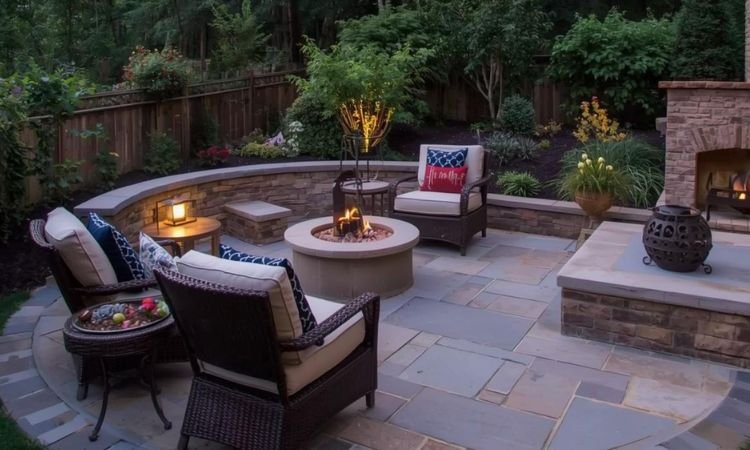
Design patio layout radiating around central fire pit creating natural gathering focus. The fire element provides warmth extending season while the circular arrangement encourages conversation and relaxation. It’s like campfires in your backyard.
Use non-combustible materials near fire—stone or concrete. Include seating 3-4 feet from fire edge. Fire pit patios cost standard patio rates plus $500-$3,000 for fire feature. These backyard patio designs create cozy focal points.
Mixed Material Combination
Combine different hardscape materials—pavers bordered by brick, concrete sections with stone accents, gravel panels between pavers—creating visual interest through contrast and texture. The varied materials define zones while adding design complexity. It’s like area rugs defining spaces.
Use materials with similar durability preventing uneven wear. Plan transitions carefully avoiding trip hazards. Material mixing adds 15-25% to costs. These backyard patio designs layer textures creatively.
L-Shaped Wraparound Design
Extend patio in L-shape wrapping around house corner creating multiple outdoor zones. The wraparound layout provides separate areas for different activities while maximizing usable square footage along house perimeter. It’s like having multiple outdoor rooms.
Connect sections with consistent materials maintaining flow. Include different furniture groupings in each section. These backyard patio designs multiply functional outdoor areas.
Planning Your Patio Project
Start With Usage Goals: Decide specifically how you’ll use the patio—entertaining groups, family dining, morning coffee, evening relaxation—then size and equip accordingly rather than building generic space hoping it works. The purpose-driven planning creates patios matching your lifestyle.
Account for Sun Patterns: Track sun movement across your yard throughout the day identifying where shade structures need placement—afternoon western sun requires different coverage than morning eastern exposure. The solar planning makes patios comfortable during hours you’ll actually use them.
Plan Drainage From Day One: Ensure patios slope slightly away from house (1/4 inch per foot minimum) and include drainage solutions preventing water pooling or foundation issues—proper water management prevents expensive problems later. The drainage forethought protects your investment.
Budget for Furniture and Features: Allocate at least 30-40% of total budget for furniture, shade structures, and finishing touches rather than spending everything on patio surface—the accessories make spaces actually usable. The balanced budgeting creates complete outdoor rooms.
Real Questions About Patio Designs
What’s the Most Affordable Patio Material?
Basic concrete slabs cost least at $6-$12 per square foot, followed by gravel or decomposed granite at $3-$6 per square foot for DIY installations. Pavers, flagstone, and stamped concrete cost more but offer better aesthetics.
Consider long-term maintenance—cheap materials needing frequent replacement or repair may cost more over time than durable options.
How Big Should Patios Be?
Minimum 12×12 feet accommodates small dining table and chairs, while 16×20 feet handles dining plus lounging areas comfortably. Go larger if space and budget allow—you rarely regret generous patio dimensions.
Measure your intended furniture with clearances before finalizing size ensuring everything fits without crowding.
Do You Need Permits for Patios?
Requirements vary by location—many areas don’t require permits for simple ground-level patios under 200 square feet, while covered structures, electrical work, or elevated platforms typically need permits. Always check local regulations.
Permit processes add 2-4 weeks to timelines. Factor this into your construction schedule.
What’s Better: Pavers or Concrete?
Pavers offer design flexibility, easier repairs, and better drainage but cost more ($12-$25 per square foot). Concrete costs less ($6-$18 per square foot) and installs faster but cracks are harder to fix and design options are more limited.
Consider your budget, desired aesthetic, and DIY skill level when choosing between options.
How Do You Keep Patios Cool?
Shade structures are most effective—pergolas, umbrellas, or pavilions blocking direct sun. Light-colored materials reflect heat better than dark surfaces. Ceiling fans create air movement. Misting systems provide additional cooling in dry climates.
Trees planted strategically provide natural shade but take years reaching useful size.
Creating Your Ideal Outdoor Living Space
Backyard patio designs work when they’re planned for how you’ll actually live outside not just how they look in photos.
The effective approach considers shade needs, includes comfortable furniture, provides some privacy or enclosure, and creates distinct zones for different activities making the space genuinely functional.
What’s holding you back from building the patio you want? Drop your questions in the comments!