Backyard Shed Office Ideas That Work Without Major Renovation
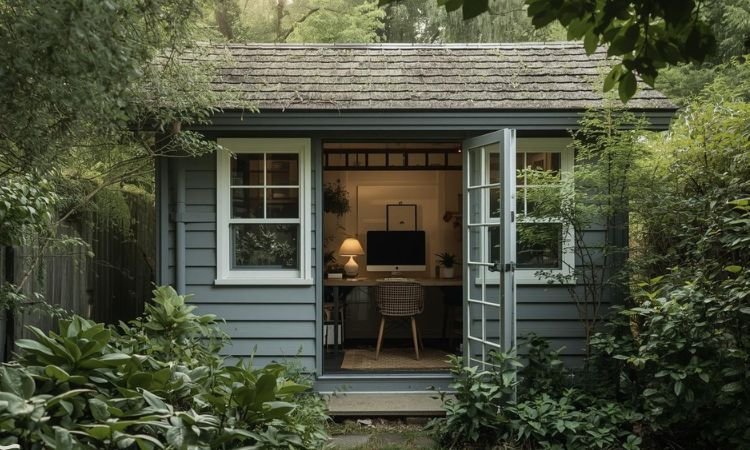
Converting a backyard shed into a functional office doesn’t require a contractor or a six-figure budget.
Most standard sheds—typically 8’x10′ to 12’x16′—already offer enough space for a desk, chair, and storage. With smart layout choices, proper insulation, and efficient lighting, you can create a quiet, productive workspace under 300 sq ft.
These 11 ideas focus on real-world constraints: limited power access, uneven floors, summer heat, and winter chill—using practical, scalable solutions that work in existing structures.
Why a Shed Office Makes Sense
Separation from home noise: A detached space reduces household distractions—ideal for calls, deep work, or creative tasks.
No interior renovation needed: You’re not tearing down walls or rerouting plumbing.
Scalable investment: Start with basic weatherproofing and add comforts over time.
Standard shed dimensions work: Even an 8’x10′ (80 sq ft) shed fits a 60″-wide desk, chair, and two small shelves with 36″ of walking space.
11 Backyard Shed Office Ideas That Work Without Major Renovation
All ideas assume a typical wood-frame shed with a single door, no plumbing, and minimal electrical.
1. Desk Against the Long Wall
Place your desk along the longest wall (usually 10′ or 12′) to maximize legroom and natural light. Leave at least 36″ of clearance behind the chair for movement. This layout fits even in an 8’x10′ shed.
Use a wall-mounted desk (24″–30″ deep) to save floor space. Keep cords managed with adhesive clips along the baseboard.
2. Insulated Wall Panels
Line interior walls with 1″-thick rigid foam board (R-5 rating) before adding drywall or plywood. This cuts heat loss in winter and slows heat gain in summer. Standard panels are 4’x8’—two cover one 8′ wall.
Seal seams with foil tape. Total cost for a 10’x12′ shed: under $200. No framing changes needed.
3. Window-Mounted AC Unit
Install a 5,000–6,000 BTU window AC unit in an existing opening or replace a fixed panel with a sliding window. Enough to cool 100–150 sq ft. Run on a standard 15-amp circuit.
Ensure the shed has at least one operable window sized for AC units (typically 23″ wide x 15″ tall). Use a support bracket to prevent sagging.
4. Elevated Floor Platform
Build a simple 2″x4″ sleeper subfloor over the existing slab or dirt floor. Add plywood on top to create a level, insulated surface. Raise the floor just 2–3 inches to allow airflow underneath and reduce dampness.
This prevents cold transfer from concrete and gives space to run Ethernet or power cords underneath.
5. Solar-Powered Lighting Kit
Use a 100W solar panel + battery kit (available pre-wired) to power LED task lights and a ceiling fixture—no electrician needed. A single 20W LED panel provides 2,000+ lumens, enough for reading and screen work.
Mount the panel on the roof facing south. Store the battery indoors if temperatures drop below freezing.
6. Pegboard Wall for Tools & Office Supplies
Mount a 4’x8′ pegboard on one wall to hold headphones, notebooks, chargers, and small tools. Keeps surfaces clear and items visible. Standard pegboard costs under $20.
Paint it matte white or black to match your setup. Use labeled bins to group similar items—keeps the system usable long-term.
7. Sliding Barn Door for Storage
Install a 36″-wide sliding barn door over a shallow closet or shelving unit to hide printers, files, or supplies. Saves the 24″ of swing space a regular door needs.
Use heavy-duty track hardware rated for 200+ lbs. The door slides along the wall—ideal in tight sheds where every inch counts.
8. Under-Desk Rolling Cart
Add a narrow rolling cart (16″ W x 12″ D) under your desk for keyboard, mouse, or reference books. Lock casters when parked. Fits in the leftover space beneath most desks.
Choose metal or laminate—avoids warping in humidity. Two drawers provide hidden storage without taking up floor area.
9. Exterior Outlet with Weatherproof Cover
Run an outdoor-rated extension cord from your house to a GFCI-protected outlet box mounted on the shed’s exterior. Use it for heaters, AC units, or power strips inside.
Keep the box covered with an “in-use” weatherproof lid. Never run cords through windows or doors—use a drilled conduit instead.
10. Fold-Down Wall Desk
Install a wall-mounted drop-leaf desk (48″ W x 24″ D) that folds flat when not in use. Frees up floor space for yoga, storage, or guest seating. Supports up to 50 lbs when open.
Mount brackets into wall studs (typically 16″ apart). Use gas springs for smooth operation. Perfect for part-time use or multi-purpose sheds.
11. Ventilation Louvers Above Door
Cut a 12″x12″ opening high on the wall opposite the door and install passive louver vents. Creates cross-ventilation to reduce moisture and stale air—no electricity needed.
Pair with a small interior fan to pull air through. In summer, this can lower interior temps by 5–8°F with zero energy cost.
Common Pitfalls and Fixes
No climate control
Fix: Start with insulation and a small space heater (1,500W max) or AC unit. Avoid propane heaters—they produce moisture and fumes.
Uneven floors
Fix: Use shims under desk legs or build a small platform. Don’t ignore slope—it causes chair wobble and eye strain.
Poor lighting
Fix: Combine overhead LEDs (3,000K color temp) with a task lamp. Avoid relying only on windows—glare ruins screen visibility.
Ignoring internet
Fix: Run Ethernet in buried conduit (18″ deep) or use a Wi-Fi extender. Cellular hotspots work but drain data fast.
Final Note
A backyard shed office works best when it solves a specific problem: noise, clutter, or lack of focus at home. You don’t need luxury—just a level surface, steady temperature, and reliable power. Start with insulation and lighting, then add comfort over time.
Which of these 11 ideas fits your shed’s size and your work style? Measure your space first—most solutions scale down to 80 sq ft or up to 200 sq ft with minor tweaks.