13 French Garden Design Ideas That Capture Elegant European Style
French gardens exude sophistication that casual gardens can’t match. The formal symmetry, elegant restraint, and timeless materials create spaces feeling both grand and intimate. Yet many assume this style requires chateau-sized properties or professional designers.
French garden design ideas reveal how to capture Gallic elegance at any scale through key principles about symmetry, proportion, and classic materials. The approach balances formality with livability creating gardens that feel refined without being intimidating or impractical.
We’re covering 13 French garden design ideas that bring European sophistication home. These strategies use traditional elements, proper proportions, and timeless combinations creating gardens with authentic French character regardless of property size.
Essential Elements of French Garden Style
- Symmetrical Layouts Create Formal Beauty: French gardens emphasize balanced arrangements with central axes and mirrored plantings. It’s like architectural plans where geometry dominates organic forms. The formal organization creates elegant order that casual layouts never achieve.
- Restrained Plant Palettes Maintain Sophistication: Limited color schemes—greens, whites, soft pastels—create refined elegance rather than cottage exuberance. It’s like fashion restraint where less becomes more sophisticated. The disciplined palette prevents visual chaos.
- Quality Materials Signal Permanence: Gravel, stone, boxwood, and wrought iron provide traditional French character through authentic materials. It’s like using real ingredients where quality shows. The classic materials age beautifully developing desirable patina.
- Formal Clipped Plants Provide Structure: Topiary, hedges, and shaped evergreens create architectural presence year-round. It’s like living sculpture where plants become formal elements. The maintained shapes require commitment but deliver sophisticated results.
13 French Garden Design Ideas
Create elegant European landscapes with these French garden design ideas that capture refined traditional style.
Symmetrical Parterre Layout
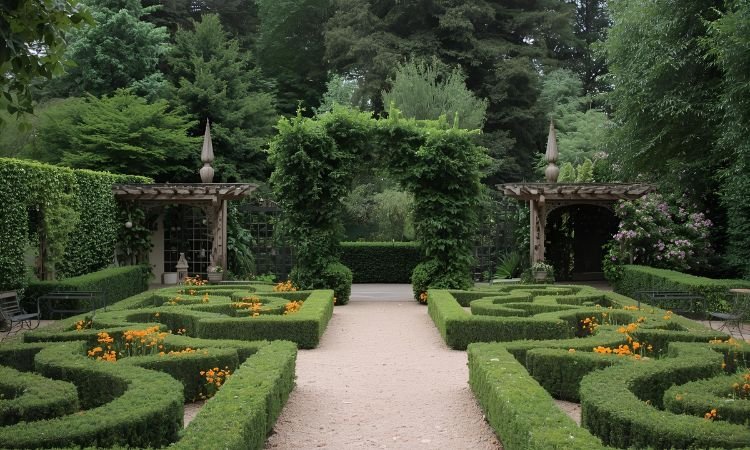
Design formal parterre beds arranged symmetrically around central axis. The geometric patterns edged with boxwood create classic French elegance. It’s like embroidery where plants form intricate patterns.
Plant parterres with seasonal annuals or gravel filling negative spaces. The formal arrangement requires precise maintenance maintaining sharp edges. This French garden design element provides signature formality defining the style.
Central Gravel Courtyard
Create gravel-surfaced entry courtyard with symmetrical plantings flanking approach. The crushed stone provides elegant surface while simplifying maintenance. It’s like welcoming carpets where gravel announces refined taste.
Edge courtyard with clipped boxwood or lavender maintaining formal boundaries. Include focal point—fountain, sculpture, or urn—at center. This French garden design approach creates immediate elegant impression.
Clipped Boxwood Spheres
Position matched pairs of boxwood spheres in containers flanking entrances or paths. The geometric shapes add formal punctuation and moveable elegance. It’s like sentries where spheres mark important passages.
Choose substantial containers in classic materials—stone, lead, or aged terracotta. Trim spheres regularly maintaining perfect round forms. This French garden design detail adds instant sophistication through simple geometry.
Axial Garden Paths
Design straight paths creating strong central axis organizing garden layout. The linear organization provides formal structure and clear circulation. It’s like spines where paths organize surrounding elements.
Surface paths with gravel, stone, or brick in traditional patterns. Flank with symmetrical plantings reinforcing axial emphasis. This French garden design principle creates backbone supporting all other elements.
Formal Water Features
Install simple fountain, reflecting pool, or wall-mounted spout as focal point. The classical water element adds elegance and soothing sound. It’s like jewelry where water features become garden centerpieces.
Choose traditional designs—tiered fountains, simple basins, or geometric pools. Position at axis terminals or courtyard centers. This French garden design element adds luxury through timeless water features.
Potager Kitchen Garden
Create formal vegetable garden combining productivity with geometric beauty. The organized beds edged with boxwood or lavender merge utility and aesthetics. It’s like farming elevated where vegetables become decorative.
Arrange beds in symmetrical patterns with gravel paths between. Include roses or fruit trees at corners adding vertical interest. This French garden design tradition celebrates practical beauty authentically.
Wrought Iron Gates and Fencing
Install decorative iron work creating elegant boundaries and entry statements. The traditional metalwork adds French character through authentic details. It’s like jewelry where iron adds refined ornamentation.
Choose classic designs avoiding overly ornate modern interpretations. Paint traditional colors—black, dark green, or aged verdigris. This French garden design detail provides authentic material expressing proper style.
Allée of Pleached Trees
Create formal tree tunnel using trained linden or hornbeam. The architectural overhead canopy adds dramatic presence and shade. It’s like living architecture where trees become structural elements.
Plant trees in straight rows training lateral branches horizontally. The technique requires years developing but creates distinctive French character. This French garden design feature makes bold statement through patient horticultural artistry.
Limestone or Gravel Surfaces
Surface paths and courtyards with pale gravel or limestone creating elegant neutral ground. The light materials brighten spaces while providing classic French character. It’s like blank canvas where pale surfaces showcase plantings.
Choose crushed limestone, pea gravel, or stone pavers in traditional patterns. The neutral surfaces suit formal aesthetics perfectly. This French garden design choice provides timeless elegant foundation.
Formal Herb Garden
Design geometric herb beds combining culinary utility with formal beauty. The fragrant plantings organized symmetrically merge function and aesthetics. It’s like useful beauty where herbs serve multiple purposes.
Edge beds with boxwood maintaining formal structure year-round. Include centerpiece sundial or armillary sphere. This French garden design element celebrates herbs as both practical and beautiful.
Espalier Fruit Trees
Train fruit trees flat against walls in formal patterns. The architectural technique saves space while adding ornamental interest. It’s like botanical tapestries where trees become two-dimensional art.
Choose traditional patterns—fan, candelabra, or horizontal cordons. Install support wires maintaining proper forms. This French garden design tradition combines productivity with sophisticated training techniques.
Stone Balustrades
Include low stone walls with classical balusters defining terraces or emphasizing axes. The architectural element adds formality and traditional detail. It’s like classical architecture where stone details elevate design.
Position balustrades at level changes or garden room transitions. Choose limestone or cast stone in traditional proportions. This French garden design feature adds architectural gravitas through permanent structures.
Lavender-Edged Beds
Border formal beds with lavender providing fragrance, color, and structure. The silver-green foliage and purple blooms suit French aesthetics perfectly. It’s like aromatic frames where lavender edges beautifully.
Choose French or English lavender depending on climate. Trim after flowering maintaining compact forms. This French garden design strategy combines practical edging with signature French character.
Creating Authentic French Gardens
- Master Symmetry and Balance: Plan gardens around central axes with mirrored plantings on either side. It’s like bilateral symmetry where balance creates formal elegance. The geometric organization distinguishes French from casual cottage styles.
- Maintain with Discipline: French gardens require regular clipping, edging, and grooming maintaining precise forms. It’s like high maintenance where formality demands attention. The consistent upkeep preserves elegant appearance defining the style.
- Choose Quality Over Quantity: Invest in fewer superior materials and plants rather than filling spaces with budget options. It’s like luxury where quality shows through restraint. The selective approach creates authentic rather than imitation elegance.
- Embrace Classical Proportions: Use traditional ratios and measurements creating harmonious relationships between elements. It’s like musical harmony where proportion creates beauty. The classical measurements produce innately pleasing results.
Frequently Asked Questions About French Garden Design
Can Small Yards Accommodate French Style?
Yes—formal French principles scale beautifully to compact spaces through appropriate proportions. Even 10×15 foot courtyards accommodate symmetrical layouts, clipped plants, and gravel surfaces. The formality actually suits small spaces through organized elegance.
Focus on central axis, matched plantings, and restrained palette rather than attempting elaborate parterres. The principles matter more than elaborate execution in limited spaces.
How Much Maintenance Do They Require?
French gardens need weekly grooming during growing season maintaining precise shapes and edges. Annual tasks include spring cleanup and fall preparation. The formal style demands more attention than casual gardens but less than elaborate cottage borders.
The regular maintenance becomes meditative practice when approached properly. Many find clipping therapeutic rather than burdensome. The consistent attention preserves beauty justifying effort.
What’s Typical Budget Range?
Basic French garden installations cost $10,000-25,000 for quarter-acre spaces including hardscaping, boxwood, and structures. Elaborate versions with stonework, water features, and mature specimens exceed $40,000-75,000. The formal style requires more initial investment than casual gardens.
Quality materials and proper installation matter critically in formal gardens where imperfections show prominently. The investment in execution ensures lasting beauty.
Do They Work in Modern Settings?
French formal gardens suit both traditional and contemporary architecture when properly adapted. Modern interpretations use simplified geometry and contemporary materials while maintaining classical proportions. The timeless principles translate across architectural styles.
Contemporary French gardens might use steel instead of iron, concrete instead of stone, while maintaining axial layouts and formal clipping. The flexible approach allows modern expression within classical framework.
What Climate Suits French Gardens?
Traditional French gardens evolved in temperate climates with defined seasons. Adaptations work in various climates through appropriate plant substitution. Replace boxwood with suitable evergreens, adjust plant palette maintaining restrained aesthetic.
The design principles—symmetry, formality, restraint—translate universally. The specific plants matter less than overall approach and execution maintaining French character.
Bringing French Elegance Home
French garden design ideas prove that European sophistication translates to American gardens through proper proportions and quality materials. The formal approach creates elegant outdoor spaces that age beautifully while maintaining refined character. The investment in French garden principles delivers timeless beauty transcending passing trends.
Start with strong central axis and symmetrical layout establishing formal bones. Choose quality materials and commit to regular maintenance. The disciplined approach creates gardens with lasting elegance worthy of the sophisticated French tradition.
What French garden element would elevate your space? Share your elegant garden aspirations below!