Sloped Garden Ideas That Solve Drainage and Erosion Challenges
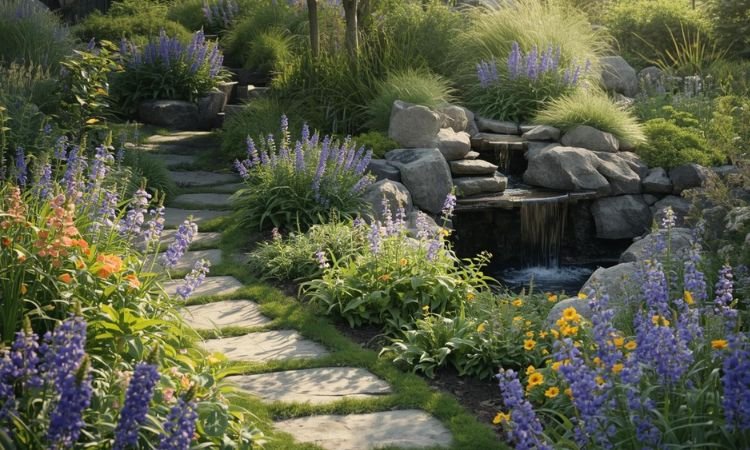
Sloped gardens with grades exceeding 15-20 degrees require erosion control measures preventing soil loss measuring 2-5 tons per acre annually.
Terracing with retaining walls measuring 18-36 inches height creates level planting areas while reducing slope angle by 40-60% enabling functional garden spaces.
In this guide, we’ll explore terracing techniques, erosion prevention strategies, plant selections, and hardscaping solutions to transform challenging slopes into functional attractive gardens rather than leaving unusable steep terrain prone to erosion and maintenance difficulties.
Essential Qualities of Sloped Garden Design
Erosion Control Prevents Soil Loss: Ground covers, retaining structures, or terracing systems prevent the 2-5 tons per acre annual soil erosion that unprotected slopes measuring 20+ degree angles experience during rain events washing away topsoil, nutrients, and newly planted vegetation. It’s like watershed management where stabilization determines land preservation. The erosion prevention measures costing $8-$25 per square foot protect long-term garden investment versus allowing degradation requiring expensive restoration after damage occurs.
Strategic Terracing Creates Usable Spaces: Level platforms measuring 3-6 feet depth created through retaining walls transform steep unusable slopes into functional planting beds, seating areas, or pathways that vertical hillsides can’t accommodate without constant sliding and maintenance struggles. It’s like staircase construction where levels enable access. The terraced approach delivers practical garden spaces from challenging terrain that leaving slopes natural wastes through limited utility despite property ownership.
Deep-Rooted Plants Stabilize Soil: Vegetation with root systems penetrating 18-36 inches deep anchors soil preventing the surface erosion and minor landslides that shallow-rooted plants can’t stop despite covering ground surface attractively. It’s like foundation anchoring where depth determines stability. The appropriate plant selection creates living erosion control through root networks that hardscape alone can’t replicate for natural sustainable slope stabilization.
Proper Drainage Prevents Water Damage: French drains, swales, or terraced drainage channels directing water along contours prevent the concentrated flow causing gullies, erosion channels, and undermined structures that unmanaged water creates within 2-5 years. It’s like civil engineering where water control determines infrastructure survival. The drainage investment prevents the damage that appears suddenly after gradual undermining reaches critical failure point requiring expensive emergency repairs.
10 Sloped Garden Ideas
Create functional attractive slopes with these sloped garden ideas featuring solutions for challenging terrain.
Terraced Retaining Walls
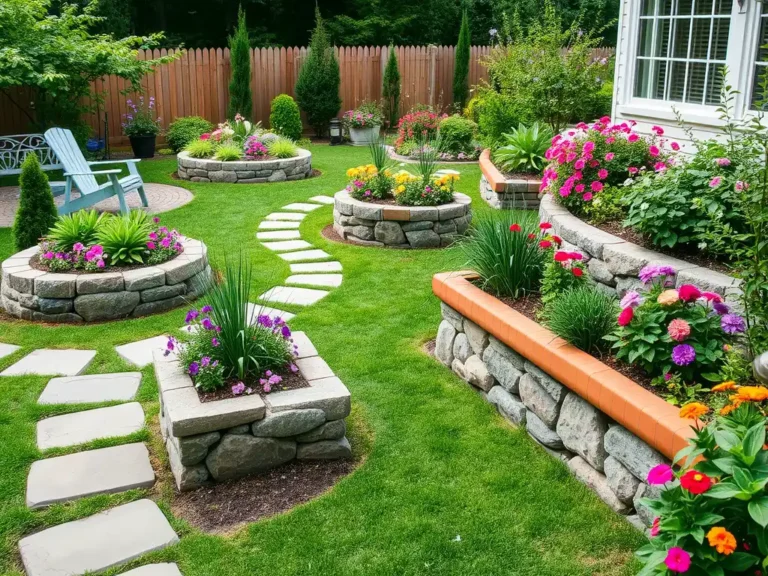
Build multiple retaining walls measuring 18-30 inches height creating stepped level planting beds. The terraced system with 3-6 foot wide platforms transforms steep slopes into functional gardens while stone, timber, or block walls prevent erosion. Include drainage behind walls preventing water pressure buildup.
Space terraces based on slope angle maintaining manageable wall heights. Plant each level with appropriate vegetation. Costs run $20-$50 per square foot for complete terraced system. This sloped garden idea creates maximum usable space from vertical terrain.
Ground Cover Planting
Cover slopes with dense ground covers like creeping juniper, creeping phlox, or vinca preventing erosion through root systems. The spreading plants with roots penetrating 12-18 inches stabilize soil while attractive foliage eliminates maintenance. Choose varieties suited to sun exposure and hardiness zone.
Plant on 12-18 inch centers allowing fill-in within 2-3 growing seasons. Mulch between plants preventing erosion during establishment. Expect costs $2-$6 per square foot for ground cover installation. This sloped garden idea provides natural low-maintenance erosion control.
Hillside Pathway System
Install zigzag pathways with steps or switchbacks creating access up slopes. The engineered paths with 6-8% maximum grade enable comfortable climbing while reducing erosion from foot traffic creating channels. Build steps with stone, timber, or concrete depending on style and budget.
Include landings every 12-15 steps providing rest spots. Add handrails on steep sections ensuring safety. Costs range $15-$40 per linear foot for hillside pathway construction. This sloped garden idea makes slopes functional and accessible.
Rock Garden Design
Create rock gardens using large boulders and alpine plants suited to slopes. The naturalistic arrangement with rocks weighing 200-1,000 pounds provides erosion control while drought-tolerant plants require minimal water. Position rocks along contours creating visual interest and soil retention.
Choose native stone matching regional geology. Plant between rocks with sedums, sempervivums, or alpine perennials. Expect costs $10-$25 per square foot for rock garden installation. This sloped garden idea suits dry sunny slopes perfectly.
Wooden Deck Platform
Build deck platforms cantilevered over slopes creating level outdoor rooms. The elevated decking measuring 8×10 to 12×16 feet provides usable space without extensive excavation or retaining walls. Pier foundation supports accommodate slope without massive grading.
Include railings meeting building codes for elevation safety. Integrate stairs connecting platform to grade levels. Costs run $35-$75 per square foot for deck construction. This sloped garden idea creates entertainment space on impossible terrain.
Ornamental Grass Hillside
Plant ornamental grasses like miscanthus, pennisetum, or switchgrass covering slopes with textural beauty. The deep roots measuring 24-36 inches prevent erosion while grasses tolerate poor soil and require minimal maintenance. Arrange in drifts creating natural appearance.
Choose native or adapted species preventing invasive spread. Cut back annually in early spring. Expect costs $4-$10 per square foot for grass installation. This sloped garden idea provides four-season interest with erosion control.
Tiered Water Feature
Install cascading water feature using natural slope creating gravity-fed fountain. The multi-level waterfall with pools at different elevations transforms slope challenge into garden focal point. Include recirculating pump and proper liner preventing water loss.
Build with natural stone creating organic appearance. Add aquatic plants softening hardscape. Costs range $3,000-$10,000 for complete water feature installation. This sloped garden idea turns liability into stunning asset.
Gabion Wall Terracing
Use gabion baskets—wire cages filled with stone—creating contemporary retaining walls. The modular system measuring 12×36 or 18×36 inches per basket builds walls of varied heights while stone-filled structure allows drainage preventing pressure buildup. Stack baskets creating desired terrace height.
Choose stone color coordinating with landscape palette. Include geotextile fabric behind baskets preventing soil migration. Expect costs $15-$35 per square foot for gabion installation. This sloped garden idea delivers modern erosion control aesthetics.
Shade Garden Slope
Transform shaded slopes into woodland gardens using hostas, ferns, and shade perennials. The moisture-loving plants thrive in typically challenging shaded slopes while dense growth prevents erosion. Layer plants by height creating naturalistic appearance.
Improve soil with compost enhancing moisture retention. Mulch heavily preventing erosion during establishment. Costs run $6-$15 per square foot for shade garden installation. This sloped garden idea solves difficult shaded slope challenges.
Vineyard-Style Rows
Plant perennial vegetables, berry bushes, or ornamental shrubs in contour rows creating vineyard aesthetic. The horizontal planting with rows following slope contours slows water runoff while plants stabilize soil through root systems. Space rows 3-5 feet apart based on plant mature size.
Include mulched paths between rows allowing access and maintenance. Choose productive or attractive plants maximizing garden utility. Expect costs $4-$12 per square foot for contour planting. This sloped garden idea combines beauty with production.
Managing Sloped Garden Successfully
Follow Natural Contours: Work with existing slope creating terraces or paths following land’s natural curves rather than forcing straight geometric patterns requiring excessive excavation. It’s like landscape architecture where cooperation beats domination. The contour-following approach reduces construction costs while creating natural-appearing results.
Improve Soil Quality: Add organic matter improving water retention and root penetration on slopes where erosion and drainage typically create poor growing conditions. It’s like foundation preparation where soil quality determines plant success. The soil investment enables lush growth that poor conditions prevent despite perfect plant selection.
Mulch Heavily During Establishment: Apply 3-4 inch mulch layer on newly planted slopes preventing erosion while plants establish root systems providing permanent stabilization. It’s like temporary protection where coverage enables development. The mulching prevents the washout failures that occur before plants mature sufficiently holding soil independently.
Choose Native Plants: Select region-appropriate species adapted to local rainfall, temperature, and soil conditions requiring less water and care than exotics struggling in non-native conditions. It’s like ecological gardening where adaptation determines success. The native selections thrive with minimal intervention once established versus constant maintenance demanding imports.
Frequently Asked Questions About Sloped Garden Ideas
How Do You Stop Erosion on Slopes?
Plant ground covers with deep root systems, install retaining walls creating terraces, apply heavy mulch, or use erosion control fabric during plant establishment. Combination approaches work best—physical barriers plus living plants creating short and long-term protection.
Erosion prevention requires multiple strategies working together. Single solutions rarely provide adequate protection on significantly sloped terrain requiring comprehensive approach.
What Plants Work Best on Slopes?
Deep-rooted ground covers, ornamental grasses, native shrubs, and established perennials prevent erosion while requiring minimal maintenance. Choose drought-tolerant species handling typically dry slope conditions. Avoid shallow-rooted annuals providing inadequate soil stabilization.
Plant selection based on root depth matters more than appearance alone. The stabilization function determines long-term slope success preventing erosion regardless of aesthetic appeal.
Can You Garden on Steep Slopes?
Yes—but requires terracing creating level planting areas, installing access paths or steps, and implementing erosion control. Slopes exceeding 30 degrees need substantial intervention through retaining walls or extensive terracing making gentle slopes more practical for typical gardening.
Slope angle determines required intervention level. Steeper terrain needs more investment creating usable space versus gentler slopes working with simpler solutions.
How Much Do Slope Solutions Cost?
Ground cover planting costs $2-$6 per square foot. Simple timber terracing runs $15-$30 per square foot. Stone retaining walls reach $30-$60 per square foot. Complete landscape transformation with multiple terraces, paths, and drainage costs $15,000-$50,000 for typical residential slopes.
Complexity and materials dramatically affect costs. The investment level depends on slope severity, desired functionality, and aesthetic expectations determining appropriate solutions.
Do You Need Professional Help?
DIY works for gentle slopes under 15 degrees with simple ground cover planting or low timber walls. Slopes exceeding 20 degrees or requiring walls over 24 inches benefit from professional design and installation ensuring structural integrity and proper drainage preventing failures.
Professional expertise prevents the expensive mistakes that improper drainage or inadequate structure causes requiring complete reconstruction after failures. The expert investment delivers lasting results.
Transform Your Challenging Slope
Sloped garden ideas reveal strategic terracing and erosion control create functional beautiful gardens from difficult terrain.
Deep-rooted plants with proper drainage transform unusable slopes into attractive productive spaces.
What slope challenge limits your garden? Share your hillside landscaping frustrations below!