Small Outdoor Balcony Ideas That Maximize Comfort Without Overcrowding
Most residential balconies measure just 4’x6′ to 8’x12′—barely enough room for two chairs and a small table.
Yet with smart layout, vertical use, and multi-functional furniture, even the tiniest balcony can become a daily retreat for morning coffee, evening wind-downs, or quiet reading. The key is editing ruthlessly: every item must earn its place through function or comfort.
Forget trying to fit a full outdoor lounge. Instead, focus on one clear purpose—dining, lounging, or greenery—and build around it.
These 11 ideas prioritize scale, airflow, and ease of use so your compact balcony feels open, not stuffed.
Why Less Works Better on Small Balconies
Every inch counts: In under 50 sq ft, bulky furniture blocks movement and sightlines.
Airflow matters: Overcrowding traps heat and humidity—especially on upper floors.
Weight limits apply: Most balconies support only 50–100 lbs per sq ft—including people, pots, and furniture.
Function beats decor: A single comfortable chair beats three mismatched stools with no purpose.
11 Small Outdoor Balcony Ideas That Maximize Comfort Without Overcrowding
All concepts work on balconies as narrow as 4 feet wide and assume standard railing height (36″–42″).
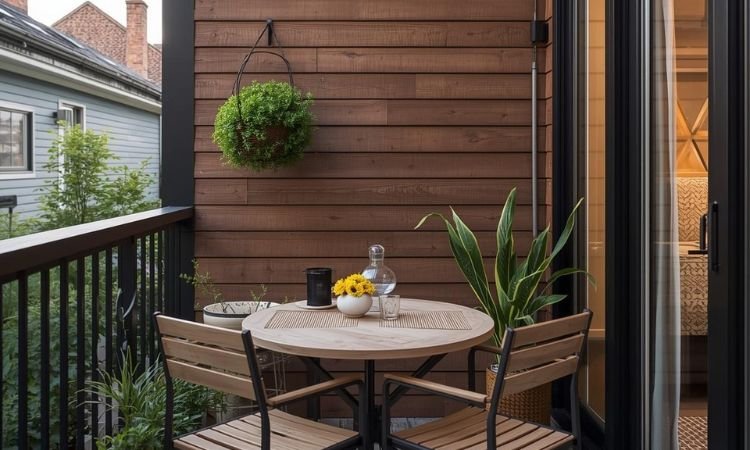
1. Bistro Set with Foldable Chairs
Choose a compact 24″x24″ metal or acacia wood table with two foldable chairs that tuck underneath when not in use.
This setup fits in under 25 sq ft and leaves room to step out comfortably. Opt for chairs with armrests for true comfort during longer sits.
2. Wall-Mounted Drop-Down Table
Install a hinged table (24″x18″) that folds flat against the wall when idle, mounted at 30″ height for seated use.
Use it for coffee, meals, or laptop work, then stow it to reclaim floor space instantly. Gas-lift arms ensure smooth operation and long-term durability.
3. Hanging Chair or Swing Seat
Suspend a lightweight hanging chair or swing seat from a ceiling beam or reinforced bracket to add seating without floor footprint.
Choose weather-resistant materials like all-weather wicker or powder-coated metal, and ensure hardware is rated for dynamic loads (at least 250 lbs).
4. Vertical Garden with Railing Planters
Attach narrow trough planters (6″–8″ deep) to the railing and mount pocket planters on a side wall to create layered greenery without using floor space.
Grow herbs, trailing vines, or compact flowers to add life while keeping pathways clear for movement and cleaning.
5. Compact Storage Bench with Cushion
Use a lidded bench (36″ L x 16″ D x 18″ H) that doubles as seating and storage for blankets, gardening tools, or extra cushions.
Choose rot-resistant wood or all-weather resin, and add a removable cushion only when in use to prevent mildew in humid climates.
6. Outdoor Rug to Define the Zone
Lay a small flat-weave polypropylene rug (4’x6′) to anchor your seating area and add comfort underfoot.
Choose fade-resistant, mold-resistant material in neutral tones like oat, gray, or olive to avoid visual clutter in tight sightlines.
7. String Lights + Task Lighting Combo
Hang warm-white LED string lights along the railing or ceiling for ambient glow, and add a small battery-powered lantern or clip-on lamp for reading.
Total draw stays under 60 watts, and everything can run on a basic extension cord or rechargeable power bank.
8. Rolling Utility Cart for Flexible Use
Place a narrow rolling cart (16″ W x 12″ D) with lockable casters to hold drinks, plants, or a small grill.
Roll it aside for cleaning or entertaining, and store it against a wall when not in use to keep the main zone open and uncluttered.
9. Privacy Screen on Lightweight Base
Use a freestanding 3-panel screen (6′ tall) on casters or a weighted base to block neighbor views or wind without permanent installation.
Choose all-weather wicker, metal, or reed panels that can be moved or stored seasonally as needed.
10. Foldable Lounger or Chaise
Opt for a slim-profile folding lounger that reclines and stores vertically against the wall.
Look for models with breathable mesh or slatted wood to reduce weight and improve airflow, making them ideal for sun-drenched afternoons in tight spaces.
11. Monochromatic Color Palette for Calm
Limit visible colors to two: e.g., black + cream, oak + gray, or navy + white. This reduces visual noise in small sightlines and makes the space feel intentional, not chaotic.
Apply the palette to furniture, textiles, and even plant pot choices for cohesion.
Common Mistakes and Fixes
- Blocking the door swing
Fix: Ensure 24″ of clear space in front of the balcony door so it can open fully without hitting furniture. - Ignoring weight limits
Fix: Calculate total load: people + furniture + wet soil. Stay under 75% of your balcony’s rated capacity. - Overloading with decor
Fix: Skip wind chimes, signs, and excessive pillows. Keep only what you touch weekly. - Using indoor-only furniture
Fix: Choose outdoor-rated or sealed wood pieces. They handle humidity better and last longer. - Skipping drainage solutions
Fix: Elevate pots on feet or use trays with gaps. Never let water pool on balcony surfaces.
Your Tiny Oasis Awaits
A great small balcony isn’t about how much you fit—it’s about how well you use what you have. One good chair, one small table, and one string of lights can be enough.
Have you transformed a tiny balcony into a personal escape? What’s your secret weapon—fold-down tables, hanging chairs, or vertical gardens? Share your setup in the comments! We’d love to see how you’ve made every square foot count.