Turf Backyard Play Areas That Keep Kids Safe And Parents Sane
Your backyard play area’s a mud pit half the year and dead grass the other half. The swing set sits in a crater from constant foot traffic, the slide ends in a dust bowl, and you’re constantly tracking dirt inside. Natural grass just can’t handle the abuse kids dish out, and you’re tired of dealing with the mess and maintenance nightmare.
Artificial turf solves the play area problem by providing consistent surfaces that handle heavy use without turning into disaster zones. It stays clean, cushions falls better than packed dirt, and looks decent year-round regardless of weather or traffic. The question isn’t whether turf works for play areas—tons of parks and schools use it—it’s figuring out how to design your specific space.
I’m covering everything from swing set installations and sports areas to creative play zones and safety considerations. You’ll see which turf types work best for different play activities, how to add cushioning for safety, what drainage considerations matter, and design ideas that keep kids entertained. These setups work in real backyards where kids actually play hard and parents need something that lasts.
What Makes Turf Play Areas Work
Cushioning Protects From Falls: Padded turf or foam underlayment reduces injury risk from inevitable tumbles off equipment. It’s like built-in safety where the ground itself provides protection. The cushioned surface gives parents serious peace of mind.
Durability Handles Heavy Use: Quality play turf withstands constant running, jumping, and roughhousing without developing bare patches or damage. It’s like commercial flooring where heavy traffic doesn’t destroy surfaces. The tough construction maintains appearance despite abuse.
Easy Maintenance Saves Time: No mowing, watering, or fertilizing means more time for actual play instead of yard work. It’s like outsourcing upkeep where the surface handles itself. The low maintenance appeals to busy families.
Cleanliness Reduces Indoor Mess: Turf doesn’t track mud inside like natural grass or create dust clouds like dirt. It’s like containment where outdoor mess stays outdoor. The cleaner surface means less housework after play sessions.
Turf Backyard Play Areas That Keep Kids Safe And Parents Sane
Create functional and safe play spaces with these turf backyard ideas featuring kid-friendly designs.
Under Swing Set Installation
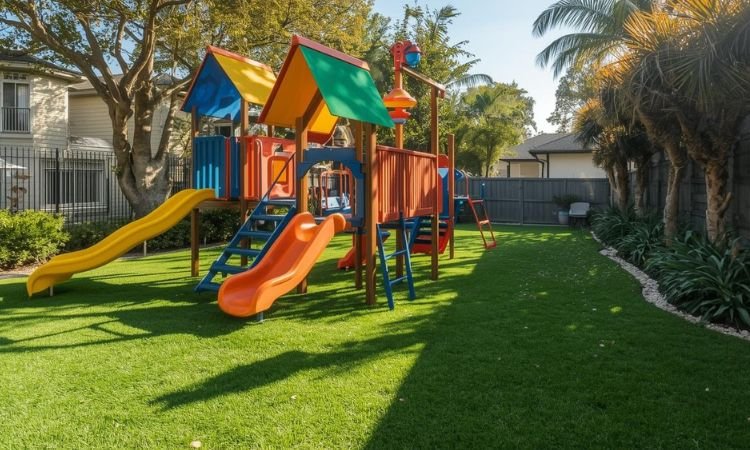
Install cushioned turf under swing sets and climbing equipment providing soft landing surfaces. The padded area reduces scrapes and bruises from falls while eliminating the wear pattern that kills grass. It’s like safety flooring where protection meets durability.
Use turf with foam backing rated for playground use—at least 1-1.5 inches of padding. Extend the turf 6 feet beyond equipment in all directions covering the fall zone. This turf backyard play area upgrade transforms the most dangerous yard spots into safer zones.
Mini Sports Court
Create a dedicated sports area with firm, short-pile turf perfect for basketball, soccer practice, or general ball games. The consistent surface provides better gameplay than patchy grass while marking boundaries clearly. It’s like home court where kids can actually practice skills.
Use dense turf with minimal pile height—around 1 inch or less—for sports applications. Add painted lines for different games if desired. This turf backyard play area gives athletic kids proper practice space year-round.
Cushioned Play Zone
Designate a general play area with maximum cushioning for younger kids who fall frequently. The extra padding creates safe spaces for running, jumping, and rough play. It’s like padded rooms where active play doesn’t mean constant injuries.
Install turf with 1.5-2 inch foam underlayment providing superior fall protection. Define the zone with edging or decorative borders. This turf backyard play area suits families with multiple young children who need safe romping space.
Slide Landing Area
Place turf at the bottom of slides creating smooth, safe landing zones that don’t develop ruts or mud puddles. The consistent surface prevents the erosion problems that plague high-traffic slide exits. It’s like runway where landings stay smooth.
Extend turf at least 6 feet from slide end covering where kids typically land and run off. Slight slope away from equipment prevents water pooling. This turf backyard play area detail solves one of the most annoying natural grass failure points.
Toddler Play Section
Create a separate toddler zone with extra-soft turf providing safe space for youngest family members. The dedicated area keeps little ones away from bigger kids’ rough play while offering age-appropriate surfaces. It’s like baby area where youngest get protected space.
Use the softest turf available with maximum padding underneath. Keep this zone smaller and closer to house for easy supervision. This turf backyard play area gives toddlers safe exploration space without constant worry.
Obstacle Course Path
Design a winding turf path creating natural obstacle course through your yard. The defined route encourages active play while protecting surrounding landscape from trampling. It’s like running track where designated paths channel energy.
Make the path 3-4 feet wide with curves, maybe some width changes for variety. Add stations along the way—balance beams, step stones, tunnels. This turf backyard play area turns your whole yard into an adventure zone.
Hopscotch and Game Patterns
Install turf with painted or inlaid game patterns like hopscotch, four square, or twister built directly into the surface. The permanent games encourage active play without setup. It’s like having playground classics always ready.
Use contrasting turf colors or special paint rated for synthetic grass creating patterns. The designs guide play without requiring equipment. This turf backyard play area adds entertainment value through clever design.
Sandbox Surround
Border your sandbox with turf containing sand spillage and providing clean transition zones. The turf prevents the messy grass-sand mixture that happens with natural lawns. It’s like containment where boundaries work.
Extend turf 2-3 feet around the sandbox perimeter. The surface stays cleaner than grass and won’t track indoors like sand. This turf backyard play area detail makes sandbox maintenance way easier.
Playhouse Base
Create a turf foundation under and around playhouses eliminating muddy entrances and creating defined play zones. The clean surface makes indoor-outdoor play more practical. It’s like flooring where houses get proper foundations.
Install turf extending at least 3 feet beyond playhouse walls in all directions. Add small turf “patios” for toy kitchens or seating areas. This turf backyard play area makes playhouse spaces actually usable year-round.
Multi-Zone Layout
Design separate turf zones for different activities—active play area, quiet zone, sports section—creating organized backyard that accommodates various play styles. The defined spaces prevent conflicts while maximizing yard functionality. It’s like room divisions where zones serve purposes.
Use different turf types or colors defining each zone. Connect zones with paths or transition areas. This turf backyard play area approach works great for multiple kids with different ages and interests.
Making Turf Play Areas Safe And Functional
Choose Proper Padding: Install adequate foam underlayment under equipment and high-traffic areas providing fall protection meeting safety standards. It’s like insurance where investment prevents injuries. The proper padding makes falls way less concerning.
Ensure Proper Drainage: Slope turf slightly and use perforated backing preventing water pooling creating slip hazards or odors. It’s like plumbing where water management determines long-term success. The correct drainage keeps surfaces safe and functional.
Regular Maintenance Matters: Brush turf monthly keeping blades upright, rinse play areas weekly removing dirt and debris, and check for damage regularly. It’s like basic care where small efforts maintain condition. The simple upkeep extends turf life significantly.
Plan For Growth: Consider how kids’ play needs change as they age—toddler areas might become sports zones later. It’s like adaptability where designs accommodate evolution. The flexible thinking prevents needing complete redos.
Frequently Asked Questions About Turf Play Areas
Is Artificial Turf Safe For Kids?
Modern artificial turf designed for play areas is generally safe when you choose quality products and maintain them properly. Lead-free turf with non-toxic infill poses minimal health risks. Play-specific turf includes antimicrobial treatments preventing bacteria growth and enhanced padding reducing injury from falls compared to hard-packed dirt or dead grass.
The main safety concerns are heat—turf gets hot in direct summer sun—and abrasion from sliding on it. Choose lighter colored turf for hot climates since it stays cooler. Add extra padding under equipment and high-fall-risk areas. Quality installation with proper drainage prevents mold and bacteria issues. Overall, playground-grade turf typically exceeds safety of worn natural grass or dirt.
How Much Does Turf For Play Areas Cost?
Professional installation of playground-grade turf costs $15-25 per square foot including cushioning underlayment and proper base preparation. A typical 500 square foot play area runs $7,500-12,500 installed. Basic turf without extra padding costs $12-18 per square foot while premium cushioned options reach $20-25 per square foot.
DIY installation saves 40-50% on labor but requires proper equipment and technique. Material costs alone run $8-15 per square foot for quality play turf with padding. Additional costs include base materials, edging, and infill. The investment typically pays back over 8-12 years through eliminated water bills and lawn care costs. Play areas justify the expense since they solve specific problems natural grass can’t handle.
Does Turf Get Too Hot For Kids To Play On?
Yes—artificial turf gets significantly hotter than natural grass in direct sunlight, sometimes reaching 140-170°F on hot days. Dark green turf heats more than lighter shades while lower-quality turf without heat-reflective technology gets hottest. This makes barefoot play uncomfortable or impossible during peak summer heat.
Solutions include choosing lighter colored turf with heat-reflective technology, installing in partially shaded areas, hosing down turf before play sessions (it cools quickly when wet), and using during morning or evening hours. Some manufacturers offer “cool turf” specifically designed to reduce heat absorption. The heat factor matters most in southern climates with intense sun—northern areas find it less problematic.
How Do You Clean Turf Play Areas?
Weekly maintenance includes rinsing with a hose removing surface dirt, debris, and any pet waste if applicable. Monthly brush the turf with a stiff-bristled broom keeping blades upright and preventing matting. Remove leaves and organic debris promptly since they can create mold if left sitting. Spot clean spills or stains immediately using mild soap and water.
For deeper cleaning, use turf-specific cleaners annually removing built-up grime. If pets use the area, rinse more frequently and use enzyme cleaners eliminating odors. Check infill levels yearly adding more if it’s compacted or depleted. Inspect for damage like tears or separation addressing issues quickly. The maintenance takes way less time than lawn care but isn’t completely zero-maintenance.
Will Turf Last With Heavy Kid Use?
Quality playground-grade turf lasts 12-18 years even with heavy daily use when properly installed and maintained. Premium options with reinforced backing and durable fibers handle roughhousing, sports, and constant traffic without significant wear. High-traffic spots under swings might show earlier wear but generally remain functional throughout the lifespan.
The key is choosing turf specifically rated for play areas rather than landscaping-only products. Play turf features tougher construction and better warranties covering heavy use. Cheap turf shows wear in 5-8 years while premium options maintain appearance much longer. Proper installation with adequate padding and drainage dramatically affects longevity—poorly installed turf fails faster regardless of quality.
Creating Your Safe Backyard Play Space
Turf backyard play areas prove that artificial surfaces genuinely solve problems natural grass can’t handle. The smart designs combine safety features with durability creating spaces kids can use hard without destroying. I’ve found that families with turf play areas use their backyards way more since they’re not constantly battling mud, bare spots, and maintenance headaches.
Start by identifying your play area needs—equipment zones, sports areas, general romping space. Choose playground-grade turf with appropriate cushioning for your specific uses. Plan for proper drainage and consider shade or cooling strategies. The upfront investment creates play spaces that actually work for years without the constant maintenance battles.
What play area problems are you trying to solve? Share your backyard challenges below!