27 English Country Garden Border Ideas for Timeless Cottage Charm
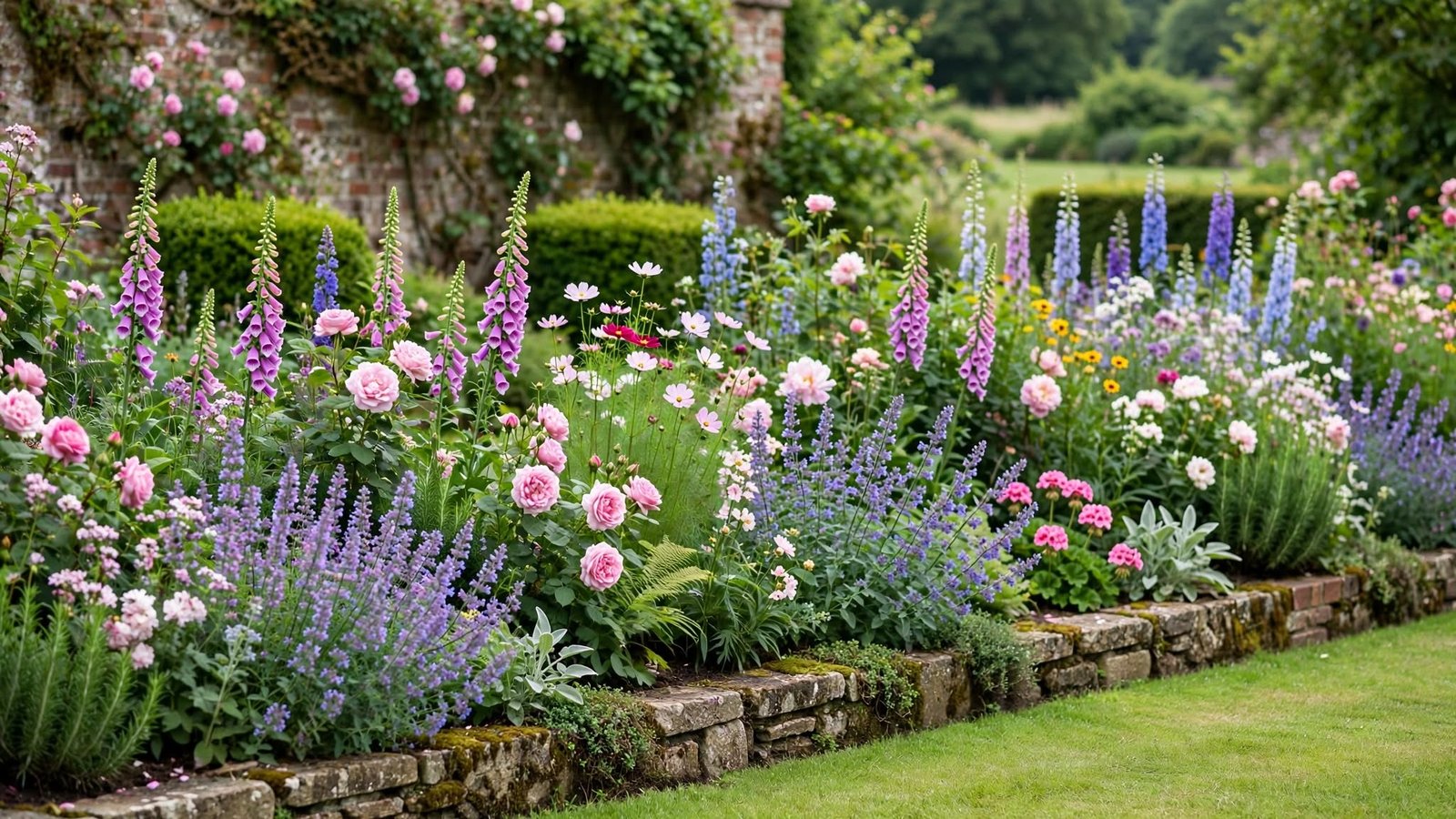
An english country garden border brings romance and structure to any outdoor space, blending loose cottage planting with considered design. Whether you favor lavender-edged paths or billowing rose arches, the right border transforms a plain yard into a welcoming retreat that feels effortlessly established.
Creating an english country garden border is about mixing heights, textures, and seasonal color so something is always in bloom. From clipped box hedging to self-seeding wildflowers, these ideas show how to layer plants and hardscaping for a look that feels both wild and intentional.
Essential Elements That Define an English Country Garden Border
A few classic ingredients make cottage borders feel authentic and lived-in.
- Layered Planting: Combine tall backdrops, mid-height fillers, and low edging for depth.
- Soft Color Palette: Use pinks, purples, creams, and blues for a romantic cottage feel.
- Natural Materials: Choose brick, gravel, or weathered stone to edge the border.
- Repeat Bloomers: Plant roses, delphiniums, and salvias for long-lasting color.
- Curving Lines: Avoid rigid straight edges in favor of gentle, sweeping curves.
- Vertical Interest: Add obelisks, arches, or climbing frames for height.
- Self-Seeders: Let foxgloves and poppies wander for an informal look.
- Year-Round Structure: Include evergreens and shrubs to anchor the border in winter.
1. Lavender Edged Path — english country garden border for Fragrant Walkways
Imagine an english country garden border where soft lavender spills over a gravel path, releasing scent with every brush of your hand. This classic combination pairs drought-tolerant herbs with cottage perennials, creating a border that feels relaxed yet deliberately composed along the walkway.
An english country garden border like this works beautifully in full sun, where lavender thrives and bees gather through summer. Repeat the planting on both sides for a balanced, welcoming entrance.
2. Climbing Rose Arch — english country garden border for Romantic Entrances
Picture an english country garden border crowned by a weathered wooden arch dripping with climbing roses. The arch frames a gateway between garden rooms, while the border beneath holds catmint and geraniums that soften the base and extend the flowering season well into autumn.
This english country garden border idea suits smaller gardens where vertical drama matters. Choose repeat-flowering roses for color from June through October.
3. Mixed Herbaceous Perennials — english country garden border for Endless Color
Discover an english country garden border packed with delphiniums, lupins, and phlox in soft pastel tones. The dense layering mimics traditional cottage planting, where every inch is filled so weeds struggle to take hold and the border looks abundant from late spring onward.
An english country garden border of this style rewards rich soil and regular deadheading. Stake tall varieties early to keep the display upright through summer storms.
4. Boxwood Knot Edging — english country garden border for Formal Structure
Consider an english country garden border where low clipped boxwood forms a neat ribbon along the front edge. This formal touch contrasts beautifully with loose roses and nepeta behind it, giving the border a sense of order without losing its soft cottage character.
An english country garden border with evergreen edging holds structure through winter when perennials die back. Trim boxwood twice yearly to keep lines crisp.
5. Foxglove Spires in Shade — english country garden border for Woodland Corners
Anchor an english country garden border in dappled shade with tall foxglove spires rising above ferns and hostas. The vertical flower spikes add height and drama to darker corners, while their self-seeding habit means the border renews itself year after year.
This english country garden border thrives under deciduous trees where soil stays moist. Let seed heads stand to feed birds through winter.
6. Cottage Wall Border — english country garden border for Stone Facades
Layer an english country garden border against a warm stone or brick wall, using climbing hydrangea and jasmine for height. At the base, plant alchemilla, hardy geraniums, and campanula to create a soft skirt that ties the house to the garden naturally.
An english country garden border along a wall benefits from reflected heat, extending the growing season. Water deeply since walls can dry soil quickly.
7. Wildflower Meadow Edge — english country garden border for Naturalistic Style
Build an english country garden border that transitions gently into a wildflower meadow, with ox-eye daisies, cornflowers, and poppies blurring the line between cultivated and wild. This naturalistic approach suits larger plots and encourages pollinators throughout the season.
An english country garden border like this needs minimal intervention. Mow paths through the meadow and cut everything back once seeds have dropped in late summer.
8. Peony and Iris Combination — english country garden border for Late Spring Drama
Bring an english country garden border to life in late spring with bearded irises followed by blowsy peonies. The two complement each other perfectly, with iris sword-like foliage giving way to peony blooms that fill the border with fragrance and color.
This english country garden border needs full sun and well-drained soil. Plant peony roots shallowly and avoid disturbing them once established.
9. Gravel Garden Border — english country garden border for Dry Sunny Spots
Transform an english country garden border into a drought-tolerant gravel garden with santolina, thyme, and ornamental grasses. The free-draining mulch suppresses weeds and sets off silver foliage, making this border ideal for hot, exposed sites where traditional cottage plants struggle.
An english country garden border on gravel needs little watering once plants settle. Choose Mediterranean herbs and perennials that relish poor soil.
10. White and Green Scheme — english country garden border for Serene Spaces
Frame an english country garden border in calming white and green, using roses, phlox, and white foxgloves against a backdrop of clipped evergreen shrubs. The restrained palette creates a serene mood and works especially well near seating areas or evening terraces.
An english country garden border in white glows at dusk. Add white nicotiana for fragrance after dark and repeat blooms through the season.
11. Delphinium Backdrop — english country garden border for Towering Height
Explore an english country garden border anchored by towering delphinium spires in blues, whites, and mauves. Position them at the back where their height supports the design, with lower growers like lady’s mantle and hardy geraniums filling the middle and front tiers.
This english country garden border needs shelter from strong winds and rich, moist soil. Stake delphiniums early and feed regularly for the tallest spikes.
12. Scented Rose Border — english country garden border for Perfumed Evenings
Shape an english country garden border around old-fashioned scented roses, interplanted with lavender and pinks. The combination releases perfume on warm evenings and provides cut flowers for the house, making this border as practical as it is beautiful.
An english country garden border with roses needs sun and air circulation to prevent disease. Feed in spring and mulch well to retain moisture.
13. Spring Bulb Layering — english country garden border for Early Color
Define an english country garden border with drifts of spring bulbs, planting tulips, daffodils, and alliums in generous sweeps. As the bulbs fade, emerging perennials hide their dying foliage, keeping the border looking fresh from March through autumn.
An english country garden border planted in layers gives months of interest. Choose bulbs that naturalize well so the display improves each year.
14. Wisteria Clad Pergola — english country garden border for Overhead Beauty
Introduce an english country garden border beneath a wisteria-clad pergola, where cascading mauve blooms hang overhead in late spring. The border below uses shade-tolerant plants like hostas and ferns, creating a cool green retreat during the hottest months.
This english country garden border benefits from the pergola’s filtered light. Prune wisteria twice yearly to control growth and encourage flowering.
15. Cottage Gate Border — english country garden border for Welcoming Entryways
Suspend an english country garden border around a wooden picket gate, using climbing nasturtiums and sweet peas to soften the structure. The border spills outward onto the path, inviting visitors in and setting a warm, informal tone from the very first step.
An english country garden border at an entrance should feel generous and slightly unruly. Allow plants to lean over the path for a romantic welcome.
16. Grasses and Perennials Mix — english country garden border for Movement
Ground an english country garden border with ornamental grasses swaying among echinacea and rudbeckia. The grasses add movement and catch low light beautifully, while the perennials provide bold color and seed heads that feed birds through winter.
An english country garden border with grasses looks stunning in autumn light. Leave stems standing until early spring for structure and wildlife value.
17. Cutting Garden Border — english country garden border for Fresh Bouquets
Position an english country garden border as a working cutting garden, filled with dahlias, zinnias, cosmos, and sweet peas. Rows of productive bloomers supply armfuls of flowers for the house while still looking decorative in the ground.
This english country garden border rewards regular harvesting, which encourages more blooms. Succession sow annuals every few weeks for continuous supply.
18. Brick Edged Border — english country garden border for Traditional Charm
Fill an english country garden border edged with weathered brick, where alpines and aubrieta tumble over the warm surface. The brick provides a timeless frame that suits both cottage and period properties, tying the planting to the architecture.
An english country garden border with brick edging defines the lawn beautifully. Plant low creepers to soften the line and add seasonal color.
19. Hydrangea and Fern Border — english country garden border for Shaded Retreats
Place an english country garden border in cool shade with hydrangeas and soft ferns as the stars. The combination of bold hydrangea blooms and feathery fronds creates a lush, layered look that thrives in conditions where sun-loving plants falter.
An english country garden border like this needs consistent moisture and shelter from drying winds. Mulch annually with leaf mould to enrich the soil.
20. Allium and Catmint Pairing — english country garden border for Purple Haze
Craft an english country garden border around the pairing of tall alliums and frothy catmint. The allium globes float above the haze of nepeta, creating a two-tone purple display that lasts for weeks and draws pollinators in droves.
This english country garden border is low-maintenance once established. Cut catmint back after the first flush to encourage a second round of blooms.
21. Narrow Side Border — english country garden border for Tight Spaces
Draw an english country garden border along a narrow side passage, using upright plants like hollyhocks and verbascum to make the most of limited width. Pale flowers and light foliage prevent the space from feeling cramped and dark.
An english country garden border in a tight spot needs careful plant selection. Avoid sprawlers and choose vertical growers that stay within bounds.
22. Rose and Lavender Hedge — english country garden border for Classic Pairing
Elevate an english country garden border with a low hedge of lavender underplanted with shrub roses. The pairing is a cottage garden staple, offering fragrance, color, and year-round structure, with roses blooming above a carpet of purple through summer.
An english country garden border like this suits sunny, free-draining sites. Prune lavender after flowering and roses in late winter for best results.
23. Perennial Wall Border — english country garden border for Long-Lasting Displays
Reveal an english country garden border composed entirely of herbaceous perennials that return stronger each year. Crocosmia, helenium, and aster carry the display from midsummer into autumn, giving the border a reliable rhythm without annual replanting.
An english country garden border of perennials improves with age. Divide crowded clumps every few years to maintain vigor and flower quality.
24. Cottage Container Border — english country garden border for Patios
Embrace an english country garden border created entirely from containers along a patio edge. Terracotta pots of geraniums, lobelia, and trailing ivy form a movable border that can be rearranged through the seasons or shifted when entertaining.
This english country garden border suits renters and small courtyards. Water daily in summer and refresh compost each spring for healthy growth.
25. Sweet Pea Obelisk Border — english country garden border for Vertical Color
Capture an english country garden border punctuated by sweet peas climbing rustic obelisks. Their ruffled blooms and intense fragrance fill the border with old-fashioned charm, while the obelisks add height and structure among lower plantings.
An english country garden border with sweet peas needs deep, rich soil and regular picking to keep flowers coming. Soak seeds before sowing for better germination.
26. Wildlife Friendly Border — english country garden border for Pollinators
Notice an english country garden border designed with pollinators in mind, using single-flowered roses, lavender, foxgloves, and sedum. The diversity of bloom shapes and seasons supports bees, butterflies, and hoverflies from early spring right through to the first frost.
An english country garden border that welcomes wildlife avoids pesticides entirely. Leave seed heads standing and provide a shallow water source nearby.
27. Autumn Foliage Finale — english country garden border for Late Season Interest
Reflect on an english country garden border that peaks in autumn with fiery foliage and late blooms. Sedum, Japanese anemones, and fiery euonymus carry the border into October, proving that a well-planned english country garden border offers beauty well beyond midsummer.
An english country garden border with strong autumn interest extends the gardening year. Combine leaf color with late flowers for a rich, layered finale.
Frequently Asked Questions
Q. What plants work best in an english country garden border?
Ans. An english country garden border thrives with roses, lavender, delphiniums, foxgloves, and hardy geraniums for classic cottage appeal.
Q. How wide should an english country garden border be?
Ans. Most english country garden border designs work best at 1.2 to 1.8 meters deep to allow proper layering.
Q. When is the best time to plant an english country garden border?
Ans. Plant your english country garden border in autumn or early spring so roots establish before extreme weather.
Conclusion
An english country garden border combines structure, fragrance, and seasonal color into a timeless outdoor feature. By layering perennials, roses, and evergreens with natural edging, you create a border that feels established and effortlessly romantic.
Whether you have a small courtyard or a sprawling lawn, these twenty-seven ideas prove that an english country garden border can be adapted to any space, budget, or climate. Start with a few key plants and let the border evolve naturally over time.