9+ Sloped Garden Beds That Solve Tricky Terrain Beautifully
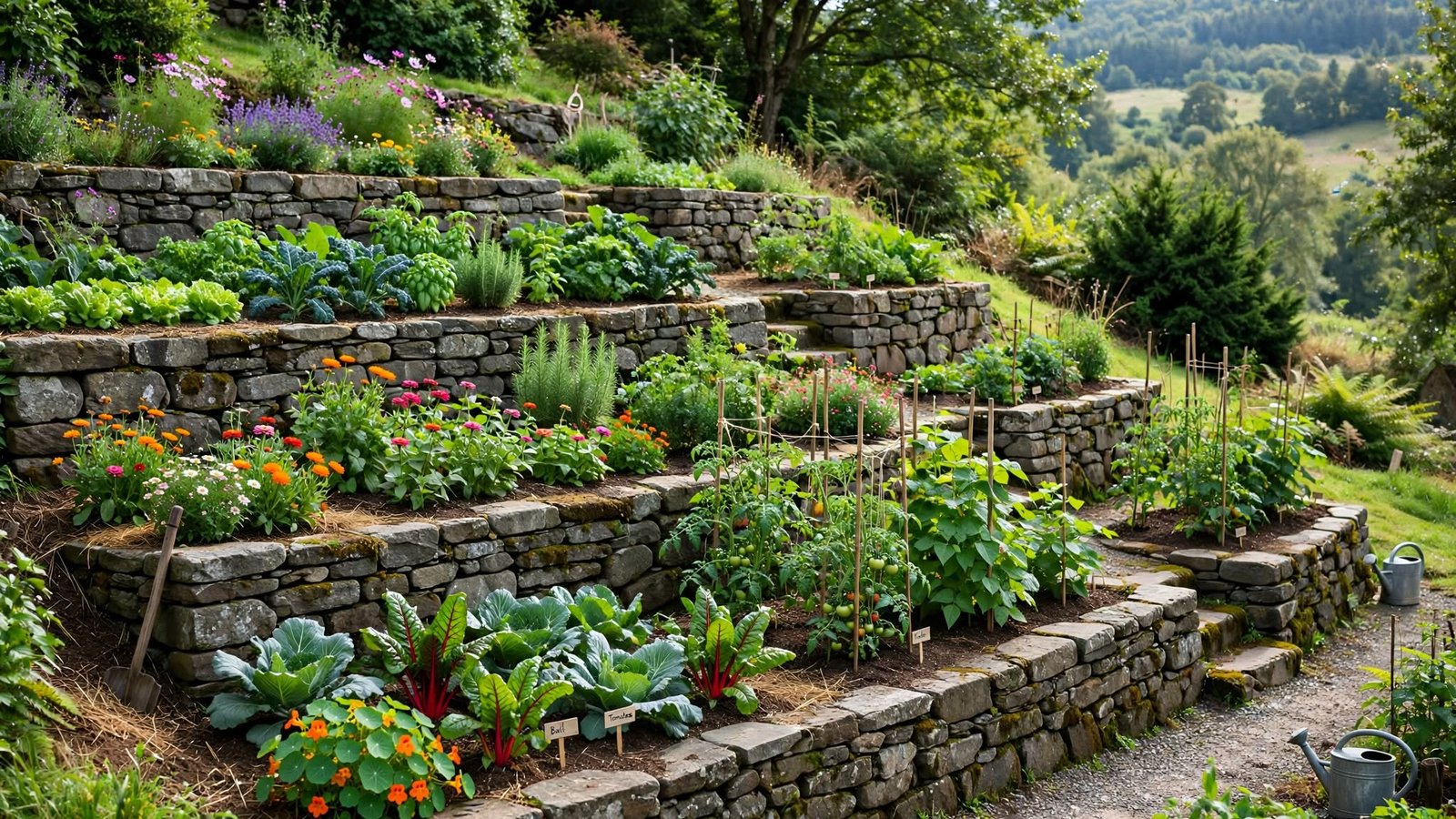
Working with a hillside does not mean sacrificing a productive garden. Sloped garden beds turn awkward inclines into layered, eye-catching planting spaces that control erosion and improve drainage. With the right structure, even a steep backyard becomes a thriving growing area.
This collection of sloped garden beds covers timber terraces, stone retaining walls, and simple hillside solutions for every budget. Whether your yard rises gently or drops sharply, these ideas show how to stabilize soil while adding depth, texture, and order to difficult ground.
Smart Ways to Plan and Build Sloped Garden Beds
A few practical principles make hillside planting far easier to manage.
- Follow the Contour: Beds built along the natural curve of a hill hold water better and reduce runoff.
- Terrace in Steps: Breaking a slope into level tiers creates flat planting zones that are simple to tend.
- Choose Rot-Resistant Timber: Cedar, redwood, or pressure-treated lumber lasts longest in damp hillside soil.
- Add Proper Drainage: Gravel backfill behind retaining walls prevents water pressure from toppling structures.
- Stabilize With Plants: Deep-rooted perennials and ground covers lock soil in place on steep faces.
- Plan Access Early: Steps, paths, or a gentle ramp make every tier reachable for planting and harvest.
- Match Sun Exposure: A slope changes light angles, so check sun patterns before choosing crops or flowers.
- Start Small: Build one terrace at a time to spread cost and effort across a season or two.
1. Terraced Timber Beds for Steep Backyards
Imagine turning a steep, unusable bank into neat rows of sloped garden beds framed with thick timber beams. Each level holds its own soil, so water flows gently downhill instead of washing everything away. The result is a tidy, productive hillside that is easy to plant and harvest.
These sloped garden beds suit vegetables, herbs, or flowers, and the wooden faces blend naturally into the landscape. Staggering the tiers also creates built-in steps for access.
2. Stone Retaining Walls That Shape Sloped Garden Beds
Picture rugged stone walls holding back rich soil on a hillside, forming sloped garden beds with lasting character. Natural rock absorbs heat during the day and releases it at night, which benefits tender plants. The rough texture also contrasts beautifully with soft foliage and flowers.
Stone-faced sloped garden beds need little maintenance once set and can last for decades. They work especially well on formal terraces and cottage-style hillsides alike.
3. Raised Wooden Boxes on a Gentle Incline
Discover how simple raised boxes can become effective sloped garden beds when stepped down a mild hill. Each box sits level, giving roots consistent moisture and giving you comfortable working height. The staggered layout adds visual rhythm to an otherwise plain yard.
Because the boxes are separate, you can rearrange or expand your sloped garden beds over time. They are ideal for beginners testing hillside growing for the first time.
4. Hillside Herb Spirals and Compact Sloped Garden Beds
Consider a spiral design when space is tight, since sloped garden beds do not always need to be long and straight. A coiled mound creates microclimates, with sunny, dry pockets at the top and cooler, damp zones near the base. Herbs thrive in these varied conditions.
Spiral sloped garden beds pack many plants into a small footprint and look sculptural through every season. They are a smart pick for courtyards and small hillside plots.
5. Anchoring Soil With Cover Crops and Ground Cover
Anchor bare hillside soil with low-growing plants that double as living mulch for sloped garden beds. Creeping thyme, sedum, and clover knit together quickly and stop rain from carving gullies. Their roots hold the surface while taller crops grow above.
These ground covers reduce weeding and watering in sloped garden beds, keeping maintenance low. They also add color and texture between rows of vegetables or flowers.
6. Layered Perennial Borders on a Slope
Layer tall, mid-height, and low perennials to create sloped garden beds that read like a natural hillside meadow. The tiered planting mirrors the incline, so every plant stays visible. Dense roots also reinforce the soil through heavy rain.
Perennial sloped garden beds return year after year with minimal replanting. Choose drought-tolerant varieties if the hill dries out quickly in summer.
7. Building a Switchback Path Between Garden Tiers
Build a gentle switchback path so every level of your sloped garden beds stays easy to reach. Zigzag routes reduce the steepness of the climb and prevent soil from washing straight down the hill. Wide steps or gravel treads work well.
Good access makes sloped garden beds safer and more enjoyable to work. It also protects the soil structure by keeping foot traffic on defined routes.
8. Bring Structure With Gabion and Boulder Edging
Bring modern or rustic character to sloped garden beds with gabion cages or stacked boulders. These heavy edges hold back soil firmly and drain freely, which prevents the rot that plagues solid walls. The look suits both contemporary and natural gardens.
Gabion and boulder sloped garden beds are durable and nearly maintenance-free. They also create warm microclimates for heat-loving plants set against the stone.
9. Transform a Front Yard Slope Into Productive Beds
Transform an overlooked front slope into attractive sloped garden beds that boost curb appeal and yield. Low retaining timbers, tidy rows, and a mulched path keep the design clean and welcoming. Edible plants mix easily with ornamentals here.
Front-yard sloped garden beds make awkward grades look intentional and cared for. They also reduce mowing on dangerous inclines and cut weekly upkeep.
10. Frame a Hillside With Drought-Tolerant Planting
Frame a sunny hill with drought-tolerant species suited to fast-draining sloped garden beds. Lavender, sedum, ornamental grasses, and yarrow thrive where water runs off quickly. Their roots bind the soil while their forms soften hard edges.
These resilient sloped garden beds need little irrigation once established, saving time and water. They also keep color and interest alive through hot, dry months.
Frequently Asked Questions
Q. What is the best material for building sloped garden beds?
Ans. Rot-resistant timber, natural stone, and concrete blocks are the most durable options for sloped garden beds.
Q. Do sloped garden beds need special drainage?
Ans. Yes, sloped garden beds benefit from gravel backfill and weep holes so water does not build up behind retaining walls.
Q. Which plants grow best in sloped garden beds?
Ans. Deep-rooted perennials, ground covers, and drought-tolerant herbs perform well in sloped garden beds.
Conclusion
Sloped garden beds turn difficult terrain into one of the most striking and productive parts of a yard. With terracing, sturdy edging, and smart drainage, any incline can become a layered growing space that controls erosion and looks intentional.
Start with one tier, choose materials that suit your climate, and plant according to the slope’s sun and moisture. These sloped garden beds prove that a hillside is an opportunity, not an obstacle.