14 Sloped Backyard Garden Ideas That Turn Hills Into Beautiful Outdoor Spaces
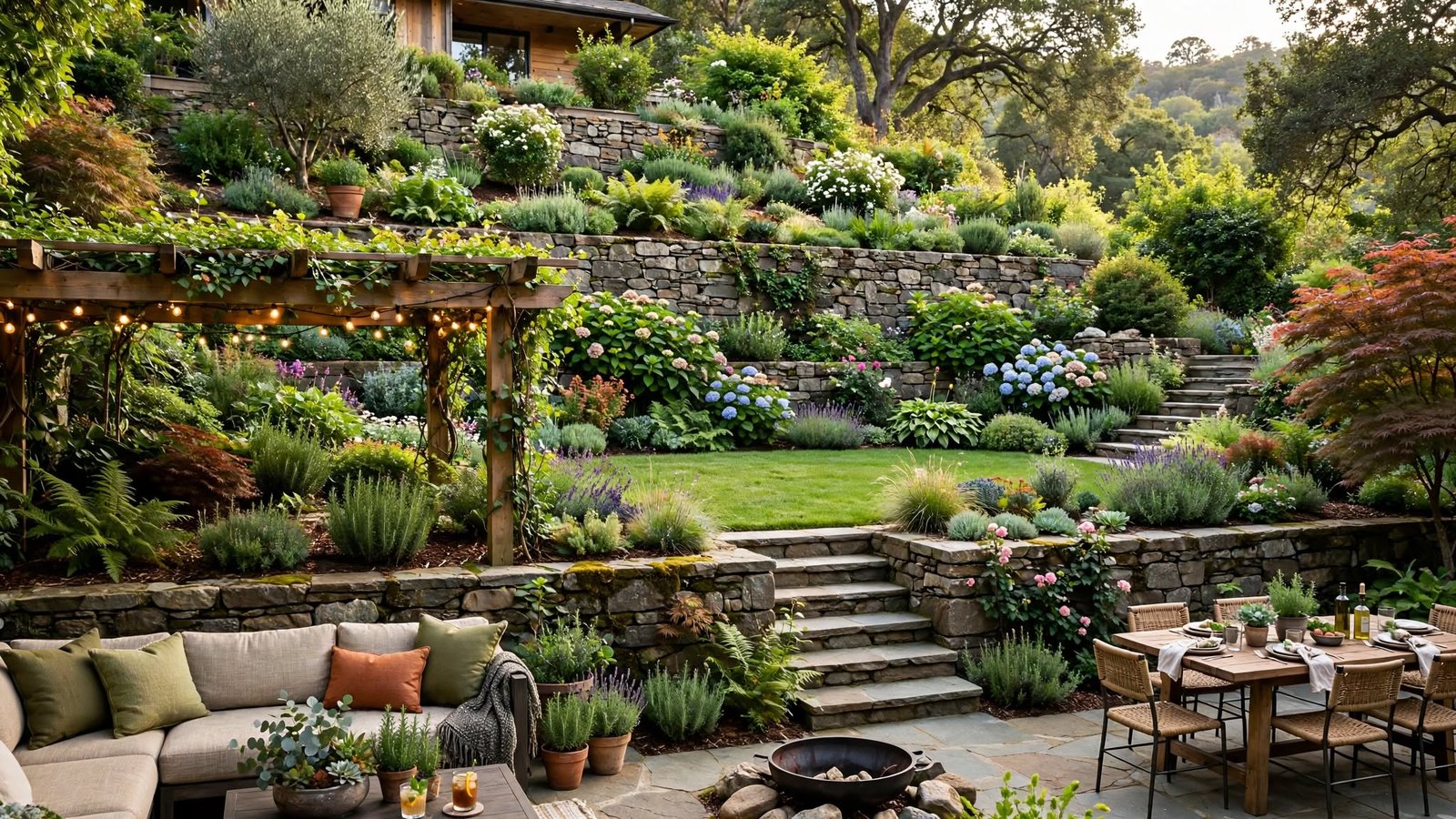
A sloped backyard garden can feel like a challenge at first glance, but with the right approach it becomes one of the most striking features of any property. Instead of fighting the grade, you can work with it to create depth, drama, and functional outdoor rooms that flat yards simply cannot match.
Whether your slope is gentle or steep, the ideas below show how a sloped backyard garden can be terraced, planted, and styled into a space that feels intentional and inviting. From retaining walls to winding paths, there is a solution here for every budget and terrain.
Smart Ways to Plan a Sloped Backyard Garden Before You Dig
A little planning upfront saves major headaches on a hillside.
- Study the Drainage: Water always runs downhill, so map where it pools before planting anything.
- Check the Grade: Measure the slope percentage to decide whether terracing or grading is the better fit.
- Choose the Right Plants: Species that love well-drained soil thrive on inclines far better than moisture-loving varieties.
- Build in Steps: Terraces break a steep hill into manageable, usable levels for seating and growing.
- Use Retaining Walls Wisely: Properly engineered walls prevent erosion and create flat planting beds.
- Add Pathways: Switchback paths make a sloped backyard garden safe and easy to navigate.
- Plan for Irrigation: Drip lines and soaker hoses work better than sprinklers on uneven ground.
- Think About Access: Leave room for wheelbarrows, tools, and future maintenance equipment.
1. Terraced Garden Beds for a Productive sloped backyard garden
Imagine stepping out to a hillside carved into neat, productive tiers where vegetables and herbs grow at eye level. Terraced beds are one of the most practical solutions for a sloped backyard garden, turning wasted incline into usable growing space while controlling erosion naturally.
Each level can hold different crops, and the retaining edges double as seating or work surfaces. This layout proves a sloped backyard garden can be just as productive as any flat plot.
2. Natural Stone Retaining Walls for a sloped backyard garden
Picture rugged stone walls holding back the earth while plants spill over the edges in soft cascades. Natural stone brings timeless texture to a sloped backyard garden and creates the structural backbone that makes terracing possible on even steep terrain.
Beyond looks, these walls manage runoff and prevent soil from washing away during heavy rain. A sloped backyard garden framed in stone gains both beauty and long-term stability.
3. Winding Pathways That Make a sloped backyard garden Walkable
Discover how a gently curving path can turn a difficult incline into an inviting journey through the garden. Switchback walkways reduce the effective steepness of a sloped backyard garden, making every corner reachable without straining your legs or risking a slip.
Stone, gravel, or stepped pavers all work well, and each material changes the mood of the space. A well-planned path is the backbone of any sloped backyard garden design.
4. Layered Plantings for Depth in a sloped backyard garden
Consider how layered planting turns a simple hill into a living tapestry of color and height. In a sloped backyard garden, placing tall shrubs at the top and low groundcovers at the base creates a natural cascade that mimics how plants grow in the wild.
This technique also hides bare soil and reduces erosion between established specimens. Layering is one of the easiest ways to add drama to a sloped backyard garden.
5. Anchor a sloped backyard garden with a Fire Pit Terrace
Anchor your hillside with a flat terrace built specifically for gathering around a fire. A fire pit platform gives a sloped backyard garden a social center, turning what could be an awkward incline into the favorite spot for evening conversations.
Surround the pit with built-in seating and low walls for safety and comfort. This addition makes a sloped backyard garden feel like a true outdoor living room.
6. Layer Groundcovers to Control Erosion in a sloped backyard garden
Layer low-growing groundcovers across bare sections to hold soil in place through every season. In a sloped backyard garden, creeping thyme, sedum, and ivy knit together into a living blanket that stops erosion while adding soft texture.
These plants need little maintenance once established and spread quickly across difficult ground. Groundcovers are the quiet heroes of any sloped backyard garden.
7. Build a Deck That Extends Over a sloped backyard garden
Build a multi-level deck that cantilevers over the hillside and instantly creates usable outdoor square footage. A deck is a smart fix for a sloped backyard garden because it bypasses the grade entirely, giving you flat entertaining space without massive excavation.
Stairs can connect the deck down to garden beds below, linking the two zones. This approach lets a sloped backyard garden serve both lounging and growing.
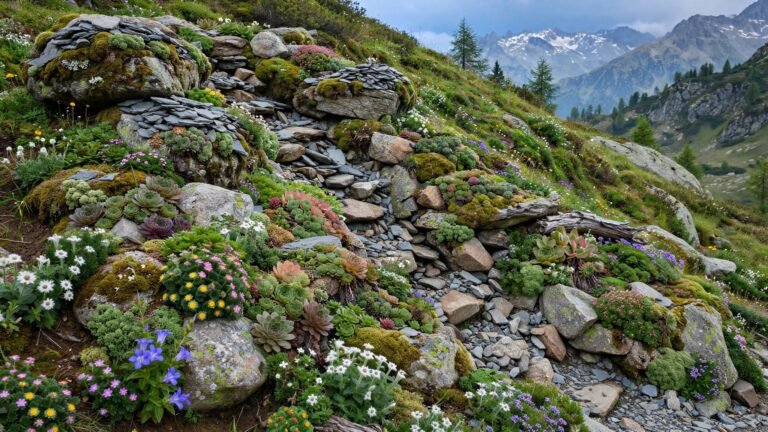
8. Bring Structure with a Rock Garden in a sloped backyard garden
Bring rugged character to the hillside by arranging boulders and alpine plants into a naturalistic rock garden. A sloped backyard garden is the perfect setting for this style, since the incline mimics the mountainous terrain these plants evolved in.
Stones stabilize the soil while creating microclimates for delicate specimens. A rock garden turns a sloped backyard garden into a sculptural focal point.
9. Transform a sloped backyard garden with a Water Feature
Transform the natural drop of the land into a cascading stream or tiered fountain that uses gravity instead of pumps alone. A water feature in a sloped backyard garden celebrates the very thing that makes the space difficult, turning elevation change into soothing sound and motion.
Ponds at the base collect the flow and attract birds and beneficial insects. Water gives a sloped backyard garden a serene, resort-like quality.
10. Frame a sloped backyard garden with Native Grasses
Frame the hillside with swaying native grasses that move with every breeze and need almost no watering. Ornamental grasses suit a sloped backyard garden because their deep roots grip the soil and their texture softens hard structural lines.
Plant them in masses for the strongest visual impact and lowest maintenance. Native grasses give a sloped backyard garden year-round interest and ecological value.
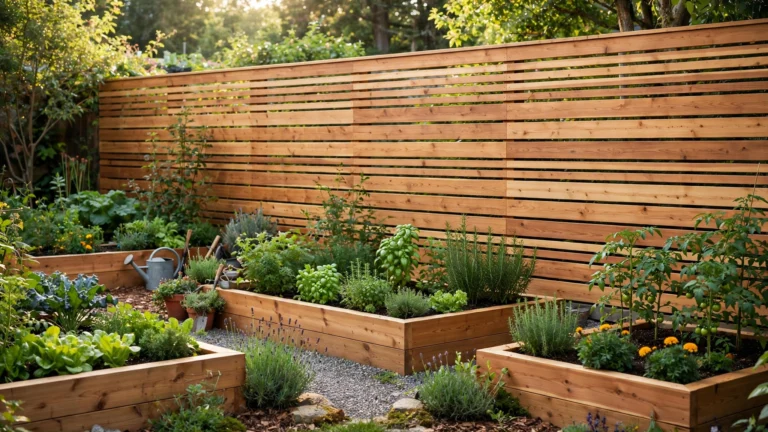
11. Explore Vegetable Terraces for a sloped backyard garden
Explore how raised vegetable terraces can turn a sunny hillside into a highly productive kitchen garden. Each level of a sloped backyard garden can be dedicated to different crops, from sprawling squash at the bottom to herbs and greens near the top.
Raised beds warm up faster in spring and drain better after rain. A sloped backyard garden designed this way can outproduce a flat plot.
12. Shape a sloped backyard garden with Curved Retaining Beds
Shape the hillside with gently curved retaining beds that flow with the natural contours of the land. Curves feel more organic than straight lines and help a sloped backyard garden blend into its surroundings instead of fighting them.
These beds also slow water runoff and give plants a stable root zone. Soft curves make a sloped backyard garden feel calm and intentional.
13. Define a sloped backyard garden with Stepped Stone Stairs
Define the climb with wide, shallow stone steps that make moving up and down the hill feel effortless. Stepped stairs are essential in a sloped backyard garden, providing safe passage between terraces, decks, and planting zones.
Use local stone or durable pavers that match the rest of the hardscape for a cohesive look. Good stairs make a sloped backyard garden genuinely usable every day.
14. Introduce Lighting to a sloped backyard garden
Introduce low-voltage path lights and uplights to highlight the structure of the hillside after dark. Lighting a sloped backyard garden well means placing fixtures along stairs, walls, and key plantings so the elevation change reads as a feature rather than a hazard.
Warm-toned bulbs create a cozy glow that extends evening enjoyment. A well-lit sloped backyard garden becomes magical at night.
Frequently Asked Questions
Q. How do I stop soil erosion in a sloped backyard garden?
Ans. Use groundcovers, retaining walls, and mulch to slow runoff and hold soil in a sloped backyard garden.
Q. What plants grow best in a sloped backyard garden?
Ans. Drought-tolerant species, native grasses, and alpine plants thrive in the well-drained soil of a sloped backyard garden.
Q. Is terracing worth it for a sloped backyard garden?
Ans. Yes, terracing creates usable flat beds and is one of the best investments for a sloped backyard garden.
Conclusion
A sloped backyard garden does not have to be a problem to solve. With terraces, retaining walls, layered plantings, and thoughtful pathways, the incline becomes the very feature that sets your yard apart from every flat lot on the street.
Start with drainage and structure, then layer in plants, lighting, and gathering spaces. Your sloped backyard garden can become the most beautiful and functional part of your home.