Stunning Red Rose Garden Ideas to Transform Your Outdoor Space
A red rose garden is the ultimate symbol of passion, romance, and timeless beauty. Whether you have a sprawling backyard or a compact urban patio, these crimson blooms can turn any outdoor area into a breathtaking sanctuary that captivates the senses.
From classic climbing varieties to modern landscape designs, cultivating a red rose garden requires thoughtful planning and creative vision. This guide explores nine distinct approaches to help you design the red rose garden of your dreams, each with its own unique character and charm.
Designing Your Perfect Red Rose Garden: Essential Considerations
Before you plant your first rose, understand the key principles that make a red rose garden truly spectacular.
- Sunlight Requirements: Red roses thrive with at least six hours of direct sunlight daily.
- Soil Preparation: Well-draining soil enriched with organic compost creates the ideal foundation.
- Spacing Strategy: Proper air circulation prevents common fungal diseases in dense plantings.
- Color Companions: Silver foliage and white flowers make red blooms pop dramatically.
- Seasonal Planning: Choose varieties that bloom continuously from spring through autumn.
- Watering Schedule: Deep watering at the base encourages strong root development.
- Pruning Techniques: Regular deadheading promotes repeat flowering throughout the season.
- Hardiness Zones: Select rose cultivars suited to your local climate conditions.
1. Classic Archway Entrance — red rose garden for Grand Arrivals
Imagine walking through a wrought iron archway draped in cascading crimson blooms, the quintessential entrance to any red rose garden. Climbing varieties like Crimson Sky weave their way upward, creating a living canopy that frames your garden path with dramatic flair.
This red rose garden design instantly elevates curb appeal and sets a romantic tone. Pair the arch with low-growing lavender or catmint at the base to soften the structure and add delightful fragrance that complements the roses.
2. Formal Parterre Layout — red rose garden for Structured Elegance
Picture symmetrical beds edged with boxwood hedges, each one filled with velvety red rose garden specimens arranged in geometric precision. This formal design borrows from French chateau traditions, creating a sense of order and refined luxury that never goes out of style.
A red rose garden with parterre styling works beautifully in larger properties. Use gravel pathways between the beds to enhance drainage and create a crisp, manicured appearance that contrasts perfectly with the soft, romantic petals of the roses.
3. Cottage Garden Charm — red rose garden for Relaxed Abundance
Discover the effortless beauty of a mixed border where your red rose garden mingles freely with delphiniums, peonies, and ornamental grasses. This informal style celebrates abundance and natural growth, with roses spilling over paths and intertwining with neighboring plants in joyful chaos.
This red rose garden approach requires less strict maintenance, making it perfect for busy gardeners. Choose shrub roses with an open growth habit and allow self-seeding flowers to fill gaps, creating a romantic, nostalgic atmosphere that feels effortlessly beautiful.
4. Modern Minimalist Beds — red rose garden for Contemporary Homes
Consider a clean, architectural approach where your red rose garden features bold drifts of a single variety planted in sweeping curves. This modern aesthetic relies on repetition and negative space, letting the intense crimson hue of the roses become the undisputed focal point of your landscape.
This red rose garden design pairs beautifully with concrete, steel, or dark stone hardscaping. Mulch with black bark or river pebbles to enhance the dramatic contrast and maintain a sleek, low-maintenance appearance that suits contemporary architecture.
5. Vertical Wall Display — red rose garden for Small Spaces
Anchor a stunning living wall using espaliered or climbing roses that turn a bare fence into a vertical red rose garden masterpiece. This technique maximizes limited square footage while creating an eye-catching backdrop for outdoor dining areas or quiet reading nooks.
Your red rose garden can thrive vertically with proper support structures and regular training. Install sturdy trellises or wire systems and gently guide new growth horizontally to encourage more blooms along the entire length of the plant.
6. Romantic Pergola Retreat — red rose garden for Shaded Relaxation
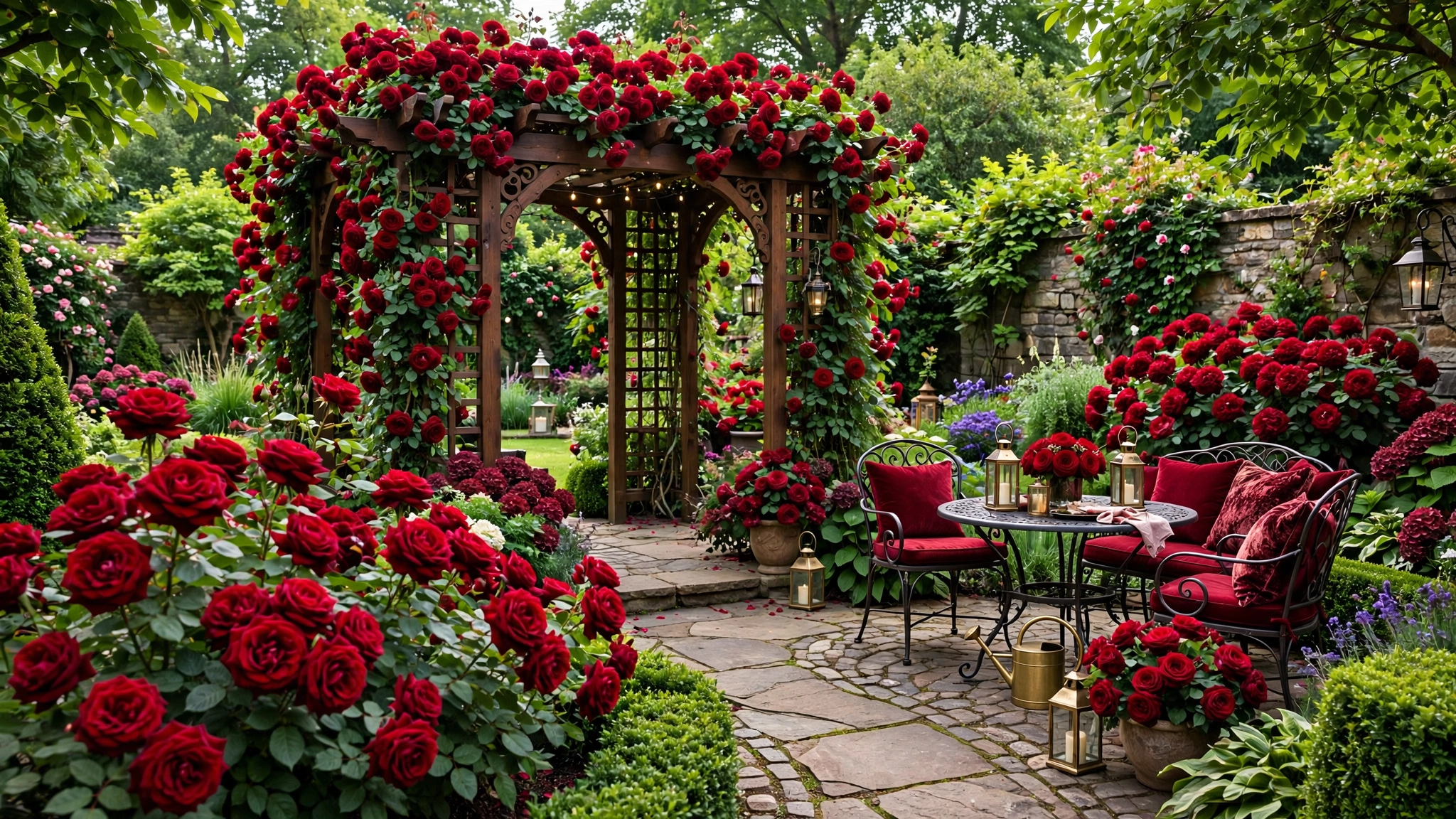
Layer a wooden pergola with vigorous climbing roses to create a fragrant, shaded retreat within your red rose garden. The structure provides essential support while the dense foliage and abundant blooms form a natural ceiling that filters sunlight beautifully throughout the day.
This red rose garden feature becomes an inviting outdoor room for entertaining. Place comfortable seating underneath and consider adding subtle landscape lighting to extend enjoyment into the evening hours, when the deep red petals take on a magical, glowing quality.
7. Container Collection — red rose garden for Patios and Balconies
Build a versatile red rose garden using large terracotta pots and decorative planters filled with compact patio rose varieties. This flexible approach allows you to rearrange your garden layout whenever inspiration strikes, making it ideal for renters or those who love to experiment with design.
A container-based red rose garden offers remarkable portability and control. Ensure pots have excellent drainage and use high-quality potting mix, then group containers at varying heights to create visual interest and a fuller, more established look.
8. Mixed Border Symphony — red rose garden for Year-Round Interest
Bring together a diverse palette of perennials, shrubs, and ornamental grasses that complement your red rose garden through every season. Spring bulbs emerge first, followed by the first flush of roses, then summer perennials and finally autumn foliage that echoes the crimson theme.
This red rose garden strategy ensures continuous visual appeal. Select companion plants with contrasting textures like feathery astilbe, spiky salvia, or soft lamb’s ear to create a rich tapestry that highlights the roses while maintaining interest even between bloom cycles.
9. Cutting Garden Corner — red rose garden for Indoor Beauty
Transform a sunny corner of your yard into a dedicated cutting garden where your red rose garden produces an endless supply of spectacular bouquets. Choose long-stemmed hybrid tea varieties known for their exceptional vase life and classic high-centered bloom form.
This practical red rose garden design rewards you with fresh flowers throughout the growing season. Plant in neat rows for easy access, and remember to cut stems early in the morning when hydration levels are highest for the longest-lasting arrangements indoors.
Frequently Asked Questions
Q. What is the best time of year to plant a red rose garden?
Ans. Early spring or late autumn is ideal for planting a red rose garden when temperatures are mild and the roots can establish before extreme weather.
Q. How much maintenance does a red rose garden require?
Ans. A red rose garden needs regular watering, monthly feeding, and weekly deadheading to maintain continuous blooming throughout the season.
Q. Which companion plants work best with a red rose garden?
Ans. Lavender, salvia, catmint, and silver-foliaged plants like artemisia create beautiful contrast and help deter pests in a red rose garden.
Conclusion
Creating your dream red rose garden is a journey of passion and patience, where every bloom tells a story of careful planning and dedicated care. Whether you choose a formal parterre, a romantic pergola, or a simple container collection, the timeless allure of crimson roses will reward you with years of breathtaking beauty.
Begin with a clear vision, select varieties suited to your climate, and remember that the best red rose garden is one that brings you joy every time you step outside. Start small, learn as you grow, and let your garden evolve into a personal sanctuary that reflects your unique style.