27 Sloped Garden Path Ideas That Turn Tricky Terrain Into Stunning Outdoor Features
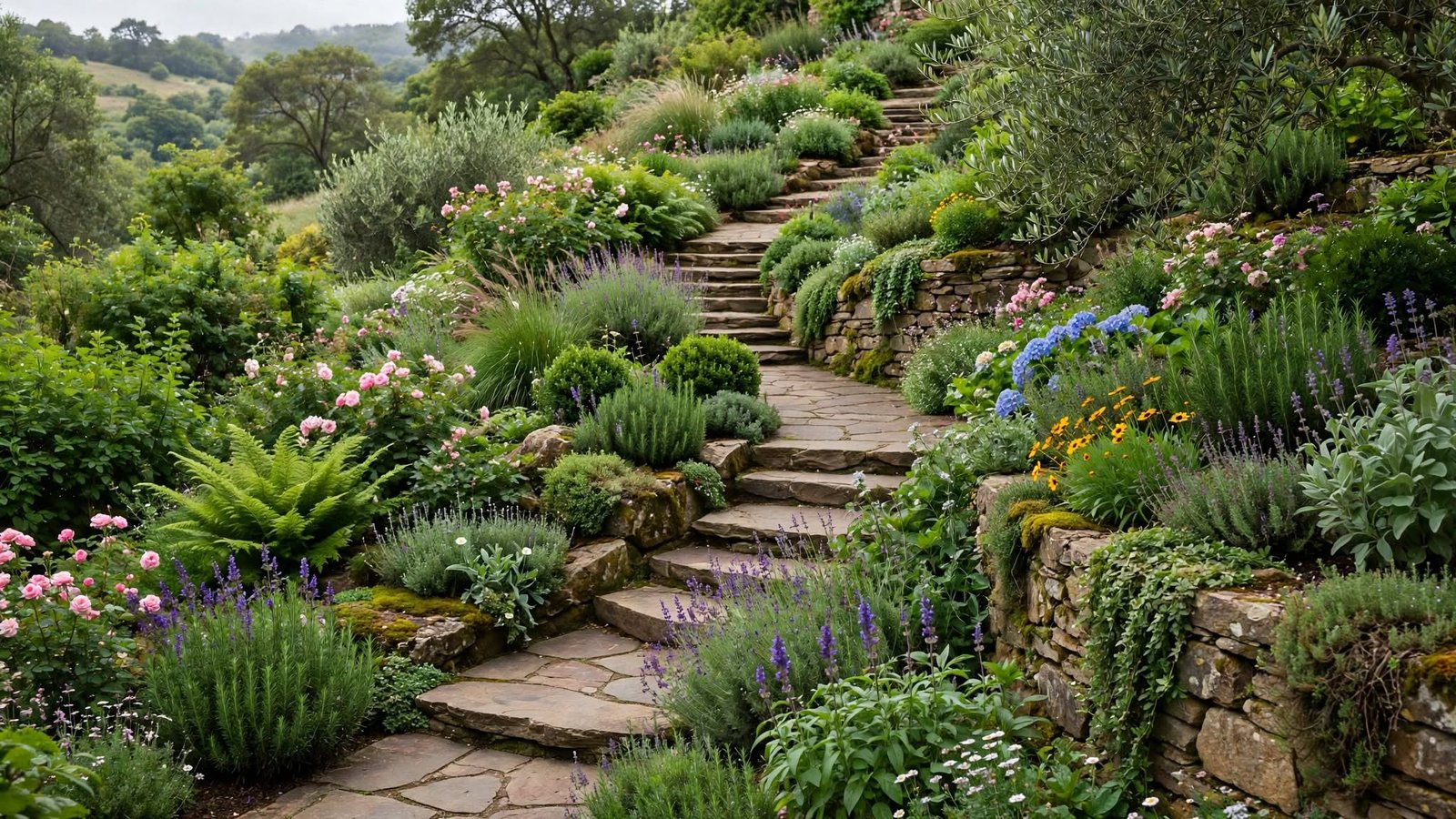
A sloped garden path can feel like a landscaping challenge, but it is really an opportunity to create something memorable. Whether your yard rises gently or drops sharply, the right sloped garden path transforms awkward terrain into a beautiful, functional journey.
From timber steps and gravel ramps to planted tiers and winding stone trails, a well-designed sloped garden path solves drainage, erosion, and access problems in one move. This collection of 27 sloped garden path ideas covers every style, budget, and gradient.
Smart Planning Makes Every Sloped Garden Path Work Harder
A little strategy before the first shovel turns a difficult incline into a landscape highlight.
- Measure the Gradient: Calculate rise over run so you choose steps, ramps, or terraces that suit the actual slope.
- Plan for Drainage: Direct water away from your home and path surface with swales, gravel, or French drains.
- Choose Grip-Friendly Materials: Textured stone, brushed concrete, and gravel outperform smooth tiles on wet inclines.
- Control Erosion Early: Ground cover, retaining walls, and deep-rooted plants hold soil in place before problems start.
- Add Gentle Lighting: Low bollards and step lights make a sloped garden path safe after dark without glare.
- Use Switchbacks Wisely: Zigzag layouts reduce steepness and create planting pockets along the way.
- Match the House Style: Path materials should echo your home’s architecture for a cohesive look.
- Budget for Structure First: Retaining walls and base layers matter more than decorative finishes on a slope.
1. Timber Steps and Gravel Landing for a Natural sloped garden path
Imagine a sloped garden path where chunky timber steps meet soft gravel landings, creating a rhythm that feels effortless underfoot. This combination handles moderate gradients beautifully while blending into planted borders on both sides. The wood softens the hard lines of a hillside.
A sloped garden path like this works best with pressure-treated or rot-resistant timber pinned securely into the soil, with gravel packed between each step to shed water quickly.
2. Curved Stone Walkway That Softens a Steep sloped garden path
Picture a sloped garden path that curves gently across the hill instead of charging straight up it. The arc reduces the effective gradient, making the climb easier and far more scenic. Stone pavers set in sand or mortar give it timeless appeal.
Flanking the sloped garden path with low perennials and grasses softens the edges and hides any slight irregularities in the stonework.
3. Terraced Beds With a Central sloped garden path for Productive Hillsides
Discover how terracing turns a steep bank into a series of flat, plantable levels with a sloped garden path running through the middle. Each tier holds moisture, reduces runoff, and gives roots a stable home. It is a classic solution for difficult terrain.
Retaining walls of stone, brick, or timber define each terrace, while the sloped garden path connects them with steps or ramps for easy access.
4. Wide Flagstone Steps Built Into a Grassy sloped garden path
Consider flagstone slabs set directly into a grassy hillside to form a sloped garden path that looks like it has always been there. The irregular shapes and natural tones let the lawn flow around each stone. It is informal, durable, and surprisingly simple to install.
Spacing the stones comfortably apart creates an inviting rhythm, and the grass between them keeps the sloped garden path cool and green underfoot.
5. Railroad Tie Stairs With Planted Risers on a sloped garden path
Anchor a rugged sloped garden path with railroad tie stairs and let creeping plants spill over each riser. The dark timber contrasts beautifully with green foliage, and the plants hide the structural edges. This look suits woodland and cottage gardens perfectly.
Each tie should be staked and backfilled properly, and the planted risers on your sloped garden path will knit the whole design together within a season.
6. Gravel Ramp With Timber Edging for an Accessible sloped garden path
Layer compacted gravel between timber edges to create a sloped garden path that is gentle enough for wheelbarrows, strollers, and wheelchairs. The gradual incline and firm surface make it genuinely practical. Timber borders keep the gravel where it belongs.
Choose angular gravel rather than rounded pebbles so the sloped garden path stays stable, and top it up annually to maintain a smooth surface.
7. Stepping Stones Floating Across a Planted sloped garden path
Build a sloped garden path from individual stepping stones that appear to float above a sea of ground cover. Thyme, moss, or creeping sedum fills the gaps and softens every edge. The result feels organic and slightly magical on a hillside.
Set each stone level and slightly recessed so it stays put, and let the plants on your sloped garden path knit together around them over time.
8. Brick Herringbone Path With Gentle Grade Changes
Bring classic charm to a sloped garden path with a brick herringbone pattern that follows the contour of the hill. The interlocking layout distributes weight evenly and resists shifting. It pairs beautifully with cottage-style planting and aged walls.
A sloped garden path in herringbone brick needs a solid compacted base and a slight cross-fall so rainwater runs off rather than pooling.
9. Woodland Trail With Log Steps for a Rustic sloped garden path
Transform a shady bank into a woodland sloped garden path using half-logs pinned into the earth as rustic steps. Forest ferns, hostas, and moss gather around each timber to blur the line between path and planting. It feels like a trail through the woods.
Fill the treads with bark mulch or leaf mold, and the sloped garden path will stay soft, quiet, and perfectly at home among the trees.
10. Modern Concrete Steps With Integrated Lighting
Frame a sleek sloped garden path with poured concrete steps and recessed LED strip lights along each riser. The clean geometry suits contemporary homes, and the lighting makes evening trips safe and dramatic. Minimal planting keeps the focus on form.
Textured or broom-finished concrete gives the sloped garden path grip, while hidden lights wash each step with a soft, even glow.
11. Switchback Path That Tames a Very Steep Slope
Explore the switchback approach, where a sloped garden path zigzags up the hill in gentle segments rather than climbing directly. Each turn creates a natural landing and a planting opportunity. Even very steep yards become walkable with this layout.
Reinforce the outer edges of each turn with stone or timber, and the sloped garden path will hold firm through heavy rain and foot traffic.
12. Pea Gravel Path With Steel Edging on a Gentle Incline
Shape a crisp sloped garden path using pea gravel contained by slim steel edging. The metal keeps the gravel tidy and creates a clean line that contrasts with loose planting. It is a modern, low-maintenance solution for mild gradients.
Compact the base thoroughly and add a geotextile layer so the sloped garden path drains well and weeds struggle to take hold.
13. Cottage Garden Path With Lavender and Stone Steps
Define a romantic sloped garden path with irregular stone steps and generous drifts of lavender, catmint, and roses. The plants soften every edge and release scent with each footstep. It is the essence of a traditional English cottage garden.
Choose drought-tolerant herbs for the sunny side of your sloped garden path, and they will thrive on the drainage a hillside naturally provides.
14. Boardwalk Style Path That Floats Over a Wet Slope
Introduce a timber boardwalk to create a sloped garden path that hovers above boggy or uneven ground. The raised deck keeps feet dry and adds a striking horizontal line to the landscape. It works especially well near ponds and streams.
Use slip-resistant decking boards and leave small gaps for drainage, and your sloped garden path will stay safe and beautiful year round.
15. Terraced Vegetable Garden With a Central sloped garden path
Suspend raised beds on a series of terraces and run a sloped garden path straight through the middle for easy harvesting. Each level gets its own sun exposure and soil mix. It turns an unusable bank into a productive kitchen garden.
Wide, stable steps and gravel surfacing make the sloped garden path practical for carts, and the beds themselves help hold the hillside in place.
16. Cobblestone Path With a Gentle S-Curve Downhill
Ground a historic-looking sloped garden path with rounded cobblestones laid in a soft S-curve. The meander slows runoff and reduces the visual steepness of the hill. Aged stone and mossy joints give it instant character.
A sloped garden path in cobblestone needs a robust base and careful jointing, but the result is a surface that lasts for generations.
17. Minimalist Concrete Path With Grass Joints
Position rectangular concrete pads with grass growing in the gaps to form a sloped garden path that is both modern and green. The open joints allow water to drain freely down the hill. It is clean, contemporary, and surprisingly affordable.
Set the pads on a compacted gravel base, and the sloped garden path will stay level even as the surrounding soil shifts with the seasons.
18. Natural Stone Path Winding Through a Rock Garden
Fill a sunny bank with alpine plants and boulders, then thread a sloped garden path of flat natural stone through the display. The stones echo the surrounding rock, making the path feel like part of the geology. Every step reveals a new texture.
Angling each slab slightly outward on the sloped garden path improves drainage and keeps the surface from becoming slick after rain.
19. Paved Ramp With Handrail for Safety and Style
Place a smooth paved ramp with a slim metal handrail to create a sloped garden path that is both elegant and accessible. The continuous surface is easy to navigate for all ages. A simple rail adds confidence without clutter.
Choose a brushed or powder-coated finish for the rail, and the sloped garden path will look intentional rather than clinical.
20. Brick and Gravel Combo Path for Cottage Charm
Craft a sloped garden path by alternating brick borders with gravel infill, a combination that balances structure and softness. The brick edges hold the gravel in place on the incline, while the loose center drains freely. It suits informal gardens beautifully.
Lay the brick in a soldier course along each side, and the sloped garden path gains a crisp frame that stands up to years of use.
21. Zigzag Path With Planting Pockets on the Inside Turns
Draw a zigzag sloped garden path across the hill and use the inside corners as planting pockets for herbs, ferns, or succulents. Each turn becomes a small garden moment. The geometry is both practical and playful.
Keep the treads wide and the turns generous, and the sloped garden path will feel comfortable rather than cramped on the climb.
22. Sunken Garden Path Between Raised Beds
Elevate the planting beds and sink the walkway to create a sloped garden path that feels intimate and sheltered. The change in level adds depth to a flat-looking yard. It also brings plants closer to hand for tending.
Line the sunken sloped garden path with stone or timber retaining edges, and the beds above will drain naturally into the lower walkway.
23. Wide Shallow Steps for Grand Entrance Appeal
Reveal a stately sloped garden path with wide, shallow steps that rise gently toward the front door. The proportions feel generous and welcoming, and the low rise per step makes the climb easy. It is a classic approach for sloped front yards.
Pair the steps with matching side walls and simple planters, and the sloped garden path becomes a genuine architectural feature.
24. Dense Ground Cover With Hidden Step Stones
Embrace a low-maintenance sloped garden path by letting dense ground cover hide most of the hardscape. Only the tops of the step stones peek through the greenery. The effect is lush, soft, and almost secret.
Choose vigorous but controllable plants like creeping thyme or ajuga, and the sloped garden path will need little more than an annual trim.
25. Mixed Material Path With Stone, Wood, and Gravel
Capture visual interest by mixing stone, timber, and gravel along one sloped garden path. Each material handles a different part of the incline, and the transitions become design features rather than compromises. It feels curated and personal.
Keep a consistent color palette across the materials, and the sloped garden path will read as one cohesive idea instead of a patchwork.
26. Water-Wise Path With Drought-Tolerant Planting
Notice how a gravel sloped garden path surrounded by succulents, lavender, and ornamental grasses thrives on neglect. The plants love the fast drainage a slope provides, and the path needs almost no irrigation. It is sustainable and striking.
Add a few boulders for structure, and the sloped garden path becomes a low-water showcase that looks good in every season.
27. Night-Lit Path With Warm Bollard Lighting
Reflect on how warm bollard lights transform a sloped garden path after sunset. Placed at intervals along the incline, they guide the eye and the feet without harsh glare. The garden takes on a completely different mood at night.
Choose fixtures with shields or louvers to direct light downward, keeping your sloped garden path safe, subtle, and star-friendly.
Frequently Asked Questions
Q. What is the best material for a sloped garden path?
Ans. Textured stone, gravel, and timber steps offer the best grip and drainage for a sloped garden path.
Q. How do I stop soil eroding along a sloped garden path?
Ans. Use retaining edges, deep-rooted ground cover, and proper drainage to keep your sloped garden path stable.
Q. Can I build a sloped garden path without professional help?
Ans. Yes, gentle sloped garden path projects with gravel or stepping stones are very achievable as weekend DIY jobs.
Conclusion
A sloped garden path does not have to be a problem to solve. With the right materials, thoughtful drainage, and a layout that works with the gradient rather than against it, any hillside can become the most interesting part of your garden.
Use these 27 sloped garden path ideas as inspiration, adapt them to your climate and style, and enjoy a walkway that is as practical as it is beautiful.