22 Rock Wall Garden Ideas That Turn Slopes and Stone Into Stunning Outdoor Spaces
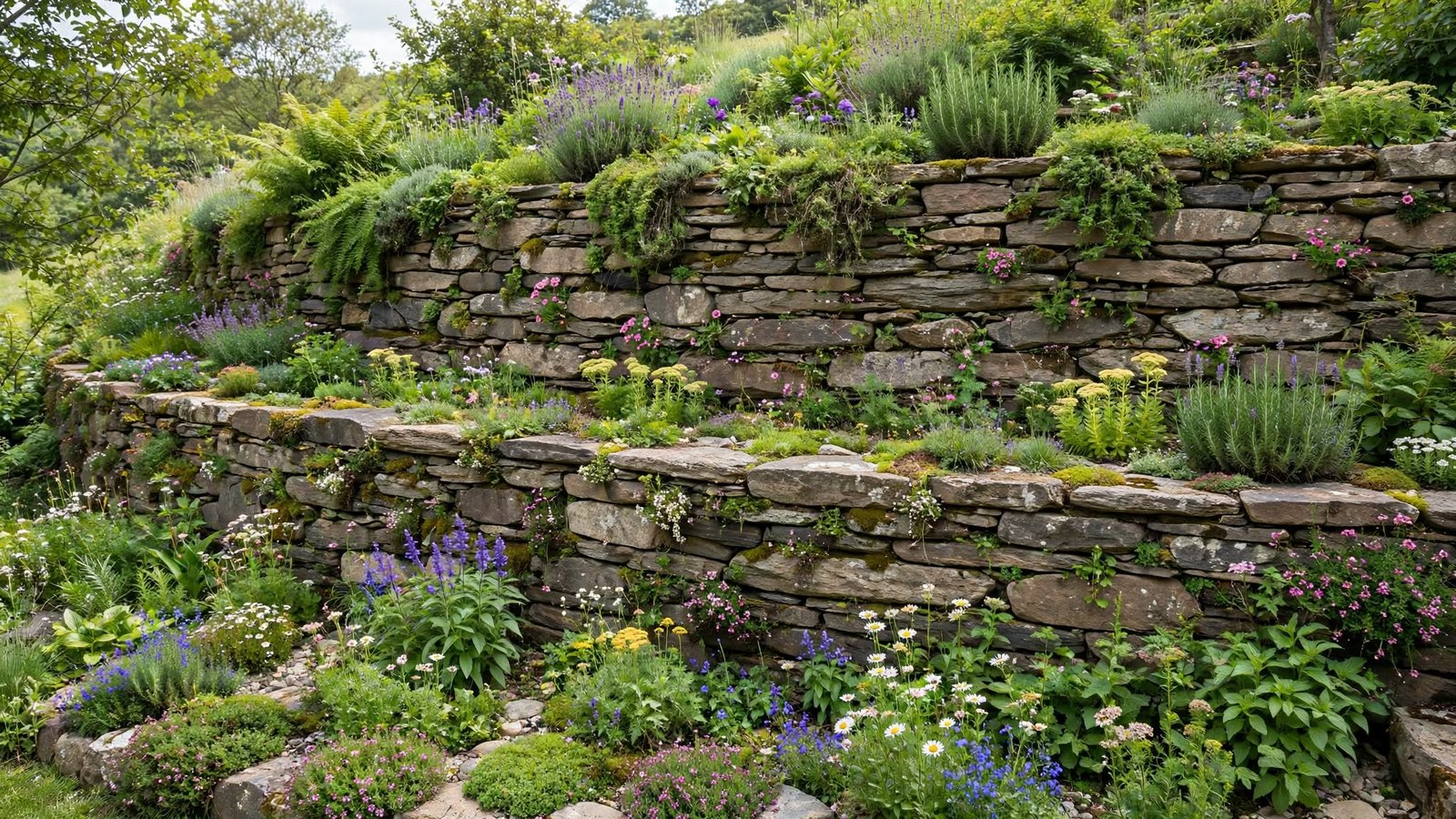
A rock wall garden transforms awkward slopes, bare retaining walls, and uneven terrain into layered, textured landscapes that look intentional and beautiful. Whether you are working with natural stone or stacked blocks, a rock wall garden opens up planting possibilities that flat ground simply cannot offer.
From cascading succulents to alpine perennials tucked into crevices, a rock wall garden blends hardscape and horticulture in a way that feels organic. These twenty-two ideas cover everything from small backyard corners to sweeping hillside installations you can adapt to your own space.
What Makes a Rock Wall Garden Work So Well
The best rock wall garden designs balance stone, soil, drainage, and plant choice.
- Drainage First: Rock walls naturally shed water, so plant species that dislike wet roots.
- Stone Selection: Match local stone for a look that feels native to your region.
- Sun Exposure: South-facing walls run hot and dry, ideal for succulents and herbs.
- Crevice Planting: Small gaps between stones hold soil and support trailing plants.
- Tiered Design: Multiple short walls often outperform one tall retaining wall.
- Soil Mix: Blend grit, compost, and topsoil for alpine and rock garden plants.
- Weight and Footing: Every rock wall garden needs a stable base and proper slope.
- Year-Round Interest: Combine evergreens, grasses, and flowering perennials.
1. Classic Stacked Stone Rock Wall Garden for Sloped Yards
Imagine a sloped backyard turned into a terraced rock wall garden with dry-stacked stones holding back beds of sedum and thyme. This approach solves erosion while creating planting pockets at every level, and the natural stone face adds warmth that concrete blocks cannot match.
A rock wall garden like this works best when each tier stays under two feet tall and leans slightly back into the hill for stability.
2. Succulent Rock Wall Garden With Cascading Color
Picture a rock wall garden packed with rosette succulents spilling over the edges in shades of jade, plum, and silver. These plants thrive in the sharp drainage a stone wall provides, and their tight forms create a living mosaic that changes subtly through the seasons.
In colder zones, a rock wall garden with succulents needs a sunny aspect and gritty soil to survive winter moisture.
3. Alpine Rock Wall Garden for Small Spaces
Discover how a compact rock wall garden can bring alpine plants into a tiny courtyard or narrow side yard. Saxifraga, lewisia, and dwarf campanula tuck into crevices and bloom above the stone, proving that a rock wall garden does not need acreage to make an impact.
Even a two-foot-tall rock wall garden can host a dozen species when you plant deliberately.
4. Natural Boulder Rock Wall Garden With Wildflowers
Consider a rock wall garden built from large boulders rather than cut stone, with wildflowers seeding themselves into the gaps. This looser style mimics natural outcrops and suits native plantings, meadow grasses, and a relaxed, meadow-like aesthetic that feels effortless.
A boulder-based rock wall garden ages gracefully as moss and lichen soften the stone over time.
5. Rock Wall Garden With Built-In Seating Nook
Anchor a rock wall garden with a flat capstone bench where the wall curves, creating a natural resting spot. This turns a purely structural feature into a destination, and the rock wall garden becomes a place to sit among the plants rather than just look at them.
Wide capstones also protect the wall core from rain and give the rock wall garden a finished top edge.
6. Drought-Tolerant Rock Wall Garden for Hot Climates
Layer a rock wall garden with lavender, rosemary, artemisia, and ornamental grasses for a planting scheme that shrugs off heat and low rainfall. The stone radiates warmth at night, which suits Mediterranean herbs, and the rock wall garden stays lush without constant irrigation.
In arid regions, a rock wall garden is often the most water-wise way to handle a slope.
7. Moss and Fern Rock Wall Garden for Shade
Build a rock wall garden in a shady corner and let moss, ferns, and hostas take over the crevices. Moisture lingers in the stone joints, so a shaded rock wall garden stays green through summer, and the cool palette of greens and grays feels calm and woodland-like.
Add a small water trickle and the rock wall garden becomes a serene focal point.
8. Rock Wall Garden Border Along a Walkway
Bring low stone walls and a rock wall garden together along a garden path, with creeping thyme and alyssum softening the edges. A rock wall garden used as a border defines the walkway, keeps mulch in place, and gives the eye something to follow as you move through the space.
Keep the wall under eighteen inches so the rock wall garden never feels like a barrier.
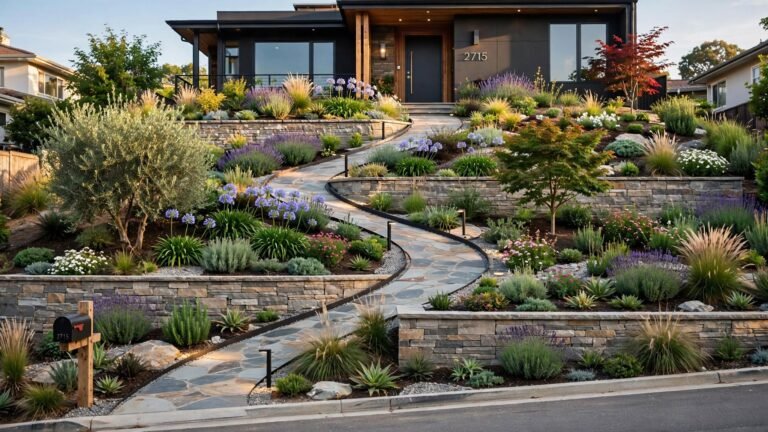
9. Tiered Rock Wall Garden on a Steep Hillside
Transform a steep bank into a series of terraced beds with a rock wall garden holding each level. Terracing reduces runoff, creates flat planting areas, and turns an unusable slope into productive ground where a rock wall garden can support vegetables, herbs, or flowers.
Each terrace of the rock wall garden should drain toward a controlled outlet to prevent washouts.
10. Rock Wall Garden With Native Perennials
Frame a rock wall garden with native perennials such as coneflower, penstemon, and aster that evolved alongside local stone and soil. A native rock wall garden supports pollinators, needs less fuss, and looks like it belongs in the landscape rather than fighting it.
Pair deep-rooted natives with the rock wall garden to stabilize soil behind the stones.
11. Rock Wall Garden With Water Feature Integration
Explore how a rock wall garden can double as the surround for a small waterfall or bubbling rock. Water threads through the stones, plants hug the wet edges, and the rock wall garden becomes both a visual and auditory feature that cools the surrounding air.
Recirculating pumps keep a water-fed rock wall garden efficient and low maintenance.
12. Rock Wall Garden for Vegetable and Herb Growing
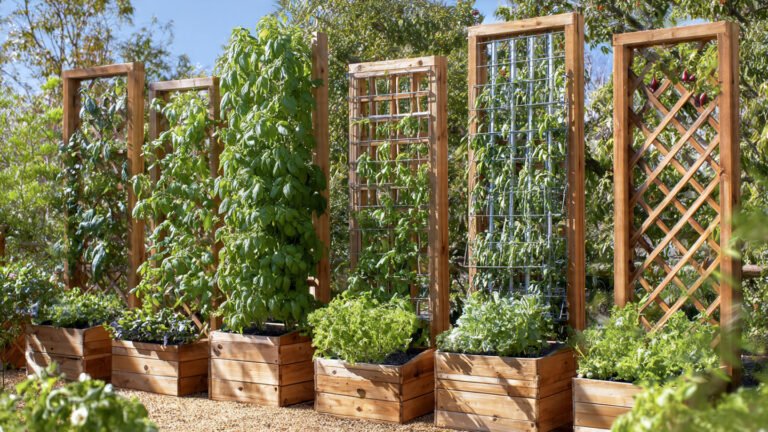
Shape a rock wall garden into a productive kitchen space by planting thyme, oregano, chives, and strawberries in the pockets. The wall’s warmth extends the growing season, and a rock wall garden keeps herbs within easy reach of the kitchen door.
Deep pockets in the rock wall garden hold enough soil for shallow-rooted crops and salad greens.
13. Rock Wall Garden With Crevice-Tucked Bulbs
Define a rock wall garden’s spring display with species tulips, crocus, and dwarf iris tucked into the gaps. These small bulbs naturalize in the sharp drainage of a rock wall garden, returning each year with early color before most perennials wake up.
Plant bulbs at least four inches deep within the rock wall garden to protect them from frost heave.
14. Modern Rock Wall Garden With Clean Lines
Introduce a contemporary twist with a rock wall garden built from sawn basalt or granite in crisp horizontal courses. The planting stays restrained, often just one or two species repeated, and the rock wall garden reads as architecture first and garden second.
Lighting a modern rock wall garden with uplights emphasizes the stone’s clean geometry after dark.
15. Rock Wall Garden Around a Fire Pit
Suspend a circular rock wall garden around a sunken fire pit to define the gathering space and add greenery at seat height. The stone wall doubles as a windbreak, and the rock wall garden softens the hard edges of the pit while providing a place for low-growing plants.
Choose fire-resistant plants for any rock wall garden near an open flame.
16. Rock Wall Garden With Integrated Steps
Ground a sloped path with stone steps framed by a rock wall garden on either side. The wall retains the slope, the steps provide safe passage, and the rock wall garden fills the gaps with plants that spill over the risers for a softened, aged look.
Wide, shallow steps pair best with a rock wall garden on steep terrain.
17. Rock Wall Garden With Ornamental Grasses
Position feather reed grass, blue fescue, and Japanese forest grass along a rock wall garden to add movement and sound. Grasses contrast the stone’s stillness, and a rock wall garden planted this way catches breezes and backlights beautifully at sunset.
Cut grasses back in late winter so the rock wall garden starts clean each spring.
18. Rock Wall Garden With Evergreen Structure
Fill a rock wall garden with dwarf conifers, creeping juniper, and heather for year-round form and color. Evergreens hold the rock wall garden together in winter when flowers fade, and their varied textures keep the composition interesting even under snow.
Space evergreens according to mature size so the rock wall garden never becomes overcrowded.
19. Rock Wall Garden With Seasonal Color Changes
Fill a rock wall garden with plants chosen for successive bloom so something is always happening. Spring bulbs give way to summer perennials, autumn brings foliage color, and the rock wall garden stays dynamic across the calendar rather than peaking once.
Layer a rock wall garden with early, mid, and late bloomers for continuous interest.
20. Rock Wall Garden With Rustic Cottage Charm
Place a rock wall garden at the edge of a cottage border where roses, pinks, and campanula can tumble over the stone. The informal, slightly tumbled look suits a rock wall garden in a romantic garden, and self-seeding plants weave the wall into the surrounding beds.
A cottage rock wall garden rewards a relaxed approach to pruning and tidiness.
21. Rock Wall Garden With Lighting for Evening Impact
Craft a rock wall garden that comes alive after dark with low-voltage uplights and path lights tucked into the beds. Shadow and texture become the focus, and the rock wall garden turns into a sculptural feature visible from inside the house.
Warm white LEDs flatter natural stone in a rock wall garden better than cool tones.
22. Rock Wall Garden With Low-Maintenance Planting
Draw on tough, self-sufficient plants for a rock wall garden that looks after itself once established. Sedum, sempervivum, creeping phlox, and ornamental onions need little water or feeding, and a rock wall garden planted this way rewards neglect rather than punishing it.
Mulch lightly around a low-maintenance rock wall garden and let the plants knit together naturally.
Frequently Asked Questions
Q. What plants grow best in a rock wall garden?
Ans. Succulents, alpine perennials, creeping thyme, and drought-tolerant herbs thrive in a rock wall garden because they prefer sharp drainage and reflected warmth.
Q. Do I need a foundation for a rock wall garden?
Ans. Yes, every rock wall garden needs a compacted base of gravel or crushed stone and a slight backward lean to handle soil pressure and frost movement.
Q. How do I keep weeds out of a rock wall garden?
Ans. Plant densely, use a gritty soil mix, and hand-pull early so a rock wall garden stays tidy without relying on chemical weed killers.
Conclusion
A rock wall garden is one of the most versatile features you can add to a yard, turning slopes, borders, and awkward corners into layered, plantable spaces. The twenty-two ideas above show how stone, soil, and plant choice combine to suit any style, from alpine crevice gardens to modern architectural walls.
Start with drainage and a stable base, then let the rock wall garden evolve as plants settle into the crevices. Whether you build one tier or ten, a rock wall garden rewards patience with texture, color, and structure that only improves with age.