16 Sloped Front Garden Ideas That Turn Challenging Terrain Into Curb Appeal
A sloped front garden can feel like a landscaping puzzle, but the right design turns that awkward incline into your home’s most striking feature. From terraced beds to cascading plantings, a sloped front garden offers creative opportunities that flat yards simply cannot match.
Whether your sloped front garden rises gently toward the house or drops steeply to the street, thoughtful planning is key. These sixteen ideas cover retaining walls, layered plantings, stone pathways, and clever hardscaping that make every inch of your sloped front garden work beautifully.
Smart Strategies for Designing a Sloped Front Garden That Works With the Land
A slope is not a problem to fix but a feature to celebrate with the right approach.
- Study the Drainage: Water always flows downhill, so plan channels and plantings that direct runoff away from your foundation.
- Terrace With Purpose: Breaking a steep slope into level tiers creates usable planting space and slows erosion.
- Choose the Right Retaining Wall: Stone, timber, and concrete block each suit different budgets and styles.
- Layer Your Plantings: Combine ground covers, shrubs, and taller specimens to soften hard edges and add depth.
- Add Steps and Paths: Safe, well-placed access makes the entire sloped front garden usable year round.
- Mind the Sightlines: Keep low plantings near the street so your home stays visible and welcoming.
- Use Native Species: Plants adapted to your region hold soil better and need less maintenance on a slope.
- Plan for Maintenance: Gentle grades and durable materials reduce the effort of caring for a hillside yard.
1. Terraced Stone Beds for a Sloped Front Garden
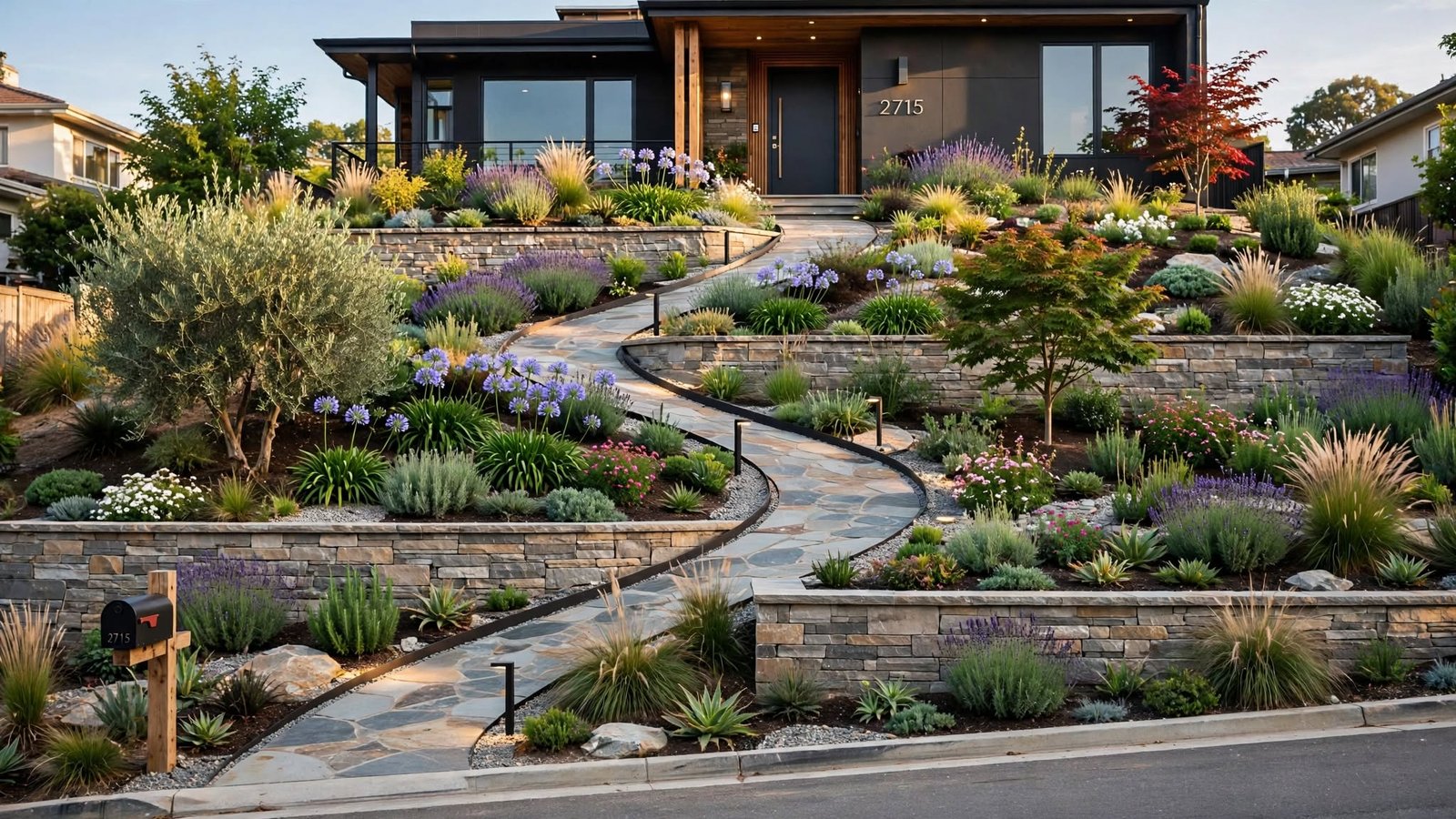
Imagine a sloped front garden carved into neat stone terraces, each level holding its own mix of flowers and shrubs. This classic approach tames steep grades while creating display space that rivals any flat border, and the stacked stone adds instant texture and warmth to your facade.
A terraced sloped front garden also controls erosion naturally, since each wall catches soil and water before they wash downhill toward the street.
2. Cascading Ground Cover for a Sloped Front Garden
Picture a sloped front garden blanketed in creeping thyme, vinca, or juniper spilling downhill like a green waterfall. Low-growing ground covers knit the soil together, smother weeds, and turn an otherwise bare incline into a lush carpet that looks intentional rather than neglected.
For a sloped front garden, choose varieties that tolerate dry conditions at the top and moisture at the bottom for even coverage.
3. Tiered Retaining Walls for a Sloped Front Garden
Discover how tiered retaining walls transform a steep sloped front garden into a series of planted shelves. Each wall reduces the grade behind it, letting you grow everything from roses to boxwood on what was once an unusable bank, and the repeating lines create a clean architectural rhythm.
Timber, block, or natural stone all work, but match materials to your home’s exterior so the sloped front garden feels cohesive.
4. Rock Garden Design for a Sloped Front Garden
Consider a rock garden for a sloped front garden where boulders, gravel, and alpine plants mimic a natural mountainside. This style thrives on sharp drainage, so it suits the fast-drying conditions of an incline perfectly, and the mix of textures stays interesting even in winter.
Arrange stones so they follow the slope’s natural angle, giving your sloped front garden a look that feels carved by nature.
5. Winding Stone Pathway for a Sloped Front Garden
Anchor a sloped front garden with a winding stone path that gently switchbacks from sidewalk to porch. The curves reduce the effective steepness, making the climb feel effortless, while flagstone or pavers set into gravel add a timeless cottage character that welcomes every visitor.
Plant low perennials along the path edges so your sloped front garden softens the hard lines of stone.
6. Layered Shrub Borders for a Sloped Front Garden
Layer shrubs of increasing height up a sloped front garden to create a green amphitheater facing the street. Start with compact varieties at the bottom, then build upward with mid-size and taller specimens, so every plant remains visible and the whole slope reads as one designed composition.
Evergreen choices keep a sloped front garden structured all year, while flowering shrubs add seasonal color.
7. Build a Dry Creek Bed in a Sloped Front Garden
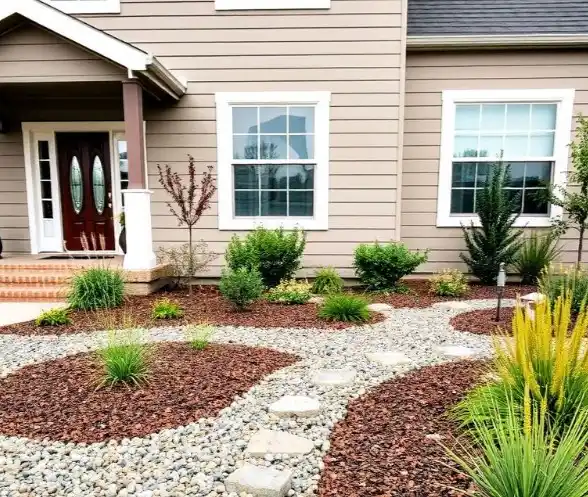
Build a dry creek bed down your sloped front garden to solve drainage and add sculptural interest at the same time. River rock arranged in a meandering channel guides stormwater away from the house, and the gray stones contrast beautifully with green plantings on either bank.
Edge the creek with moisture-loving plants, and your sloped front garden becomes a functional focal point.
8. Bring Structure With Built-In Steps and Landings
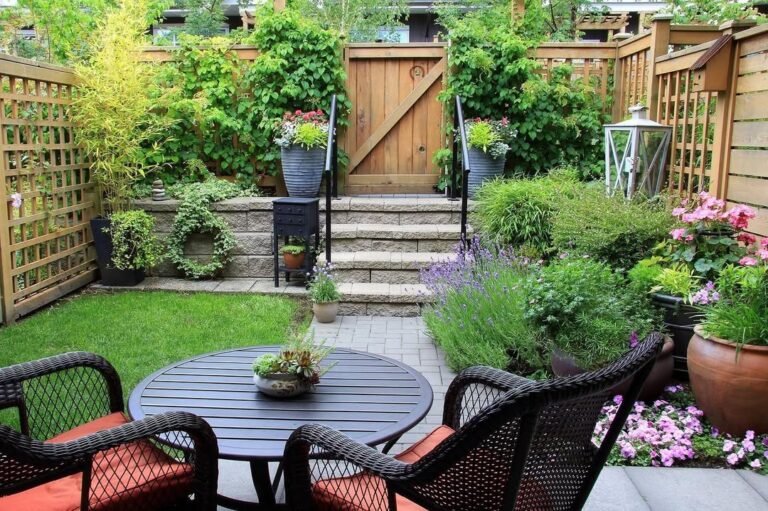
Bring order to a sloped front garden with wide steps and generous landings that double as display platforms for pots and planters. Broad treads feel safer underfoot and slower to climb, turning what could be a chore into a pleasant garden stroll up to your front door.
Flank the steps with matching walls, and your sloped front garden gains a formal, welcoming entry sequence.
9. Transform a Slope With Container Gardening
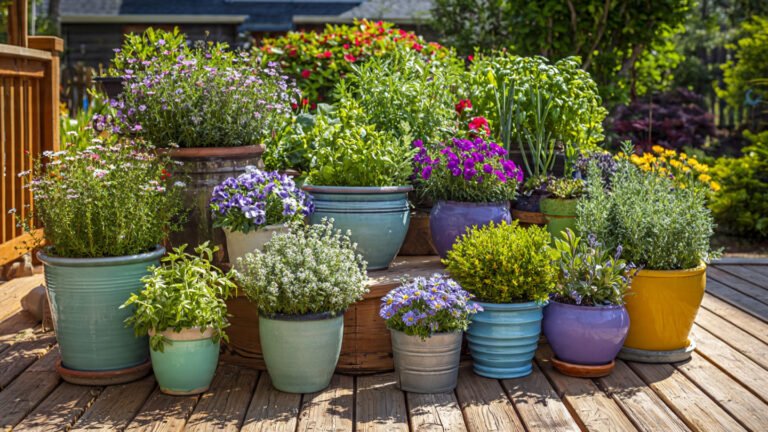
Transform a sloped front garden with clusters of containers arranged on steps, ledges, and landings. Pots let you garden on grades without digging, and grouping them by size creates a staircase of color that draws the eye upward toward the entry in a deliberate, welcoming way.
Use frost-proof planters so your sloped front garden display survives winter without cracking or fading.
10. Frame the View With Ornamental Grasses
Frame a sloped front garden with sweeping drifts of ornamental grasses that move with every breeze. Their fibrous roots grip soil on inclines, and their arching form softens the sharp geometry of walls and steps, adding motion and sound that static plantings simply cannot provide.
Cut grasses back in late winter, and your sloped front garden renews itself with fresh growth each spring.
11. Explore Cottage-Style Plantings on a Slope
Explore a cottage approach to a sloped front garden, where loose drifts of lavender, coneflower, and salvia tumble downhill in relaxed abundance. Informal planting masks the engineering of terraces and walls, making the whole slope feel like it simply grew that way over time.
Self-seeding perennials suit a sloped front garden well, filling gaps naturally without constant replanting.
12. Shape the Slope With Curved Planting Beds
Shape a sloped front garden with curved bed edges that echo the contours of the land instead of fighting them. Sweeping lines slow the eye as it travels uphill, and the organic shapes pair beautifully with both naturalistic and modern homes for lasting curb appeal.
Outline curves with a garden hose before digging, so your sloped front garden beds flow exactly as intended.
13. Define the Space With a Low Boulder Wall
Define a sloped front garden with a low wall of natural boulders that doubles as seating and soil retention. Unlike rigid block walls, boulders follow the terrain’s curves, giving the slope an organic, aged look that feels established the day it is installed.
Nestle small plants into the crevices, and your sloped front garden wall becomes a living tapestry.
14. Introduce a Water Feature on the Incline
Introduce a small waterfall or rill that uses gravity to carry water down your sloped front garden. The sound masks street noise, the moving water attracts birds, and the feature turns the slope’s greatest challenge, its drop, into its most memorable asset.
Recirculating pumps keep water use low, so your sloped front garden feature stays efficient and easy to maintain.
15. Suspend Plantings on a Steep Bank
Suspend trailing plants over a steep bank in your sloped front garden, letting ivy, creeping phlox, and sedum cascade over walls and ledges. This vertical gardening approach covers bare soil quickly and creates the impression of a green curtain draping down toward the street.
Combine trailers with upright accent plants so your sloped front garden gains both height and flow.
16. Ground the Design With Native Plantings
Ground your sloped front garden with native trees, shrubs, and perennials adapted to local rainfall and soil. Deep-rooted natives stabilize banks, support pollinators, and need far less watering and fertilizing, making them the smartest long-term choice for any challenging slope.
A native sloped front garden also blends seamlessly with the surrounding landscape, looking as though it belongs.
Frequently Asked Questions
Q. How do I stop soil erosion in a sloped front garden?
Ans. Plant deep-rooted ground covers, add terraces or retaining walls, and direct runoff with a dry creek bed to keep your sloped front garden stable.
Q. What plants work best in a sloped front garden?
Ans. Native shrubs, ornamental grasses, and spreading ground covers thrive in a sloped front garden because they hold soil and tolerate fast drainage.
Q. Do I need a retaining wall for my sloped front garden?
Ans. Only if the grade is steep or you want level planting tiers, since gentle sloped front garden grades can often be planted directly.
Conclusion
A sloped front garden rewards thoughtful design with dramatic curb appeal that flat yards cannot replicate. Terraces, retaining walls, layered plantings, and smart drainage turn a difficult grade into a landscape asset.
Start with the ideas that match your slope’s steepness and your maintenance comfort, then build outward. With the right plan, your sloped front garden becomes the most admired yard on the street.