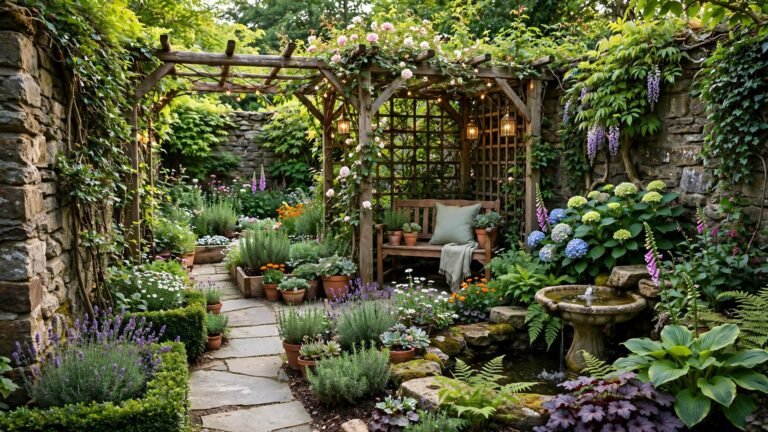
17 Rock Garden Edging Ideas to Define Your Outdoor Space Beautifully
Rock garden edging transforms an ordinary landscape bed into a sculpted, intentional feature that guides the eye and protects your plants. Whether you prefer rustic stacked stone or clean geometric lines, the right border changes everything about how a garden reads from the curb.
Choosing rock garden edging is about more than looks; it controls erosion, suppresses weeds, and separates mulch from lawn with lasting durability. This collection of seventeen ideas covers natural stone, brick, timber, and creative alternatives for every budget and terrain.
Why Rock Garden Edging Deserves a Place in Every Landscape Plan
A well-chosen border is the frame that makes your garden look finished.
- Defines Boundaries: Clean edging separates garden beds from lawns and pathways with crisp visual lines.
- Controls Erosion: Stones hold soil in place on slopes where mulch alone would wash away.
- Suppresses Weeds: A solid border blocks creeping grass and invasive roots from entering beds.
- Adds Texture: Natural stone brings organic color and surface interest that complements plants.
- Improves Drainage: Gravel and stacked rock allow water to move freely through the soil profile.
- Lasts for Decades: Quality stone and brick outlive wood, plastic, and metal edging by years.
- Boosts Curb Appeal: A finished border instantly raises the perceived value of your home landscape.
- Works on Any Budget: From salvaged brick to premium flagstone, options exist at every price point.
1. Stacked Flagstone Border for Natural Curves
Imagine a curved bed framed by irregular flagstone pieces stacked on edge, each stone slightly different in height and tone. This rock garden edging approach feels organic and relaxed, letting the border follow the natural sweep of your planting rather than forcing rigid straight lines.
Flagstone works especially well around perennials and shrubs, where a soft transition between lawn and soil keeps the rock garden edging looking intentional yet unforced.
2. River Rock Mosaic Edging for Zen Spaces
Picture smooth river rocks arranged in a tight mosaic strip along the front of a bed, their rounded shapes catching light and softening hard corners. This rock garden edging style suits Japanese-inspired gardens, meditation corners, and any space where calm repetition matters more than bold structure.
Mixing sizes within the same rock garden edging strip adds subtle rhythm without overwhelming the plants behind it.
3. Vertical Slate Shards for Modern Minimalism
Discover how vertically placed slate shards create a sharp, architectural line that reads almost like a low wall. This rock garden edging technique brings contemporary polish to modern landscapes, especially when paired with ornamental grasses and sculptural succulents.
Because slate is thin and dense, it forms a nearly impenetrable barrier, making this rock garden edging a practical choice for keeping aggressive ground covers in check.
4. Brick and Stone Combination Edging
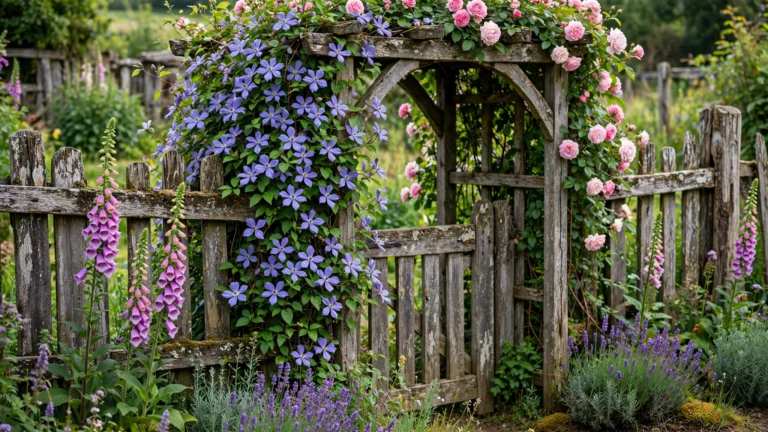
Consider pairing reclaimed brick with rough fieldstone to create a border that balances warmth and texture. This rock garden edging idea works beautifully in cottage gardens, where the mix of materials echoes the informal charm of climbing roses and wildflowers.
Alternating brick and stone within the same rock garden edging run adds visual interest while keeping the overall palette grounded and earthy.
5. Boulders as Anchor Points for Large Beds
Anchor a sprawling garden bed with a few oversized boulders placed at key corners and curves. This rock garden edging strategy uses mass rather than repetition, giving the eye a place to rest while defining the boundary between cultivated space and wilder surroundings.
Boulders work best when partially buried, so the rock garden edging looks like it emerged naturally from the earth rather than sitting on top of it.
6. Layered Gravel and Stone Trench Edging
Layer pea gravel over a shallow trench lined with larger stones to build a border that drains beautifully and resists weed growth. This rock garden edging method is ideal for xeriscapes, where water retention is a concern and every element needs to earn its place.
Refreshing the gravel each spring keeps this rock garden edging looking crisp and prevents soil from migrating into the stone channel.
7. Cobblestone Rows for Cottage Charm
Build a low row of rounded cobblestones along the front of a flower bed to capture old-world cottage character. This rock garden edging style pairs perfectly with lavender, foxgloves, and other romantic plantings that spill casually over the stone line.
Setting cobblestones slightly below grade keeps the rock garden edging from interfering with mowing while still holding the bed edge firmly.
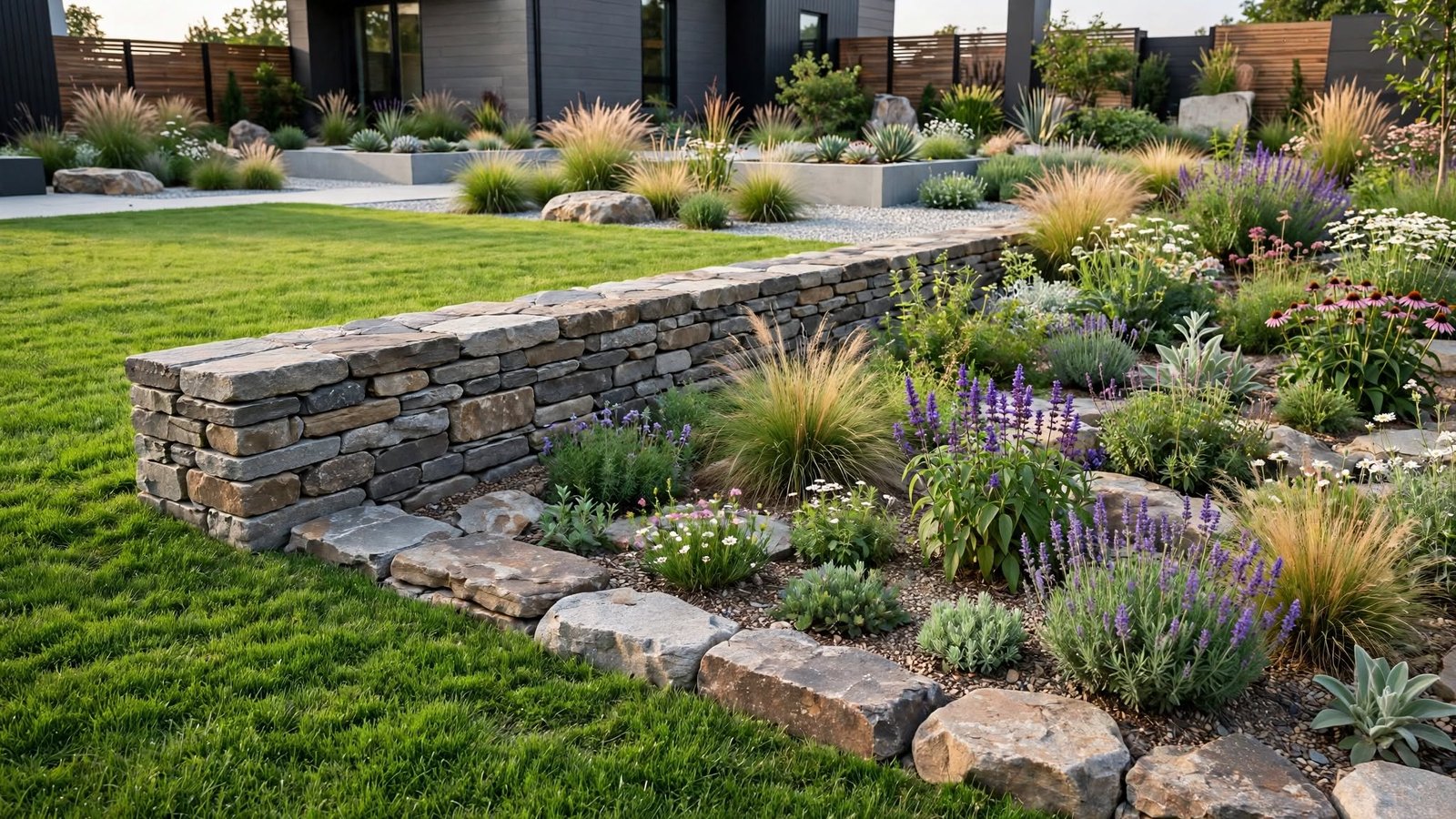
8. Dry Stack Stone Wall Edging for Elevation
Bring raised dimension to flat ground with a dry stack stone wall that doubles as a retaining edge. This rock garden edging approach lifts the bed a foot or more, improving drainage and creating a dramatic platform for alpines and succulents.
Because no mortar is used, this rock garden edging allows water to seep through the gaps, which protects plant roots during heavy rainfall.
9. Pebble Border with Contrasting Colors
Transform a simple bed edge with pebbles in contrasting shades, such as white against charcoal or warm tan against cool gray. This rock garden edging idea creates a graphic line that reads clearly from a distance and adds a designer touch without heavy lifting.
Raking the pebbles into gentle waves or arcs gives this rock garden edging a rhythmic quality that echoes the curves of the plants behind it.
10. Timber and Rock Hybrid Edging
Frame a vegetable or herb garden with pressure-treated timber topped by a row of small stones for a rustic, functional border. This rock garden edging combination gives you the structural strength of wood with the visual weight of stone.
The timber base keeps soil in place while the stone cap on this rock garden edging softens the transition to surrounding lawn or gravel paths.
11. Explore Spilled Rock Edging for Wild Gardens
Explore the look of stones that appear to spill organically out of the bed, blurring the line between garden and path. This rock garden edging style feels relaxed and natural, ideal for woodland gardens and native plantings where rigid borders would look out of place.
Placing a few scattered stones beyond the main line extends this rock garden edging visually and encourages moss and ground covers to knit everything together.
12. Shape a Circular Rock Garden Border
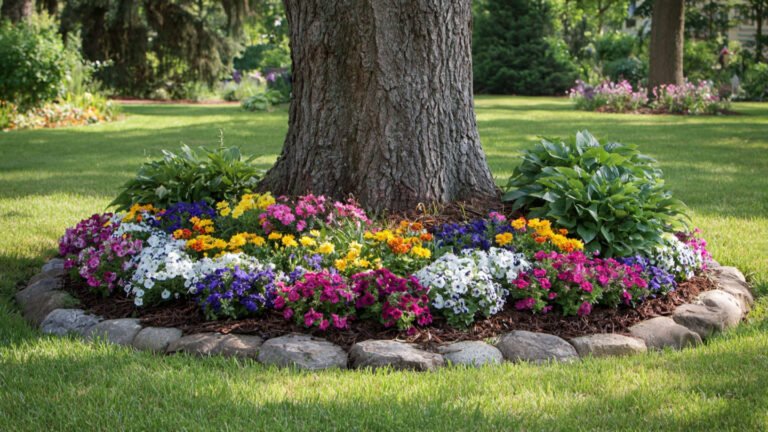
Shape a perfect circle or spiral of stones to create a focal point in an open lawn or courtyard. This rock garden edging design draws the eye inward and works well around a specimen tree, a birdbath, or a central sculpture.
Keeping the stone sizes consistent around the curve helps this rock garden edging read as a single, deliberate gesture rather than a random scatter.
13. Define Pathways with Rock Garden Edging
Define a garden path with matching rock borders on both sides to guide visitors through the landscape with clarity. This rock garden edging technique keeps gravel or mulch contained and prevents plants from encroaching on the walking surface.
Choosing stones that complement the path material itself makes this rock garden edging feel integrated rather than added on as an afterthought.
14. Introduce Moss-Covered Stones for Aged Beauty
Introduce moss-covered stones to a shaded border and let time do the rest of the work. This rock garden edging look feels ancient and serene, perfect for woodland gardens, fern glades, and any spot where damp, cool conditions prevail.
Encouraging moss on your rock garden edging requires patience but rewards you with a border that looks like it has always belonged there.
15. Suspend Stones in a Floating Border Design
Suspend flat stones on edge in a shallow trench so their tops sit just above the soil line, creating a floating border effect. This rock garden edging trick hides the base of each stone and gives the illusion that the rocks hover above the mulch.
Used along a modern bed, this rock garden edging adds a subtle sculptural quality that pairs well with clean-lined plantings and gravel mulch.
16. Ground Slopes with Terraced Rock Edging
Ground a sloped yard with terraced rows of rock that step down the hillside like a staircase for plants. This rock garden edging method prevents erosion, creates flat planting pockets, and turns a difficult grade into one of the most striking features of the property.
Each terrace in this rock garden edging holds its own microclimate, letting you grow alpines, herbs, and succulents side by side.
17. Position Accent Rocks for Seasonal Interest
Position a few accent rocks along the border to highlight seasonal color changes, from spring bulbs to autumn foliage. This rock garden edging approach treats stones as sculptural elements rather than pure utility, giving the garden year-round structure.
Rotating small plantings around these anchor stones keeps this rock garden edging fresh and interesting through every season.
Frequently Asked Questions
Q. What is the best rock garden edging for sloped yards?
Ans. Terraced dry stack stone is the best rock garden edging for slopes because it holds soil, slows runoff, and creates flat planting pockets.
Q. How deep should I bury stones for rock garden edging?
Ans. Bury roughly one third of each stone so your rock garden edging stays stable through frost, rain, and foot traffic.
Q. Does rock garden edging need a weed barrier underneath?
Ans. A landscape fabric layer under rock garden edging is optional but helps slow weeds in gravel-filled borders.
Conclusion
Rock garden edging is one of the most durable and visually rewarding upgrades you can make to any landscape. From stacked flagstone curves to terraced slopes, the seventeen ideas above show how stone defines space, controls erosion, and frames your plantings with lasting structure.
Start with one bed, choose a material that suits your soil and style, and let the border do the heavy lifting. With the right rock garden edging in place, every plant behind it looks more intentional, more polished, and more worth the effort.