21 Sloped Vegetable Garden Ideas for Growing Food on Uneven Ground
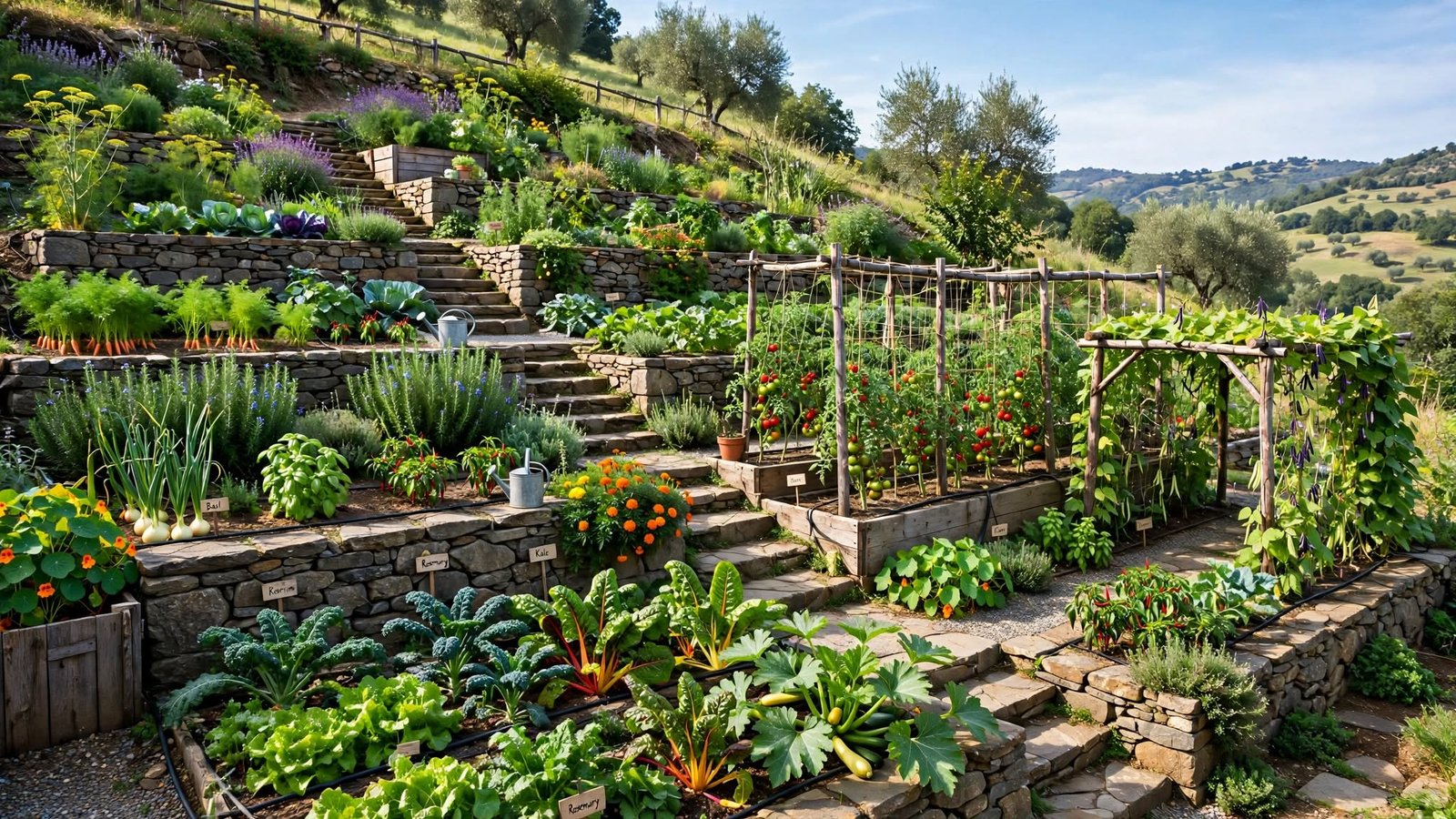
A sloped vegetable garden turns a difficult yard into one of the most productive spaces on your property. Instead of fighting the incline, you can use it to improve drainage, capture sunlight, and create striking terraced beds that make harvesting easier.
Whether your slope is gentle or steep, the right sloped vegetable garden layout solves erosion, water runoff, and access problems at the same time. The ideas below show how real gardeners work with hillsides rather than against them, from simple raised beds to full terrace systems.
Smart Planning Makes Every Sloped Vegetable Garden Easier to Work
A few structural decisions at the start save seasons of frustration later.
- Map the Sun: Track light across the slope for a full day before placing beds.
- Follow the Contour: Beds set along the contour hold water instead of shedding it.
- Stabilize First: Retaining walls, logs, or stone keep soil where you put it.
- Plan Wide Paths: Level walkways make carrying tools and harvests far safer.
- Build Steps In: Shallow stairs or ramps prevent slips on steep garden slopes.
- Improve the Soil: Add compost deeply since hillside topsoil is often thin.
- Choose Terracing: Multiple narrow beds beat one wide bed on steep ground.
- Think About Water: Swales and drip lines direct moisture to plant roots.
1. Terraced Beds for a Productive Sloped Vegetable Garden
Imagine stepping out to a hillside where every level of your sloped vegetable garden is planted and reachable without climbing. Terraced beds break a steep grade into flat growing strips, which stops erosion and gives roots stable soil. Each terrace can hold different crops based on how much sun and moisture it receives.
This layout works especially well on medium to steep slopes where a single bed would wash out. A sloped vegetable garden built this way also looks intentional and tidy from the house.
2. Raised Beds That Level Out a Sloped Vegetable Garden
Picture raised boxes stepped down a hill, each one level even though the ground beneath is not. This is one of the simplest fixes for a sloped vegetable garden because the frames do the grading work for you. Deep beds also give you control over soil quality, which matters when hillside ground is rocky or compacted.
Stagger the heights so taller beds sit lower on the slope and shorter ones sit uphill. In a sloped vegetable garden, that arrangement keeps every planting surface visible and easy to reach.
3. Contour Rows for a Natural Sloped Vegetable Garden
Discover how planting along the contour lines of a hill slows water and feeds the soil. In a sloped vegetable garden, rows that follow the natural curve of the land act like small dams, letting rain soak in rather than rush downhill. This traditional method needs no lumber or stone, just careful layout.
Contour rows suit larger hillsides where terracing would be costly. A sloped vegetable garden planted this way also reduces the need for constant watering during dry spells.
4. Retaining Walls That Hold a Sloped Vegetable Garden in Place
Consider stone or timber walls as the backbone of your sloped vegetable garden. A well-built retaining wall creates a flat planting shelf and stops soil from creeping downhill after heavy rain. Walls also add warm thermal mass that can extend your growing season slightly.
Keep wall height modest and add drainage behind the stones. In a sloped vegetable garden, a sturdy wall turns an unusable bank into prime growing space.
5. Swales and Berms for a Water-Wise Sloped Vegetable Garden
Anchor your design with shallow ditches and raised mounds that manage runoff. A sloped vegetable garden with swales on contour captures rainwater and lets it sink slowly into the root zone. The berms beside each swale become perfect spots for thirsty crops like squash and tomatoes.
This earthworks approach requires no hard materials and improves soil over time. For a sloped vegetable garden on a dry hill, swales can cut irrigation needs dramatically.
6. Keyhole Beds for a Compact Sloped Vegetable Garden
Layer keyhole-shaped beds into your hillside to maximize growing area while keeping every plant within arm’s reach. In a sloped vegetable garden, the notch in each bed gives you a standing spot for planting, weeding, and harvesting without stepping on soil. The shape also helps retain moisture near the center.
Keyhole beds work well on moderate slopes and small yards. A sloped vegetable garden built with them feels organized and cuts down on bending and stretching.
7. Staircase Garden Paths Through a Sloped Vegetable Garden
Build safe access first, then plant around it. A sloped vegetable garden with shallow steps or a gentle switchback path is far easier to tend than one you must scramble up. Wide treads and gravel or mulch surfaces improve grip when the ground is wet.
Paths also define bed shapes and prevent soil compaction. In a sloped vegetable garden, good circulation keeps the whole space feeling manageable rather than overwhelming.
8. Sun-Trap Layout for a Sloped Vegetable Garden
Bring warmth to your crops by orienting beds toward the sunniest exposure. A south or southwest facing sloped vegetable garden collects heat during the day and shelters plants from cold winds. This microclimate can let you grow heat-loving vegetables that struggle elsewhere on the property.
Use the slope angle to your advantage by planting tall crops at the bottom. A sloped vegetable garden arranged this way avoids shading shorter plants uphill.
9. Log Terraces for a Rustic Sloped Vegetable Garden
Transform fallen timber into retaining edges for your hillside beds. A sloped vegetable garden framed with logs has a natural, woodland look and costs little if you already have trees to thin. As the logs age, they slowly feed the soil and support beneficial insects.
Set each log into the slope and backfill with compost-rich soil. This sloped vegetable garden style suits informal yards and wooded lots beautifully.
10. Container Steps for a Small Sloped Vegetable Garden
Frame your slope with pots and planters arranged like outdoor stairs. This approach turns even a tiny sloped vegetable garden into a productive space without any digging or heavy construction. Herbs, peppers, and salad greens thrive in containers that follow the grade.
Move pots as the seasons change to chase sunlight or avoid heavy rain. A sloped vegetable garden built from containers is ideal for renters and patios.
11. Hugelkultur Mounds for a Self-Watering Sloped Vegetable Garden
Explore hugelkultur, where buried wood and organic matter form raised mounds that hold water for weeks. A sloped vegetable garden built on hugelkultur beds needs far less irrigation because rotting logs act like a sponge. The mounds also warm up early in spring.
Orient the mounds along the contour so they catch runoff. This sloped vegetable garden method is perfect for permaculture-minded growers who want low-maintenance fertility.
12. Drought-Tolerant Planting for a Sloped Vegetable Garden
Shape your plant list around crops that tolerate drying out between waterings. A sloped vegetable garden drains faster than flat ground, so Mediterranean herbs, root vegetables, and hardy greens often outperform thirsty varieties. Mulching heavily keeps moisture in place.
Group plants with similar water needs on the same terrace level. In a sloped vegetable garden, matching crops to conditions beats fighting the terrain.
13. Erosion Control for a Steep Sloped Vegetable Garden
Define a clear erosion strategy before you plant a single seed. A steep sloped vegetable garden loses topsoil quickly unless ground cover, mulch, and structural edges hold it. Cover crops between seasons keep roots in the ground year round.
Combine living mulch with stone or timber borders for the best results. On any sloped vegetable garden, protecting soil is the foundation of long-term productivity.
14. Vertical Growing in a Sloped Vegetable Garden
Introduce trellises, arches, and cages to use height instead of ground area. A sloped vegetable garden gains enormous capacity when beans, cucumbers, and tomatoes climb upward. Vertical crops also shade the soil below, reducing evaporation on hot exposures.
Place taller structures at the lower end of the slope to avoid blocking light. In a sloped vegetable garden, going vertical is often the smartest use of limited flat space.
15. Drip Irrigation for a Sloped Vegetable Garden
Suspend overhead watering in favor of drip lines that deliver moisture slowly at the root zone. A sloped vegetable garden wastes a lot of water through runoff when sprinklers are used on a grade. Drip emitters and soaker hoses put water exactly where plants need it.
Install pressure-compensating emitters so every row gets an even share. A sloped vegetable garden with drip irrigation stays consistently moist without erosion.
16. Native Plant Borders for a Sloped Vegetable Garden
Ground the edges of your growing area with native perennials that stabilize soil and attract pollinators. A sloped vegetable garden ringed with deep-rooted wildflowers and grasses suffers less erosion and supports beneficial insects. These borders also soften the look of retaining walls and terraces.
Choose species suited to your region and soil type. In a sloped vegetable garden, native plantings are both practical and beautiful.
17. Cold Frame Corners in a Sloped Vegetable Garden
Position cold frames on the flattest, sunniest corner of your slope to extend the season. A sloped vegetable garden with a protected frame can grow salad greens well into winter and start seedlings weeks early. The slope’s natural drainage keeps frames from sitting in soggy soil.
Angle the glass toward the winter sun for maximum warmth. This sloped vegetable garden feature pays for itself in fresh produce.
18. Mulch Strategies for a Sloped Vegetable Garden
Fill your beds with heavy mulches that stay put on an incline. A sloped vegetable garden loses lightweight mulch to wind and rain, so straw, wood chips, and stone work better than fine materials. Mulch also slows water movement so it soaks in rather than streaming away.
Apply mulch after seedlings are established and top it up each season. In a sloped vegetable garden, mulch is one of the cheapest erosion tools available.
19. Crop Rotation on a Sloped Vegetable Garden
Place heavy feeders at the bottom of the slope and lighter crops higher up. A sloped vegetable garden naturally moves nutrients downhill with rain, so plan rotations that take advantage of that flow. Legumes on upper terraces can fix nitrogen that benefits lower beds over time.
Keep records of what grew where each year. A sloped vegetable garden managed with rotation stays healthier and reduces pest pressure.
20. Decorative Edging for a Sloped Vegetable Garden
Craft clean borders with brick, woven willow, or weathered steel to give your hillside structure. A sloped vegetable garden with crisp edging looks cared for and keeps soil from spilling onto paths. Edging also defines where to walk and where to plant.
Match materials to your home’s style for a cohesive look. In a sloped vegetable garden, good edging is both practical and visually pleasing.
21. Seasonal Color in a Sloped Vegetable Garden
Draw the eye across your hillside with flowers tucked among the vegetables. A sloped vegetable garden planted with marigolds, nasturtiums, and calendula gains color, pest control, and pollinator activity all at once. These companions fill gaps between harvests so the slope never looks bare.
Scatter blooms at every terrace level for a balanced composition. A sloped vegetable garden that is pretty as well as productive is one you will enjoy tending all season.
Frequently Asked Questions
Q. What is the best way to start a sloped vegetable garden?
Ans. Begin by observing sun and water flow, then add terraces or raised beds to create level planting areas in your sloped vegetable garden.
Q. How do I stop soil erosion in a sloped vegetable garden?
Ans. Use retaining walls, contour beds, heavy mulch, and cover crops to hold soil in place throughout your sloped vegetable garden.
Q. Which vegetables grow best in a sloped vegetable garden?
Ans. Root crops, herbs, and drought-tolerant greens thrive in a sloped vegetable garden because the grade drains quickly.
Conclusion
A sloped vegetable garden rewards careful planning with better drainage, warmer microclimates, and more usable growing space than a flat plot often provides. The key is to work with the grade through terraces, raised beds, swales, or contour rows rather than fighting it.
Start with erosion control and safe access, then build your sloped vegetable garden layer by layer each season. With the right structure and plant choices, even a steep hillside can become the most productive part of your yard.